Category Archives: Travel

Cheap Hotels in Tulum

MexicoTulum › Budget Hotels
Updated: December 29, 2023

See Also

The 8 Best Budget Hotels in Tulum

1. Teetotum – Budget

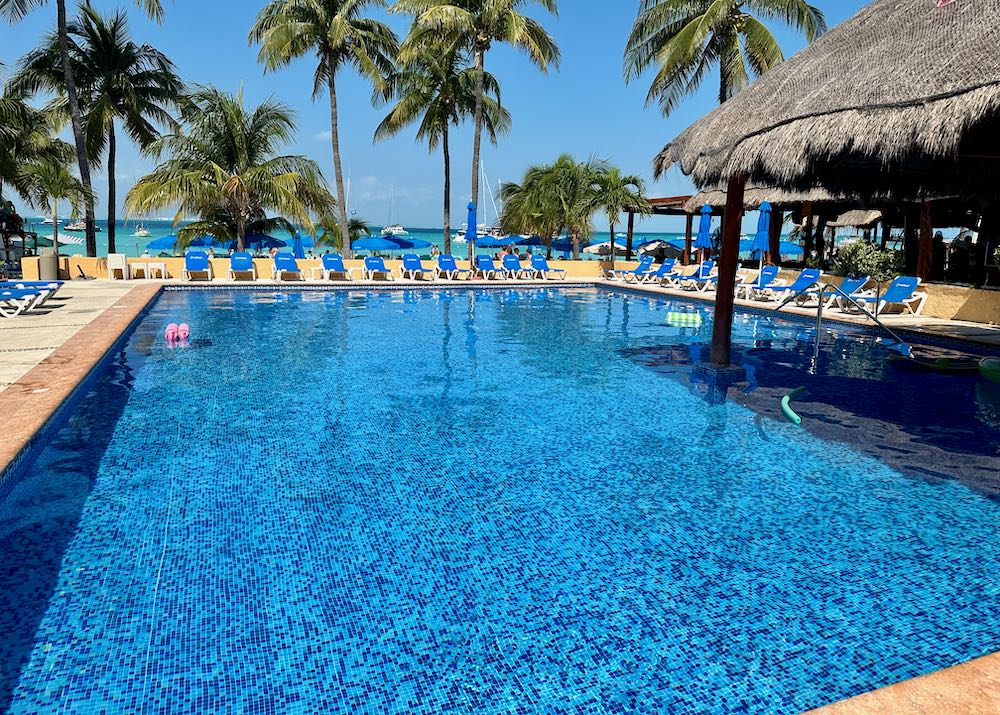
Featuring four contemporary guest rooms, this charming, good value hotel offers free breakfast, an outdoor plunge pool, restaurant, spa services, and free bicycles for guest use. Each guest room has air conditioning and a minibar, and the hotel is located 3 km from the Archaeological Zone and 4 km from the beach.
Hotel phone: +52 1 984 143 8956
Hotel website • Check prices for Teetotum

2. Casa Don Diego – Budget

Within walking distance of the restaurants of downtown Tulum, this colorful hotel features free breakfast, an outdoor pool, restaurant and bar, spa, free parking, laundry service, and bike and scuba equipment rentals. Rooms have air conditioning, terraces, private bathrooms, and no TVs. Located 5 km from the Archaeological Zone and the beach.
Hotel phone: +52 1 984 745 9305
Hotel website • Check prices for Casa Don Diego

3. Posada Yum Kin – Budget

Located just north of downtown Tulum, this eco-friendly budget hotel is 5 km (15-minute drive) from the Archaeological Zone, and offers complimentary continental breakfast, outdoor pool and hot tub, free parking, and a lush garden. All rooms feature traditional architecture and local artwork, and most rooms have air conditioning, terraces with hammocks, and kitchenettes.
Hotel phone: +52 1 920 858 2127
Check prices for Posada Yum Kin

4. Mango – Budget

Located 3 km from the Archaeological Zone and 4 km from Gran Cenote, this cozy and affordable hotel is positioned just outside the center of Tulum, but within walking distance of many restaurants and shops. Minimalist guestrooms feature air conditioning, ensuite bathrooms, and refrigerators, as well as free coffee, tea, and filtered drinking water. An outdoor pool and a garden are on-site.
Hotel phone: +52 984 142 6462
Hotel website • Check prices for Mango

5. Cabañas La Luna – Moderate

Beachfront property made up of 10 bungalows, a pool, and a restaurant, and situated about 8 km from downtown Tulum as well as the Archaeological Zone. Bungalows vary in size but all offer direct beach access and filtered drinking water, and some feature multiple bedrooms, air conditioning, and private bathrooms.
Hotel phone: +52 1 984 146 7737
Hotel website • Check prices for Cabañas La Luna

6. Villas Geminis Boutique Condohotel – Moderate

Situated in the heart of downtown Tulum and 4 km from both the beach and Gran Cenote, this art-focused hotel offers an outdoor pool, garden, free continental breakfast, and free bicycles for guest use. Every spacious room has a balcony or patio, traditional decor, and air conditioning, while some rooms feature full kitchens and sitting areas.
Hotel phone: +52 1 984 277 6298
Hotel website • Check prices for Villas Geminis Boutique Condohotel

7. Biwa – Moderate

Known for its scenic rooftop bar, this modern mid-range hotel offers free breakfast, free bicycles for guest use, an outdoor pool, several lounge areas, free parking, and an elevator. Rooms feature air conditioning, minibars, coffee makers, desks, private bathrooms, and bathrobes. The hotel is located 4 km from the Archaeological Zone and within walking distance of the restaurants of downtown Tulum.
Hotel phone: +52 1 984 871 2200
Hotel website • Check prices for Biwa

8. Naay – Moderate

Charming boutique hotel situated 4 km from the beach with complimentary breakfast, free bikes for guest use, and a large rooftop deck with two pools, cabanas, and a restaurant. All rooms feature modern amenities like air conditioning, smart TVs, Bose speakers, and memory foam beds; some rooms have balconies.
Hotel phone: +52 1 800 504 5000
Hotel website • Check prices for Naay Curamoria

Read More
The Best Time to Visit Mexico City

MexicoMexico City › When to Go
Updated: December 21, 2023

See Also

Best time to visit Mexico City.

When is the Best Time to Visit Mexico City?

If you’re looking for dry weather and moderate temperatures the best time to visit Mexico City is between March and May. During these spring months, the city enjoys warm, pleasant weather with minimal rainfall, making it ideal for outdoor activities and sightseeing. The daytime temperatures are comfortable, and the nights are cool, offering a perfect balance for exploring the city. This period also allows you to experience the vibrant cultural life of Mexico City in full swing, with various festivals and events taking place. October and November are also great months to visit, though crowds are larger and hotel prices higher.

  • Best Time to See Flowers: Many look forward to the time Jacaranda trees bloom in late February and early March. The broad trees with lavender blooms light up Reforma Avenue. The Chapultepec Botanical gardens are open year-round and be sure to catch the Festival de Flores y Jardines there in April, or head to the neighborhood of San Angel for Feria de las Flores in July.
  • Best Time to Visit Teotihuacan: The spectacular ancient Mesoamerican city, just 30 miles north of Mexico City, is open year-round. If the weather is hot, as it can often be in May and June, you may want to arrive when the site opens at 9 am. You can also get a jump on the crowds that way. Speaking of crowds, the spring equinox at Teotihuacan is a huge happening with hundreds of thousands of white-clad people flocking to the site to take in its energy as it alights with the sun. If your purpose is to see the site and learn about its history, it is best to avoid the days around the equinox.
  • Best Time for Music Fans: March is the month for the Vive Latino Music Festival, a huge event featuring an eclectic array of international and local pop and rock music stars. If your taste leans more towards violins and oboes than electric guitars and synthesizers, you might want to look at the schedule of the Festival de Mexico en el Centro Historico. This 2-week-long festival, which begins at the end of March, includes jazz, classical music, and dance performances, as well as children’s events. In November, you can catch another pop extravaganza: the Corona Capital Music Festival.
  • Best Time to Catch a Soccer Game: If you enjoy spectator sports, sitting in the raucous stands of a Mexico City soccer game will be an experience to remember. Mexico City has 3 teams in the Liga MX, the top-level professional league in Mexico. They have 2 seasons, one from July 20 to November 24 and the other from January 5 to late May.
  • Best Time to Ride a Canal Boat in Xochimilco: The best time to set out with a group on one of these colorful canal boats depends on your travel appetite. Do you want to hit the canals with the locals? Then go on a weekend or during the week before and after Easter, when many Mexicans are on holiday. Want to avoid crowds? Weekday mornings are the best bet.
  • Best Time for Visiting Markets: Mexico City has wonderful public markets and weekly open-air farmers markets. They operate year-round, but availability for some items, such as some fruits and traditional crafts, depends on the time of year. The best time for a fresh mango is in June and July. Mamey Sapote, a brown fruit with rich orange flesh and a taste similar to a sweet pumpkin with cherry overtones, is most often found in the winter months. The best time to buy a hand-made piñata is in December, in the 2 weeks before Christmas.
  • Best Time for Bargains: Chilly winter nights keep some visitors out of the city, so hotel bargains may be found from December to February. There may also be some good hotel deals from June to August.

Mexico City Travel Seasons

  • High Season (September to November): Compared to many destinations, Mexico City doesn’t see a big variation in the number of visitors at different times of the year, but September-November is when tourist traffic in Mexico City is the highest. The last weeks of the rainy season and the beginning of the dry season mean mild temperatures and a good backdrop for popular festivals such as Day of the Dead. September has frequent rains and warm temperatures. The dry season sets in during October and nights get increasingly cool.
  • Shoulder Season (March to May): Another popular time of year, when nights warm up but before the rainy season starts, are the spring months, which are a great time to explore the outdoors. Be sure and reserve in advance, particularly if you are visiting during the weeks before and after Easter – times when Mexicans go on vacation. Besides the pageantry of holy week, there are quite a few festivals to enjoy this time of year.
  • Low Season (December to February): The coolest and driest months of the year have some of the lowest tourist crowds and pleasures of their own, such as Mexico City’s exuberant celebrations of Christmas, New Year’s, and Epiphany. While daytime temperatures are pleasant, nighttime temperatures can reach near freezing, and it is important to take into account that central heating is unusual in Mexican buildings.
  • Low Season (June to August): The summer months are a little less popular for tourists than spring or fall because it rains almost every day during these months, usually in short, intense bursts. Luckily, Mexico City has no shortage of museums, indoor markets, and other diversions that are out of the weather. Because of the rain, air quality is at its best this time of year. The hottest month of this period is June.

Mexico City Weather by Month

    Year-round, Mexico City has weather that most people would call lovely, with daily highs between 20°C and 30°C.

  • Mexico City Weather in January: January is the coolest month of the year. Daytime temperatures are usually pleasantly warm, while nighttime temperatures can dip to freezing. Smog is a regular occurrence but rain is rare. Wear lots of layers to adjust to the changes in temperature. (Average Max Temperature: 22°C, Average Rainfall: 10mm.)
  • Mexico City Weather in February: February has temperatures that are cool by Mexico City standards: pleasant during the day and very cold at night. It’s still the dry season, so rain is rare, but smog might be an issue. Both indoor or outdoor activities are fine in February. Bring layers in either case. Jacaranda trees bloom at the end of the month, signaling that spring is on the way. (Average Max Temperature: 24°C, Average Rainfall: 5mm.)
  • Mexico City Weather in March: In March, daytime temperatures start getting warmer, though still pleasant. Nighttime temperatures rise with them, but it gets chilly. Rain is rare. This is usually a smoggy month unless an early Easter cuts down the traffic. (The week before and the week after Easter are holidays in Mexico, and many city residents leave town.) If you are sensitive to air pollution exposure, try to remain indoors during morning and afternoon commute times. (Average Max Temperature: 26°C, Average Rainfall: 6mm.)
  • Mexico City Weather in April: April weather is often beautiful. It can get fairly hot during the day while remaining quite cool at night. The 2-week school vacation around Easter usually eases up the traffic for a little while, giving a break from the smog. It rains a little more often than earlier in the year, but it is still very much dry season. (Average Max Temperature: 27°C, Average Rainfall: 14mm.)
  • Mexico City Weather in May: With May, Mexico City hits its hottest time of year. It’s even relatively mild at night. The sunny skies at the beginning of the month come with bad air quality, but when the rains get going at the end of the month, the smog eases up. (Average Max Temperature: 27°C, Average Rainfall: 24mm.)
  • Mexico City Weather in June: June has hot daytime temperatures, mild nighttime temperatures (lows are about 12°C), and frequent rains. Often, there will be a light shower in the morning and a heavier one, lasting 20 minutes to an hour, sometime after 4 pm. It’s humid but the smoggy days of the dry season are gone. (Average Max Temperature: 26°C, Average Rainfall: 61mm.)
  • Mexico City Weather in July: July sees daytime temperatures decrease a little from the highs of May and June, while nighttime temperatures stay mild. It rains a lot, sometimes with a light shower in the morning followed by a proper tropical downpour sometime after 4 pm. The air quality is relatively good this time of year. (Average Max Temperature: 24°C, Average Rainfall: 61mm.)
  • Mexico City Weather in August: August weather is much like July: warm during the day, mildly cool at night, and wet, with a period of rain almost every day, often after 4 pm. If a hurricane is in the area, expect some days of steady rain. Things can be soggy but the air quality is good. (Average Max Temperature: 25°C, Average Rainfall: 55mm.)
  • Mexico City Weather in September: In September, temperatures may start to cool off while regular rains continue. Most commonly, the rains are short showers in the morning and brief tropical downpours in the afternoon, but sometimes, particularly when hurricanes are about, the rain can go on for longer. Air quality is fine, and when there isn’t rain, it is usually pleasant outside. (Average Max Temperature: 24°C, Average Rainfall: 38mm.)
  • Mexico City Weather in October: October sees the weather shift from a wet season pattern of regular downpours to a dry season pattern of very little rain at all. Temperatures are still warm in the daytime, but nights get chillier (a low of 10°C is average). When the rains disappear, smog becomes part of life again. (Average Max Temperature: 24°C, Average Rainfall: 18mm.)
  • Mexico City Weather in November: A lovely month, November has comfortable temperatures during the day but starts to get quite chilly at night, which can be noticeable indoors because central heating isn’t a common feature in Mexican buildings. Rain is rare and air quality can be poor. (Average Max Temperature: 23°C, Average Rainfall: 1mm.)
  • Mexico City Weather in December: Dry, sunny days and chilly nights are the norms for December in Mexico City. Rain is rare while smog is a possibility. Once in a while, the nighttime temperature might go below freezing at night. (Average Max Temperature: 23°C, Average Rainfall: 2mm.)

Mexico City Events and Festivals

Mexico City in January

  • New Year’s Day – A public holiday when most businesses and restaurants will be closed, so people can relax with their families and recover from the New Year’s Eve parties the night before.
  • Día de los Reyes/Three Kings’ Day – On January 6, Mexicans commemorate the arrival of the 3 wise men after the birth of Christ by giving kids gifts.

Mexico City in February

  • Día de la Candelaria – On February 2, it is customary for families to dress up a doll of the baby Jesus in fine clothes and take him to church to be blessed.
  • Zona Maco Arte Contemporaneo – For 4 days in February, a gigantic international art fair takes over galleries and museums around the city, and also features lectures and other activities.

Mexico City in March

  • National Pyrotechnic Festival – This spectacular week-long festival takes place in Tultepec, a Mexico city suburb that is the center of Mexico’s artisanal fireworks industry.
  • Benito Juárez’s Birthday – The birthday of Benito Juarez, a 19th-century Mexican president who worked his whole life for democratic reform in the country, is an excuse for a national holiday on the third Monday in March.
  • Spring Equinox Teotihuacan – Hundreds of thousands of people, all wearing white with a red accessory, flock to the pyramids at Teotihuacan to absorb what they believe is energy released by the equinox, which can occur on March 19, 20, or 21.
  • Vive Latino Music Festival – A huge weekend-long music festival that includes popular international bands as well as up-and-comers in an eclectic spectrum of genres.
  • Festival de México en el Centro Histórico – A 2-week showcase of high culture: classical and jazz music and dance, along with literary and children’s events.

Mexico City in April

  • Semana Santa – Beginning with Palm Sunday, the Sunday before Easter, when churches bless palm fronds, and continuing to Easter and the week after, Mexicans mark the most important festival of the Catholic calendar.
  • Passion Play of Iztapalapa – Taking place over 6 days with a cast of over 2,000 locals, 150 with speaking roles, plus thousands of followers carrying wooden crosses through the streets, this spectacular interpretation of the events leading up to Jesus’ crucifixion draws millions of spectators to Iztapalapa, a hardscrabble suburb of Mexico City.
  • Festival De Flores y Jardines – The Botanical Garden at Chapultepec and the nearby neighborhood of Polanco will pop with color during this festival featuring competitions in floral design.

Mexico City in May

  • Labor Day –  Mexico honors the contributions of working people with a statutory holiday on May 1.
  • Cinco de Mayo – The anniversary of the First Battle of Puebla, in which Mexican forces beat the invading French, is not observed in Mexico, except in Puebla, a beautiful city about 2.5 hours from Mexico City.
  • Corredor Cultural Roma Condesa – For a spring weekend, restaurants, bars, and stores in the hip Roma and Condesa neighborhoods host a tour highlighting design, art, and food.
  • Ambulante Film Festival – This festival stops by Mexico City in May for 2 weeks of documentaries and workshops.

Mexico City in June

Mexico City in July

  • Feria de Las Flores – The neighborhood of San Angel lights up its public spaces with this harvest festival featuring displays, flower sales, tours, dances, and concerts.

Mexico City in August

  • Festival Raices Cubanas – Held for 5 days in August, this very popular music festival features several international artistes, shows, parties, workshops, and competitions.

Mexico City in September

  • El Grito de Dolores/Día de la Independencia – Mexico City’s primary patriotic celebration starts the evening of September 15 when hundreds of thousands of people converge on the Zocalo to hear the bells ring and the President of Mexico read out the famous words of Miguel de Hidalgo, a priest whose cry of independence had set off a revolution.

Mexico City in October

  • Día de la Raza – This unofficial holiday on the anniversary of Christopher Columbus’ landing was first conceived as a time to celebrate Mexico’s culture. For many, it is also a time to remember the suffering of indigenous peoples.
  • Alebrije Parade – In a celebration of folk art, people propel hundreds of Alebrijes – gigantic, brilliantly-colored, fantastical creatures – down a 3.5-mile route, while acrobats, musicians, and folks in costume add to the festive atmosphere.
  • Feria Nacional del Mole – San Pedro Atocpan, a town on the outskirts of Mexico City, is the world capital of mole, and spends much of October showcasing the spicy and savory wonders of the dish.
  • Dia de Muertos Parade – The annual Day of the Dead Parade through the Centro Historico was inspired by a fictional one, depicted in the opening of the 2015 James Bond movie “Spectre.”

Mexico City in November

  • Día de Muertos – Many public places are filled with families and shrines are elaborately decorated in yellow marigolds. The Zocalo is one place to go (it has a concert stage). More down-to-earth observances take place in the neighborhoods of Coyoacan and Mixquic.
  • Corona Capital Music Festival – For 1 weekend, an auto race track becomes a venue for a variety of pop music performers, many from English-speaking countries, with 4 stages open during the day and after-parties going into the night.
  • MUTEK – The Mexico stop of an international festival of electronic music and digital arts.
  • Día de la Revolución – Public holiday commemorating the 1910 revolution that overthrew President Porfirio Diaz.
  • Fiesta de Santa Cecilia – Mariachi bands can be found in Plaza Garibaldi day and night, year-round, but on this day, the square hosts lots of musicians and dancers who come together for a fiesta honoring the patron saint of music.

Mexico City in December

  • Day of the Virgin of Guadalupe – Thousands of pilgrims carrying flowers converge on the Basilica of Guadelupe. Outside the basilica there is music, street food (pastries called bunuelos are traditional), and dancing.
  • Christmas – In the weeks leading up to the holiday, Nativity scenes, many life-sized, decorate public spaces and there are holiday lights in the Zocalo, which also hosts a giant ice rink.
  • New Year’s Eve – The big public party is around the Angel de Independencia. Expect live bands and fireworks.

Read More
The Best Tacos in San Jose del Cabo

MexicoLos Cabos › Best Tacos
Updated: March 7, 2022

See Also

The best tacos in San Jose del Cabo, Mexico.

Lateral Crudo y Asado in San Jose del Cabo.

The 5 Best Tacos Places in San Jose del Cabo

La Lupita

Tacos in San Jose del Cabo.
Trendy taco restaurant in downtown San Jose del Cabo. They also specialize in mezcal. Reservations highly recommended.

Taqueria El Paisa

Pastor tacos in San Jose del Cabo.
Fast food taco joint with a street food feel. The best pastor in San Jose del Cabo.

Taqueria El Fogon

Tacos in San Jose del Cabo.
Fantastic local taco restaurant that’s open for breakfast.

Lateral Crudo y Asado

Tacos in San Jose del Cabo.
The best taco place near some of the best hotels in San Jose del Cabo.

7 Seas

Tacos at San Jose del Cabo beach.
The best tacos along the beach are found at the Cabo Surf Hotel’s beachfront restaurant.

Best Time to Visit Tulum

MexicoTulum › When to Go
Updated: March 23, 2023

See Also

Best time to visit Tulum

When is the Best Time to Visit Tulum?

The best time to visit Tulum, Mexico, depends on your preferences for weather, activities, and crowd levels. Generally, the most popular time to visit Tulum is during the dry season, which runs from November to April. The weather during these months is typically sunny and warm, with temperatures ranging from 75°F (24°C) to 85°F (29°C).

The peak tourist season in Tulum is from December to March, coinciding with winter breaks and holidays in North America and Europe. During this time, you can expect higher prices for accommodations, more crowded beaches, and a lively atmosphere. If you don’t mind the crowds and are looking for the best weather conditions, this is a great time to visit.

The shoulder season from April to early June can also be an excellent time to visit Tulum. During this period, the weather remains warm and pleasant, but the crowds start to thin out, and accommodation prices are generally lower. This is a good time to enjoy the beaches, attractions, and activities without the peak-season crowds.

The low season, which runs from June to October, coincides with the rainy season and hurricane season in the region. Although there is a higher chance of rain and storms, you can still enjoy warm weather and fewer crowds. Prices for accommodations and activities are usually lower during this time, making it a more budget-friendly option.

Beach resort in Tulum.

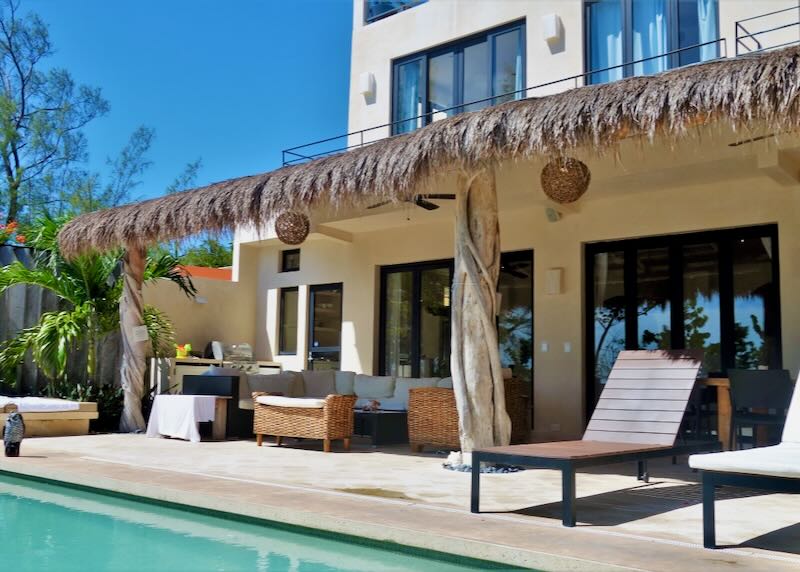
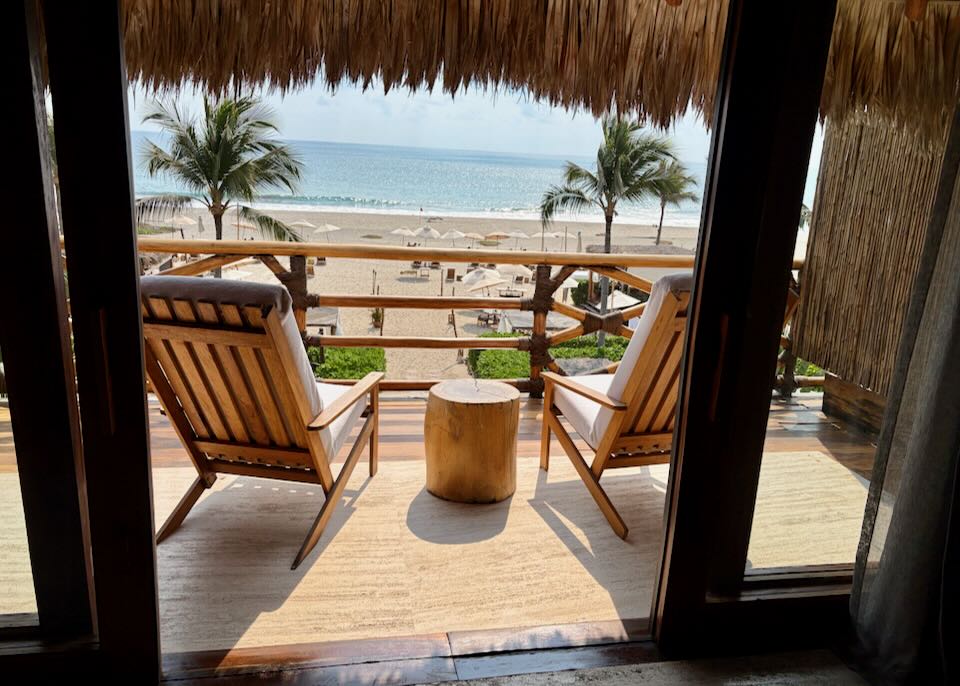
Book Tulum hotels far in advance. Suenos beach resort is one of our favorite places to stay in Tulum.

  • The Best Time for Good Weather: Late November through April has the sunniest weather with the least amount of rain, along with warm daytime temperatures with comfortable, occasionally cool nights. Expect some rain for visits from May until October, with June, September, and October being the wettest months. Even during the rainy seasons, storms usually last only an hour or two, then the sunny skies return – it’s rare to have two or three days of continual rain without any sun. May and August are the hottest months, with August feeling especially hot due to high humidity. Ocean temperatures are comfortable for swimming all year long but are warmest from July through October. Hurricanes are not common, but if they’re going to hit, it will most likely happen in September and October.
  • The Best Time for Great Deals: Room rates will be at their lowest in the off-season, from June through October, especially during September and October, Tulum’s two rainiest months. Though humidity is high every day and rain is likely on half of the days, storms typically only last an hour or two, then it’s back to sun and warmth. October typically sees the biggest lull in tourism, so be advised that many shops and tour operators take advantage of this break and close for a few weeks during this time. April through June, post-high-season and pre-hurricane season, also sees occasional good deals, though prices tend to vary more widely. The best hotels in Tulum should be booked 4 to 6 months in advance.
  • The Best Time for Avoiding Crowds: Crowds are at their smallest in late summer/early fall, especially during September and October, when rain, heat, and humidity are at their peaks. June through August sees gradually thinning crowds, while October is the least crowded month, especially earlier in the first half. Though fewer tourists means less crowded attractions, this also means that many smaller tour operators and restaurants close for their own vacations. The major attractions will still be open, though, and the beaches will be quieter. Plan accordingly, and you can have a great, relaxing time.
  • The Best Time for Sightseeing (Ruins and Jungles): November to April are the best months to explore the area’s wonderful historical, cultural, and natural attractions. These months tend to be dry and warm, but not too hot in the day. Humidity and heat are highest during the rainy season from May to October, with May and August being the hottest months, and June through September the most humid. This isn’t a problem when you’re on the beach and refreshed by ocean breezes, but inland sightseeing at Coba, Chichen Itza, and Sian Ka’an can feel overwhelming in the sticky heat. If you visit during the summer months, bring plenty of water and plan an afternoon cenote swim to cool off.
  • The Best Time for Swimming, Snorkeling & Diving: Oceans, reefs, and cenotes are truly wonderful all year round, though there are some fluctuations in conditions. Water temperatures are at their lowest in January and February and at their highest from July through October. September and October tend to have more rainy days, though, so July and August are the better of these four months for swimming. For diving and snorkeling, visibility is not great in the warmer, rainier months but rather during the drier months from November through May, especially during the months of January through March. For snorkeling with whale sharks in particular, visit in late May; the water is warm, visibility is good, and the first whale sharks have arrived.
  • Best Time for Whale Sharks and Sea Turtles: Tulum is one of the most reliable spots for seeing these two endangered animals. Whale sharks begin to arrive in May and are plentiful by June. From June through August, whale shark tours have almost 100% chance of locating these gentle giants, usually several at a time in one location. Whale sharks begin to leave the area in September and are almost all gone by the end of the month. Adult sea turtles begin nesting on the beaches in May, especially toward the end of the month and finish laying in October. The baby sea turtles begin hatching and heading seaward in July, continuing their nightly treks through December. The best time to see all three groups (whale sharks, nesting turtles, and baby turtles) is in July and August when all are fully present and active.
  • The Best Time for Honeymoons: Tulum is most beautiful from November through May, with ideal beach conditions and clear skies throughout these drier months, the perfect honeymoon mix. Early November and May offer the best mix of good weather, low-ish crowds, and good room rates for honeymooners celebrating on a bit of a budget. January through March has the best weather, with the most number of sunny days, and near-perfect beach conditions, but rates are higher and crowds are thicker.
  • The Best Time for Nightlife: December and January land in the peak travel season and are the best months for nightlife. Bars and clubs are all hopping, some open as late as 4:00 a.m. Dancers and partiers are in a celebratory mood, but without the craziness that spring break brings in March.

Tulum Festivals and Events

The Best Recurring Parties in Tulum

  • Tuesdays and WednesdaysBatey Mojito and Guarapo Bar: Relaxed but trendy bar, serving their famous mojitos made with fresh, pressed sugarcane from a converted VW Beetle. Live music most nights. Located in Downtown in the main bar and restaurant strip, walking distance to plenty more nightlife.
  • ThursdaysCasa Jaguar: Intimate, contemporary, Mexican bar and restaurant, featuring a Jungle Party with live DJs every Thursday night in the garden backyard.
  • FridaysGitano: Upscale mezcal bar and restaurant in a jungle beach setting with a DJ and live music several nights a week. Popular on Thursday nights for getting a jump start on the weekend, though most of their official events are on Fridays and Saturdays.
  • SaturdaysPapaya Playa Project: This is the biggest, most stylish party of the week every Saturday, but their Full Moon Parties are totally over the top, held monthly on the Saturday closest to the full moon. Vibe is chic and beach-cool with top-name DJs and dancing until 3:00am or later.

Tulum in January

  • Zamna Festival: From late December through mid-January, this EDM music festival is actually a loose collection of different DJ sets every couple of nights, with a different lineup and venue each night. Tickets are sold individually for each set.
  • New Year’s Day – Año Nuevo, or New Year’s Day, is a national holiday in Mexico. January 1 tends to be very quiet in Tulum and throughout the country, with everyone resting and recovering from festivities the night before. While most businesses are closed, restaurants and other places that cater to tourists are usually open.
  • Comunité Festival: Daylong music festival with an eco, Mexican, and world-cultural focus, at a jungle ranch with three cenotes and three stages. Live bands and DJs share the bill, with a special focus on acoustic styles and folkloric traditions. A portion of ticket sales go to benefit social and environmental efforts.
  • El Día de Los Reyes (Kings’ Day): January 6 is the twelfth day of Christmas, which is the traditional gift-giving day in Mexico. Children receive their presents, and the family eats together, especially a wreath-shaped, sweet bread called Rosca de Reyes. A baby Jesus figure is baked into the bread, and whoever finds it in their slice will host El Día de Candelaria, the upcoming holiday, and make the tamales for the celebration.
  • Arena Festival Internacional: Weeklong LGBT dance music festival, with local and international DJs spinning at twelve different parties in various locations in Playa del Carmen and Tulum, including the cenote Dos Ojos. Dancing goes from 1:00pm until 5:00am. Attendees receive bracelets covering the admission for the duration of the event. Parties are biggest in the smaller pueblos.

Tulum in February

  • El Día de Candelaria/Tamale Day: Candlemas falls 40 days after Christmas, on February 2nd, and is a celebration of the Presentation of Jesus at the Temple. It is also the midway point between the winter solstice and spring equinox. On this day, people dress up figurines of the baby Jesus and take them to the church to be blessed, along with candles. This is followed by a meal of tamales, hence its other name, with family and friends. Celebrations in Veracruz and huge, with parades and more, but in Tulum, this is a more intimate holiday.
  • Carnaval: Exact dates vary, but celebrations take place the whole week before Ash Wednesday, with the biggest parties the night before. Carnaval is celebrated in different parts of the Riviera Maya on different days, with the biggest celebration on Cozumel and usually the final party in Tulum. Expect parades, live music, wild costumes, lots of food and booze, and dancing in the streets.

Tulum in March

  • Alborada Maya: A fusion of Maya and Catholic celebrations unique to Tulum. Events mostly take place at the Mayan Ceremonial Center as well as the Church of Tulum. Maya priests perform ceremonies of thanksgiving for harvests, while pilgrimages, prayers, ceremonies, and music all blend in honor of the saints.
  • Tres Cruces: March 7-14. This holiday is unique to the Cruzo’ob, the Cult of the Talking Cross, a small faction of indigenous Maya from Quintana Roo, who practice a religion that blends Maya and Catholic faiths and is rooted in the Caste War of the mid-1800s. The ceremonial center is near the Tulum Ruins, and its saints and entry are protected by a guard, who permits visitors to enter barefoot, with bare heads, in silence, and by candlelight. This holiday is in honor of the three original talking crosses, crosses being both pre-Hispanic and Catholic imagery, who spoke words of encouragement to the Maya people in their uprising against the Spanish.
  • Wine and Food Festival, Cancun-Riviera Maya: Five-day celebration of food and wine, with renowned chefs and sommeliers from Mexico and the U.S. Events include dinners, taco competitions, beach parties, golfing, and more.
  • Spring Equinox at Chichen Itza: Occurring annually on March 20, the first day of spring, when the afternoon light hits the pyramid temple of El Castillo just right, it reveals a representation of Kukulkan. The feathered serpent god seems to appear and climb down the side. This amazing event happens twice yearly at the spring and autumn equinoxes, amazing visitors with the astronomical and mathematical prowess of the ancient Maya peoples. It is usually very crowded on the equinoxes and tons of fun. If you prefer to avoid the crowds, you may still see the effect two days before or after the actual equinox.

Tulum in April

  • El Día del Niño (Children’s Day): A holiday filled with fun, gifts, and special activities just for kids. Though not an official holiday, many schools don’t hold classes this day. Zoos, amusement parks, and attractions often offer special discounts on April 30. Travelers can also participate by handing out toys or candy to street kids.

Tulum in May

  • Festival de Cultura del Caribe: Celebration of Maya, Mexican, and Caribbean culture through food, music, dance, literature, film, and more. The eight-day celebration takes place in a variety of venues throughout the city and features a variety of local and international acts.
  • Cinco de Mayo: Not actually a holiday here and only really celebrated in Puebla. Many bars will run drink specials, though!
  • Sacred Mayan Journey/Travesia Sagrada: Annual recreation of a thousand-year-old pilgrimage from Xcaret to Cozumel in worship of the fertility goddess Ixchel. Roughly 300 men and women row canoes across the ocean beginning at dawn and making their return journey the following dawn. Rituals, music, and dance begin and end the event. A feast awaits the rowers in Cozumel, but the biggest celebration is in Xcaret upon their return.

Tulum in June

  • Fête de la Musique: French-based music festival taking place in 100 countries at once. Taking place in Playa del Carmen, this event celebrates the first day of summer, June 21, with food, dance, cultural activities, and more. Proceeds benefit a local charity.

Tulum in July

  • Festival del Triciclo/Tricycle Festival: Playa del Carmen’s celebration of the tricycle, the crucially important vehicle traditionally used by fishermen to haul their catch, by street vendors to carry their wares, and by travelers transporting their luggage. The festival begins with a parade of wildly decorated tricycles down 5th Avenue to Parque Fundadores. Once at the park, prizes will be awarded to the best-decorated trikes, followed by live music and bites from food trucks and restaurants alike.

Tulum in August

  • ZoukMX: Ten-day music and dance festival in Playa del Carmen on the beach and in the jungle. This event begins with several teacher workshops, followed by days and nights on end of dancing to zouk, a fast tempo, Caribbean dance music.
  • Assumption of the Virgin Mary – Celebrated nationwide in mid-August, there are special masses held throughout the country, including Cancun. Though some cities will host processions, Cancun typically does not.

Tulum in September

  • El Grito and Independence Day: Celebrations begin in the afternoon on September 15 in the main square downtown with mariachi music, dancing, and carnival rides. Street vendors and restaurants serve all kinds of goodies, especially pozole and mole. Tequila and mezcal are the major drinks here. At 11 pm, the grito, or cry for independence, is called with bells ringing and fireworks. The country’s biggest party begins immediately after and goes well into the night.
  • Autumn Equinox at Chichen Itza: Occurring annually on September 22, the first day of fall, when the late afternoon light hits the pyramid temple of El Castillo just right, it reveals a shadow image of the feathered serpent god Kukulkan, just as it does in spring. However, September is the rainiest month of the year, and sometimes the cloud coverage prevents Kukulkan from making an appearance. Additionally, with daylight savings time, the event occurs after the park is closed for the evening. Some years, the park stays open late to accommodate the event, but other times, they close at the usual schedule. Check the weather and check the park’s officially posted hours before planning a trip out. It’s a long drive!

Tulum in October

  • Turtle Festival/Festival de la Tortuga Marina: A free, three-day event celebrating the sea turtle, with various events taking place in Tulum, Akumal, and Xcacel. The family-friendly festival centers on educating and encouraging sea turtle conservation. Activities include a turtle hatchling release, Maya ceremony, cookout, sandcastle competition, music, carnival, and more.
  • Día de las Brujas (Halloween): Though not traditionally celebrated in Mexico, Halloween has been catching on in the past few years. Smaller parties take place in Tulum and Puerto Morelos on October 31st, but Playa del Carmen has the biggest celebration, especially along 5th Avenue with costumes and trick or treating.

Tulum in November

  • Day of the Dead: November 1-2. Known as Hanal Pixan in Yucatan Maya. This is actually two holidays rolled into one, Día de Todos Santos (All Saints Day) and Día de los Muertos (Day of the Dead, All Souls Day). On All Saints Day, Mexicans honor deceased children, leaving offerings to them on custom-designed altars in cemeteries or in their homes, with sugar skulls, toys, and treats. Day of the Dead is similar but for the souls of deceased adults. People decorate altars in their homes or in cemeteries, some keeping vigils and others leaving offerings, usually tequila, cigarettes, and the deceased’s favorite foods. Candles and trails of marigold petals are led from the altars to light the way for the spirit’s return. Unlike Oaxaca, Mexico City, and the tourist zone of Cancun, celebrations in Tulum are more low-key, without the big parades and fanfare. Though travelers can visit the cemeteries to see the altars, those are usually smaller and more intimate for families. The competition altars in Downtown are more elaborately designed, free to visit, and are usually more festive in the evening. For more of a family-friendly celebration, visit Xcaret Eco Park from October 30-November 2 for their special event with food, dancing, music, and performances.
  • Riviera Maya Jazz Festival: Free, three-day music festival, attracting major acts and anywhere from 9,000 to 15,000 attendees a night. The stage sets up on the beach near Mamita’s, with music beginning in the afternoon until late in the evening. Arrive early if you plan on sitting down; the area near the stage allows attendees to bring beach blankets and chairs. The back of the crowd is standing room only.
  • Tulum Food, Spirits, and Wine Festival: Four-day event featuring highly awarded local and international chefs and mixologists as they fuse their knowledge and talent with local spices, produce, and gastronomical traditions. Events range from street food to elegant dinner parties, along with tequila, wine, and mezcal tastings. Proceeds benefit a local charity.
  • Mayakoba Golf Championship: An official, PGA tour with over 100 pro-golfers competing for a huge prize in four rounds over the course of one week. The event takes place in Mayakoba at the El Camaleón golf course just north of Playa del Carmen. Some of the proceeds benefit local charities.

Tulum in December

  • Antorchas Guadalupanas and Día de la Virgen de Guadalupe: One of the most important Mexican Catholic holidays, December 12 celebrates the appearance of the Virgin Mary to an indigenous convert, Juan Diego. The holiday begins its celebration with a series of relay race pilgrimages, the Antorchas Guadalupanas, where runners take turns carrying a torch. The runners reach their destination in Downtown Tulum on December 12, and the main festival begins, with mass, food, music, dancing, and flowers. Though celebrated throughout the Riviera Maya, Tulum has the largest celebration.
  • Dos Equis Winter Beach: Three-day music, fashion, and entertainment festival, featuring internationally renowned DJs, beachfront catwalks debuting swimsuit and beachwear collections, and dance parties at Papaya Playa.
  • Christmas: Christmas Eve sees family and friends celebrating throughout town, often with a late night mass, followed by a midnight feast with mole, ham, and more. Christmas Day is much quieter, with most families celebrating at home.
  • Día de Los Santos Inocentes/Day of the Holy Innocents: December 28. This is basically a Mexican April Fool’s Day. Originally meant to commemorate the deaths of the Holy Innocents, the children slaughtered by King Herod in an attempt to kill the baby Jesus, the holiday has evolved into a day of pranks. Once someone is fooled, it is customary to say to them, “Innocent little dove that you let yourself be deceived.” This is also a day where people are known to borrow items and never return them.
  • Zamna Festival: From late December through mid-January, this EDM music festival is actually a loose collection of different DJ sets every couple of nights, with a different lineup and venue each night. Tickets are sold individually for each set.

Read More
Best Time to Visit Cancun

Mexico › Cancun When to Go
Updated: March 23, 2023

See Also

When is the Best Time to Visit Cancun?

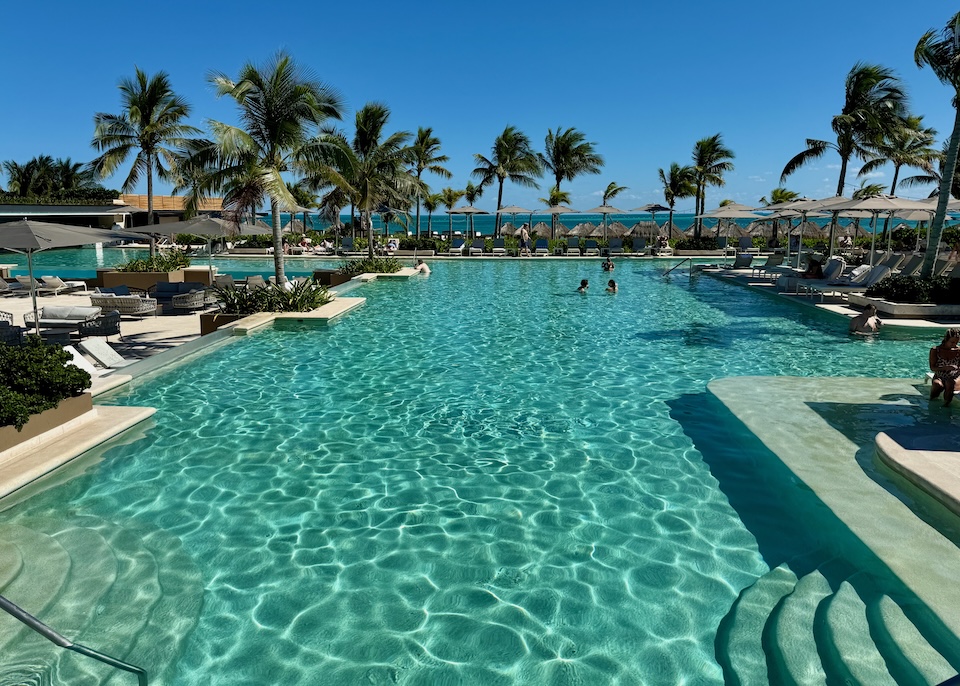
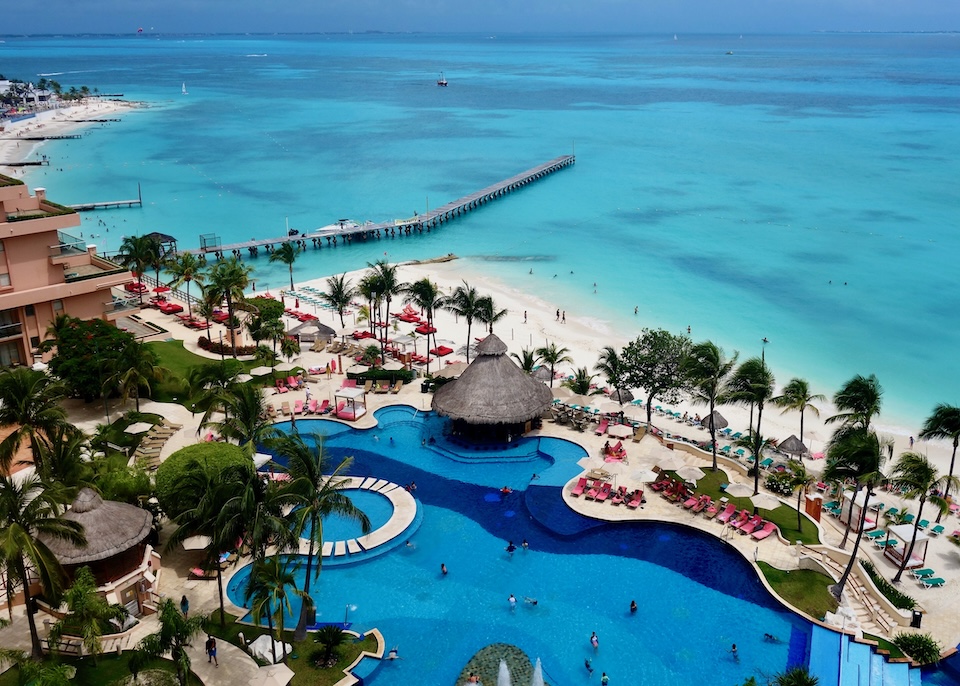
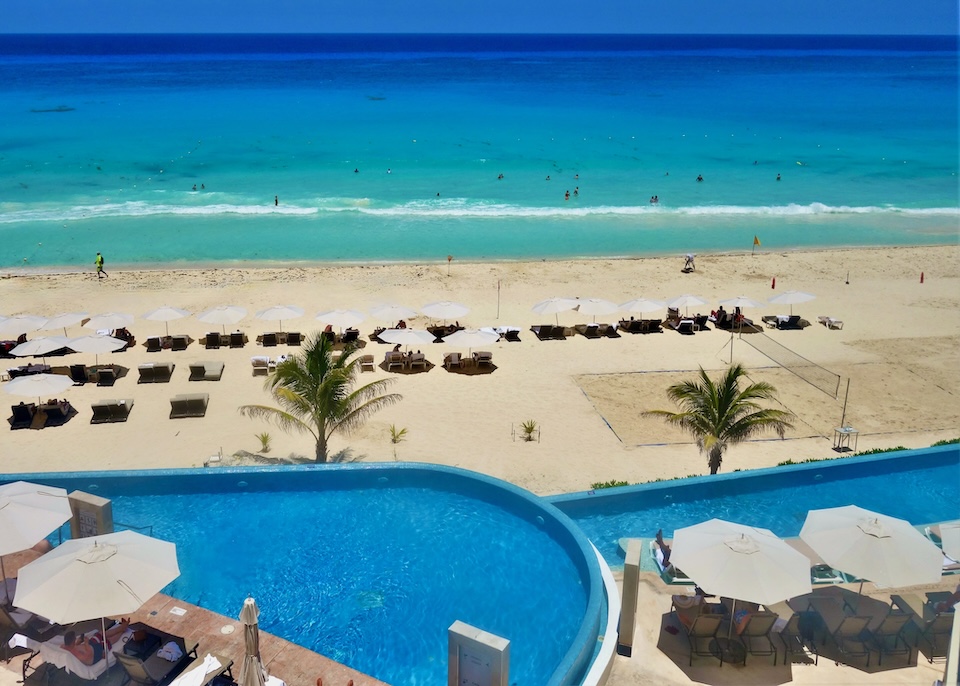
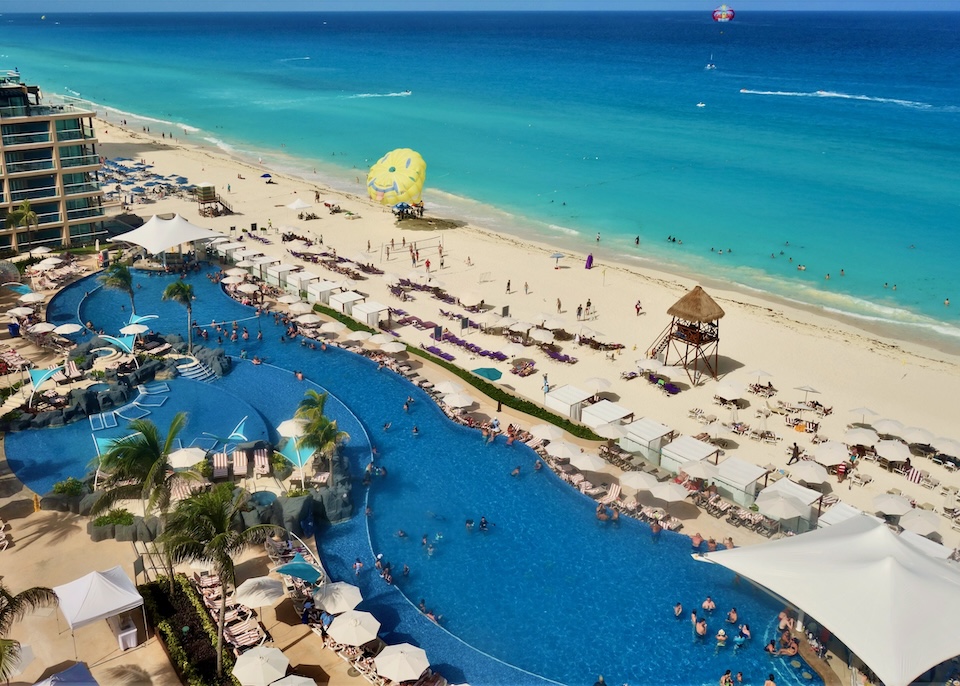
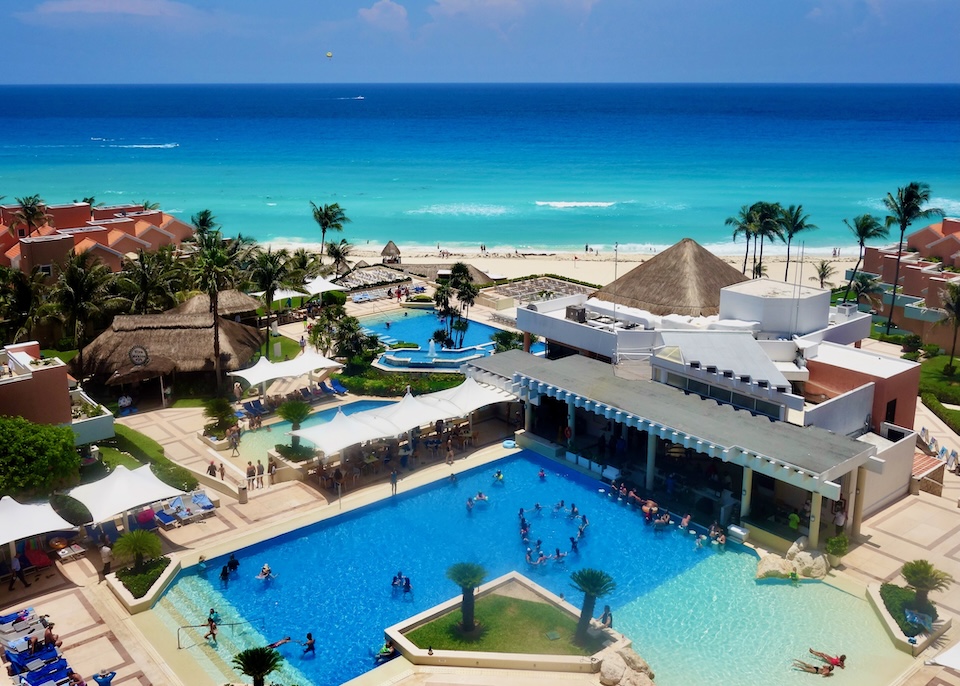
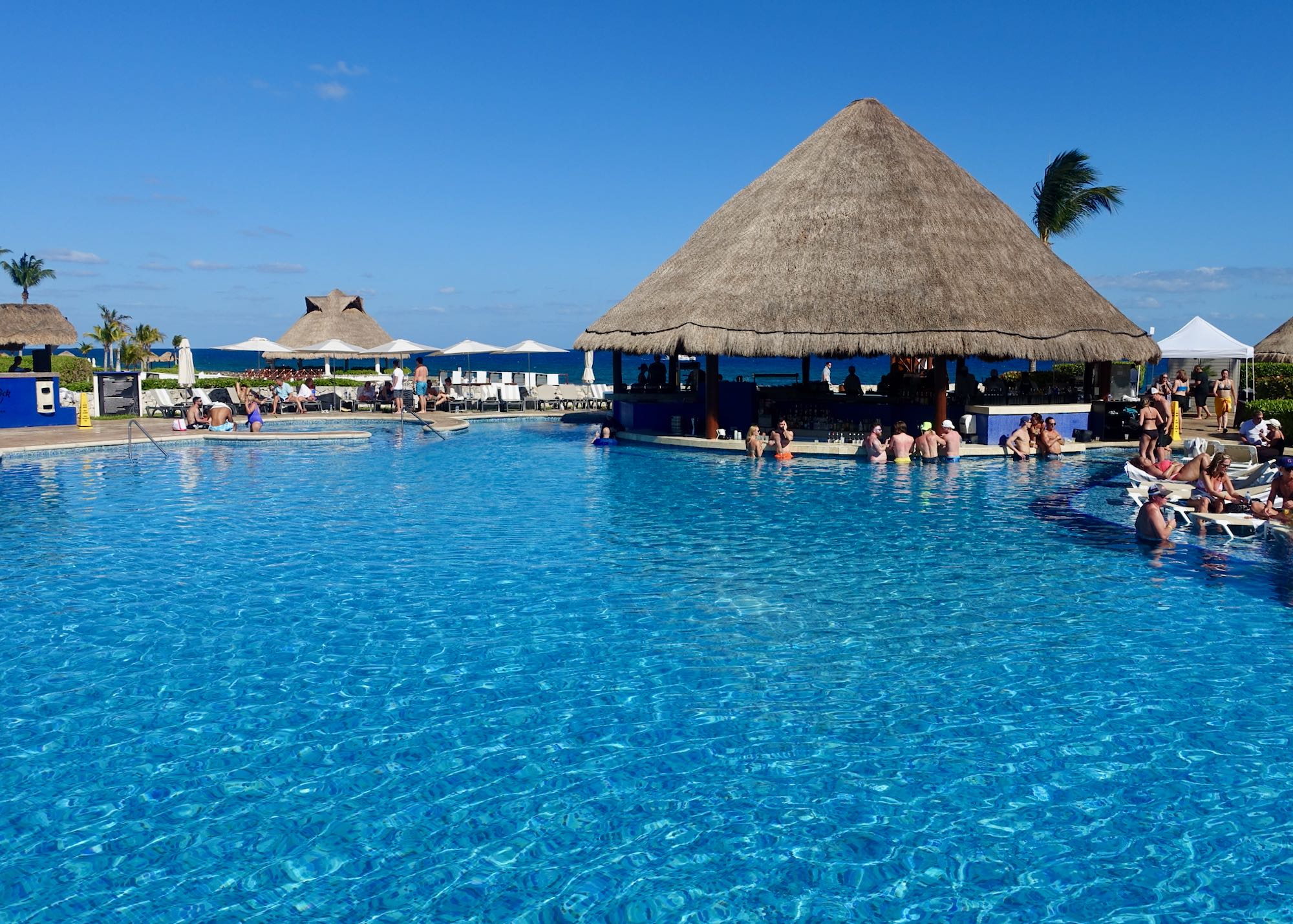
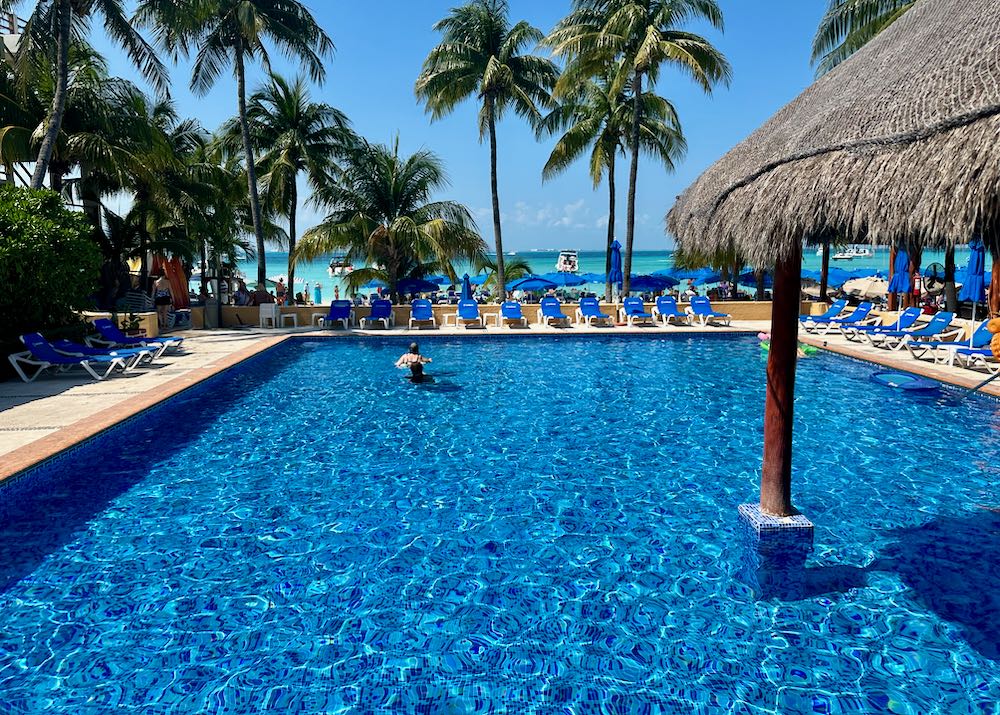
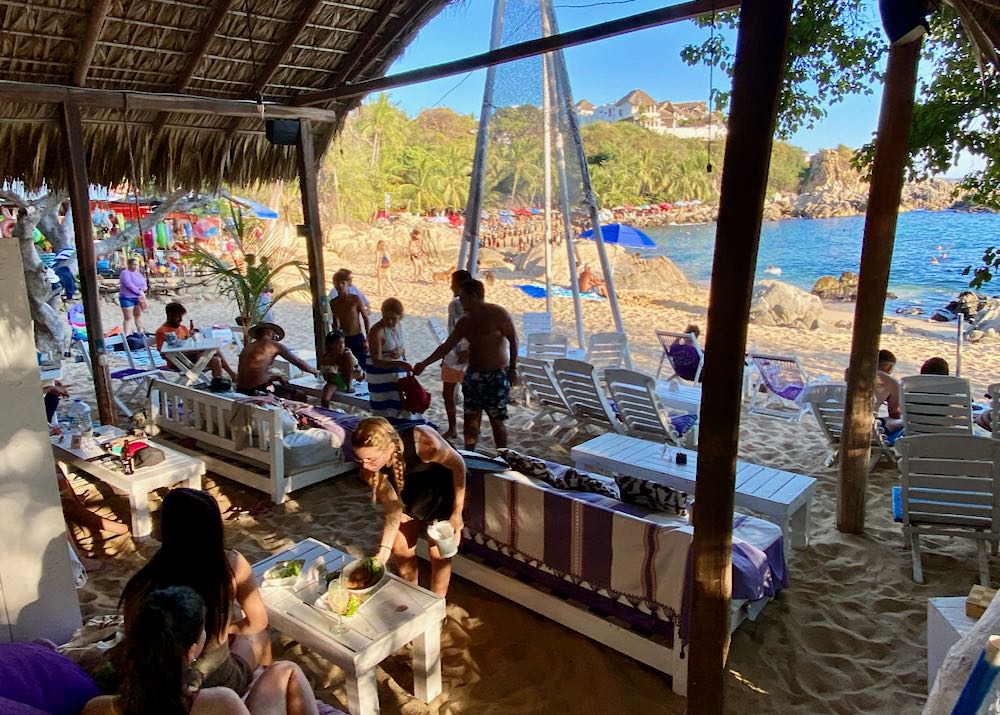
Pool and beach at Cancun resort.

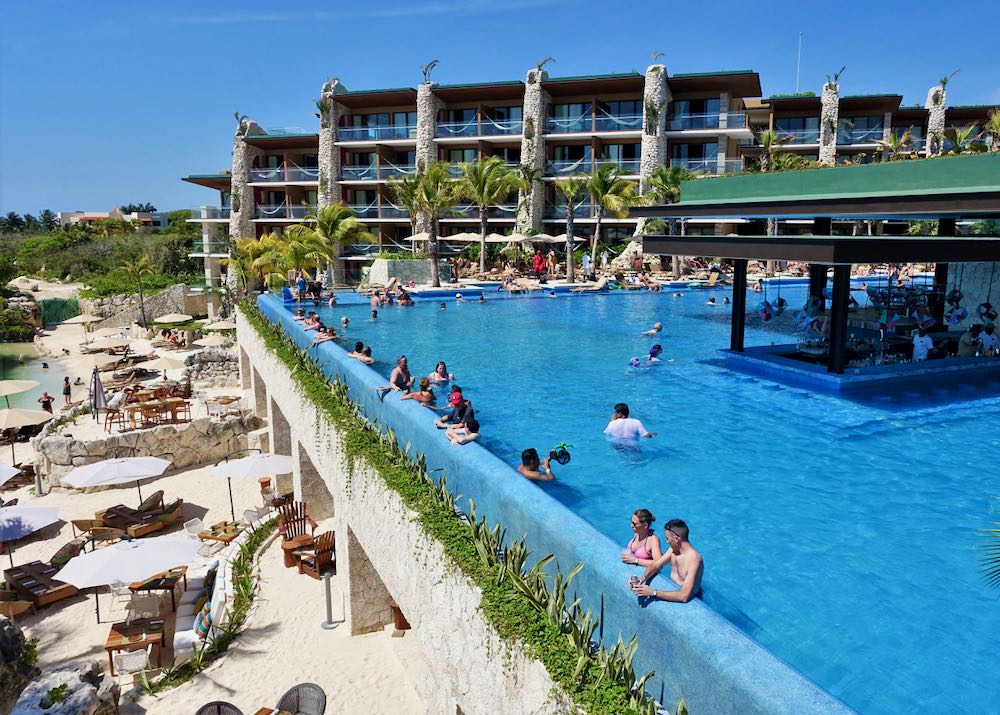
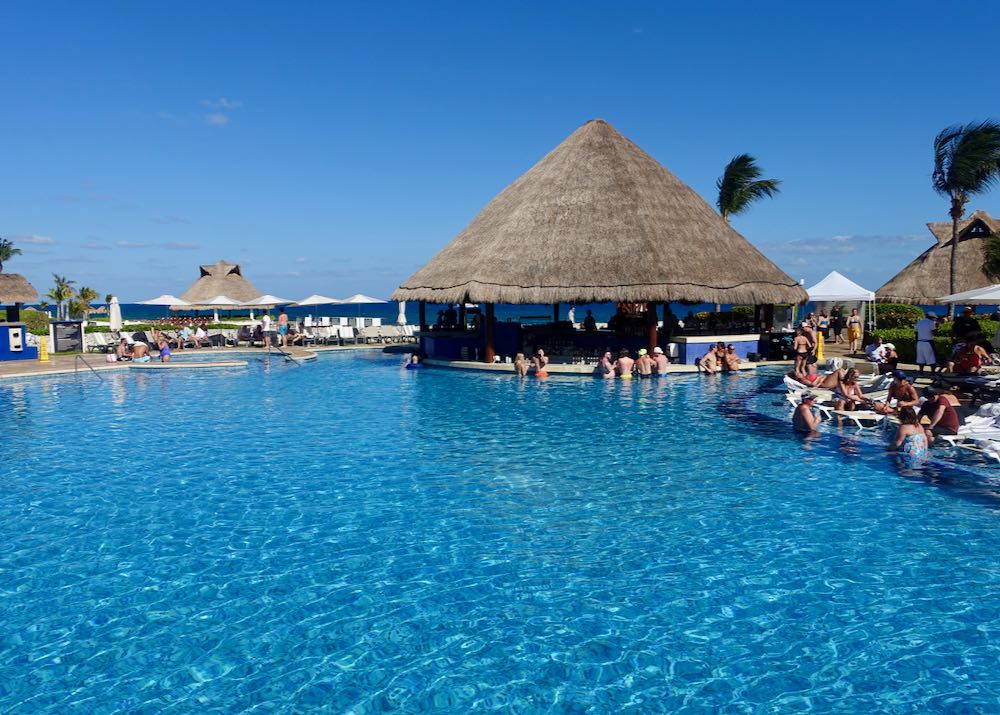
The pool bar and beach at the fantastic Hyatt Ziva in the heart of Cancun.

The best time to visit Cancun depends on your preferences for weather, activities, and crowd levels. Generally, the most popular time to visit Cancun is during the dry season, which runs from December to April. The weather is typically sunny and warm, with temperatures ranging from 75°F (24°C) to 85°F (29°C).

The peak tourist season in Cancun is from mid-December to March, coinciding with winter breaks and holidays in North America and Europe. During this time, you can expect higher prices for accommodations, more crowded beaches, and a vibrant nightlife scene. If you don’t mind the crowds and are looking for the best weather conditions, this is a great time to visit.

The shoulder season from April to early June can also be an excellent time to visit Cancun. During this period, the weather remains warm and pleasant, but the crowds start to thin out, and accommodation prices are generally lower. This is a good time to enjoy the beaches, attractions, and activities without the peak-season crowds.

The low season, which runs from June to November, coincides with the rainy season and hurricane season in the region. Although there is a higher chance of rain and storms, you can still enjoy warm weather and fewer crowds. Prices for accommodations and activities are usually lower during this time, making it a more budget-friendly option.

  • Best Time to Visit Cancun for Good Weather: Cancun weather can be enjoyable year round, though it is particularly pleasant from the end of December through April, with January through March being the absolute peak time for fantastic weather. These months have the least amount of rain and humidity, the balmiest temperatures, and the sunniest skies. Expect gorgeous conditions on Cancun’s beaches nearly every day, and pleasant weather for exploring the ruins and jungles inland. Ocean temperatures are cooler than during the summer months, but still comfortable for swimming. Night and early morning temperatures are mostly warm during this time, but can get a little cool from December through February.
  • Best Time to Visit Cancun for Great Deals: The best time for great deal is during the summer rainy season, from July through October, with especially discounted prices in September, October, and November. This coincides with hurricane season, but hurricanes have only landed here twice in the past thirty years. The vast majority of days during the wet season are hot and humid, with rain in short bursts. For travelers who don’t mind the heat and occasional rain shower, this is a good time to visit. Hotel rates are supremely discounted, and deal-hunters will also find cheaper fares on flights and excursions. Travelers during these months can save hundreds, even thousands, of dollars versus any other time of the year.
  • Best Time to Visit Cancun for Avoiding Crowds: The best time for avoiding crowds is during the rainy season, from June through October, especially in September and October. As mentioned before, these months line up with hurricane season, though storms are very rare. Travelers during this time will find beaches blissfully empty and tours to the ruins almost private. Be advised that because there are fewer travelers at this time, many tour operators and restaurants close down for their own breaks, especially during the month of October.
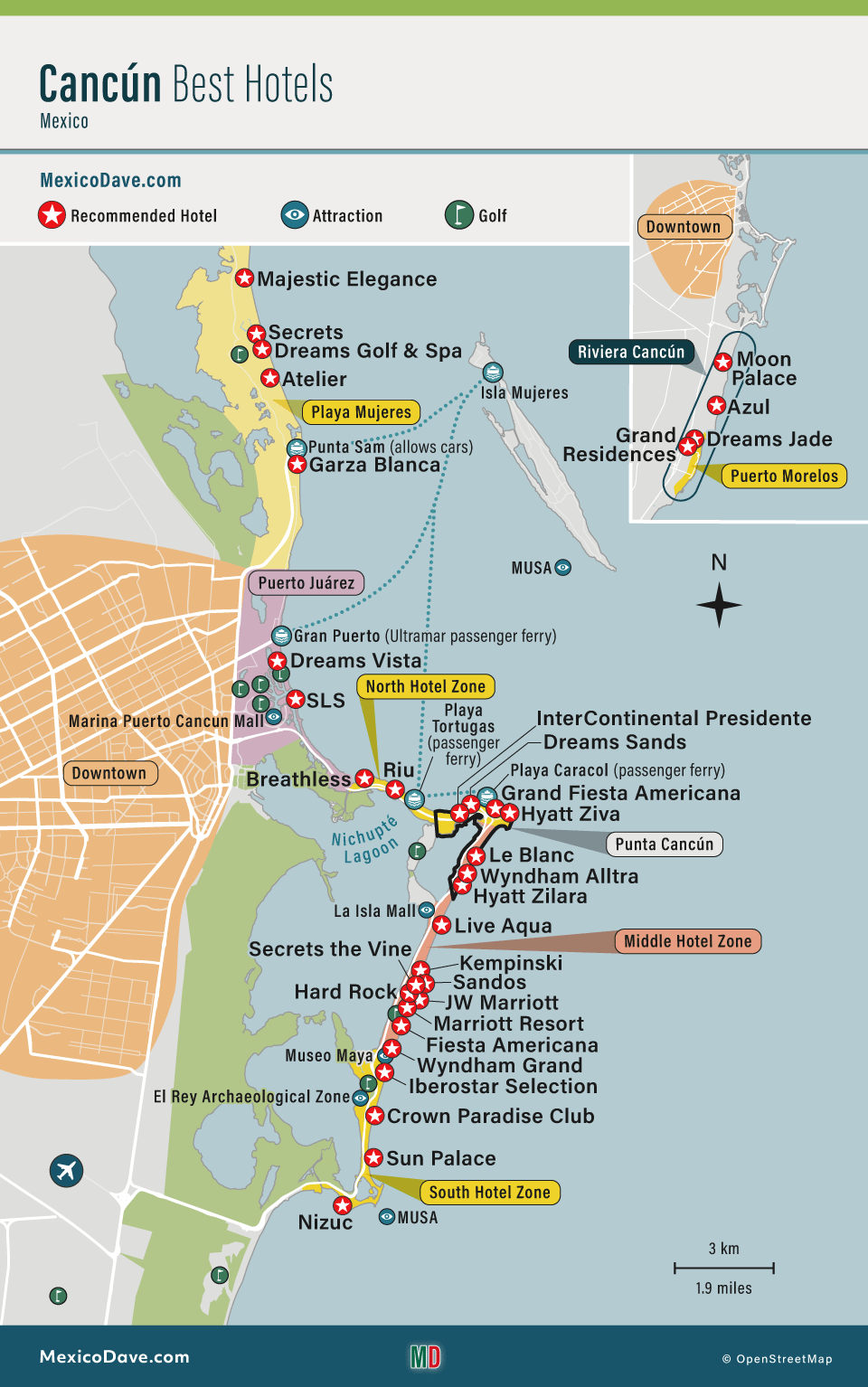
  • Best Time to Visit Cancun for Swimming, Snorkeling, and Diving: Oceans, reefs, and cenotes are truly wonderful all year round, though there are some fluctuations in conditions. Water temperatures are at their lowest in February and March and at their highest from July through October. September and October tend to have more rainy days, though, so July and August are the better of these four months for swimming. For diving and snorkeling, Cancun is not the best spot. Though it’s fronted by a huge reef and filled with wildlife, the water is often rough enough to reduce visibility, plus the coral near the main Hotel Zone is mostly dead. Snorkeling and diving tours usually take visitors to nearby Isla Mujeres, MUSA, or Punta Nizuc at the south end of the Hotel Zone, where the water is calmer and clearer with active marine life. Visibility is best in the drier months, from November through May, especially during the months of January through March. For snorkeling, with whale sharks in particular, visit in late May; the water is warm, visibility is good, and the first whale sharks have arrived.
  • Best Time for to Visit Cancun Whale Sharks and Sea Turtles: Cancun is one of the most reliable spots for seeing these two endangered animals. Whale sharks begin to arrive in May and are plentiful by June. From June through August, whale shark tours have almost 100% chance of locating these gentle giants, usually several at a time in one location. Whale sharks begin to leave the area in September and are almost all gone by the end of the month. Adult sea turtles begin nesting on the beaches in May, especially toward the end of the month and finish laying in October. The baby sea turtles begin hatching and heading seaward in July, continuing their nightly treks through December. The best time to see all three groups (whale sharks, nesting turtles, and baby turtles) is in July and August when all are fully present and active.
  • Best Time to Visit Cancun for Honeymoon: Cancun is most beautiful from December through May, with ideal beach conditions and clear skies throughout these drier months, the perfect honeymoon mix. Early December, April, and May offer the best mix of good weather, low-ish crowds, and good room rates for honeymooners celebrating on a bit of a budget. January through March has the best weather, with the most number of sunny days, and near perfect beach conditions, but rates are higher and crowds are thicker.
  • Best Time to Visit Cancun for Nightlife: Cancun always has great nightlife, with parties going on continually at all of the uptown clubs and bars near Punta Cancun in the Hotel Zone. However, different times of the year attract different party crowds. Cancun is most legendary for its Spring Break, with wild parties all day and night, top international DJs, and bikini contests throughout the whole month of March. June through mid-July also see tons of partying, this time for high-school grads cutting loose before college begins. The legal drinking age is 18 in Mexico, but IDs are rarely checked. For amazing, grown-up nightlife, visit from December through February. Clubs and bars still get crazy, but the crowds’ average age is over 25, and they’re less likely to barf on your shoes.
  • A Note About Spring Break: While Cancun was once infamous for its huge, noisy crowds of spring breakers and a destination to avoid during the month of March, by staying outside of the main drag, not venturing into the clubs late at night and simply avoiding hotels that cater to that group, you’ll enjoy a relatively peaceful environment. Those who want to find a party can easily do so, while those who prefer a more subdued atmosphere can find that as well.

Cancun Events and Festivals

Cancun in January

  • New Year’s Day – Año Nuevo, or New Year’s Day, is a national holiday in Mexico. January 1 tends to be very quiet in Cancun and throughout the country, with everyone resting and recovering from festivities the night before. While most businesses are closed, restaurants and other places that cater to tourists are usually open.
  • Mayan Village Show – At Xcaret Park, located about an hour from Cancun, recreations of ancient Mayan festivals, including a jungle walk and celebration of the discovery of fire, take place throughout the month of January.
  • Día de los Tres Reyes (Kings’ Day): January 6 is the twelfth day of Christmas, which is the traditional gift-giving day in Mexico. Children receive their presents, and the family eats together, especially a wreath-shaped, sweet bread called Rosca de Reyes. A baby Jesus figure is baked into the bread, and whoever finds it in their slice will host El Día de Candelaria, the upcoming holiday, and make the tamales for the celebration.

Cancun in February

  • El Día de Candelaria/Tamale Day: February 2. Candlemas falls 40 days after Christmas and is a celebration of the Presentation of Jesus at the Temple. It is also the midway point between the winter solstice and spring equinox. On this day, people dress up figurines of the baby Jesus and take them to the church to be blessed, along with candles. This is followed by a meal of tamales, hence its other name, with family and friends. Celebrations in Veracruz and huge, with parades and more, but in Cancun, this is a more intimate holiday.
  • Carnaval: Exact dates vary, but celebrations take place the whole week before Ash Wednesday, with the biggest parties the night before. Carnaval is celebrated in different parts of the Riviera Maya on different days, with the biggest celebration on Cozumel. Cancun’s Carnaval is surprisingly intimate, taking place in Downtown away from the main tourist zone. Expect parades, live music, wild costumes, lots of food and booze, and dancing in the streets. Street vendors will be selling amazing local specialties, while candies and other goodies will be raining down from the parade floats.
  • Island Time Music & Fishing Festival: Six-day festival in Isla Mujeres. Local and world-renowned musical acts play in small venues around the island, while fishermen chase sailfish through the local waters. Proceeds benefit the Little Yellow Schoolhouse, serving special needs children on the island.

Cancun in March

  • Inception Music Festival: The largest Spring Break party in the world, lasting 30 straight days and nights and featuring top-name musical acts and DJs. Events take place every night at the clubs in Punta Cancun, including The City, Dady’O, Mandala, and Palazzo. Day parties take place at Mandala Beach, while exclusive day parties also go on at the Oasis Resort.
  • Wine and Food Festival, Cancun-Riviera Maya: Five-day celebration of food and wine, with renowned chefs and sommeliers from Mexico and the U.S. Events include winemaker and celebrity chef dinners, taco competitions, beach parties, golfing, and more.
  • Spring Equinox at Chichen Itza: Occurring annually on March 20, the first day of spring, when the afternoon light hits the pyramid temple of El Castillo just right, it reveals a representation of Kukulkan. The feathered serpent god seems to appear and climb down the side. This amazing event happens twice yearly at the spring and autumn equinoxes, amazing visitors with the astronomical and mathematical prowess of the ancient Maya peoples. It is usually very crowded on the equinoxes and tons of fun. If you prefer to avoid the crowds, you may still see the effect two days before or after the actual equinox.
  • Laser Sailing Show: During the second half of March, this event attracts sailboat enthusiasts and merchants from around the world. The waters around Cancun are filled with sailing vessels of all types, big and small, that roam the coastline for two weeks.

Cancun in April

  • Anniversary of the Founding of Cancun: Cancun’s history is relatively new. A master-planned tourism community founded in 1970, the event is put on by families of the city’s founders. This month-long celebration is held at various locations in Downtown and features masses, music, exhibitions, and a parade down Avenue Tulum.
  • Holy Week – Holy Week is celebrated nationwide, from Palm Sunday to Easter Sunday, which typically falls in early to mid-April. In Cancun, just about everything stays open during this period to cater to tourists, and it’s usually very busy. If you plan to travel to Cancun during Holy Week, make your reservations as early as you can as flights in and out of Mexico are typically filled months in advance. Easter services are held at churches of various dominations, though mostly Catholic.
  • El Día del Niño (Children’s Day): A holiday filled with fun, gifts, and special activities just for kids. Though not an official holiday, many schools don’t hold classes this day. Zoos, amusement parks, and attractions often offer special discounts on April 30. Travelers can also participate by handing out toys or candy to street kids.

Cancun in May

  • Cinco de Mayo: May 5th is a national holiday that commemorates the country’s defeat of the French in the Battle of Pueblo in 1862. Unlike in the States, it’s pretty much a regular day in Cancun, with not much in the way of celebrations. There are usually drink specials in the bars, and some of the resorts might do a small party, but it will be all for tourists. The only spot in Mexico that really celebrates Cinco de Mayo is in Puebla, more than a day’s drive away.
  • Festival de Cultura del Caribe: Celebration of Maya, Mexican, and Caribbean culture through food, music, dance, literature, film, and more. The eight-day celebration takes place in a variety of venues throughout the city and features a variety of local and international acts.
  • Cancun Jumpoff: This is like Spring Break for grown-ups. A four-day music festival, with live acts and DJs spinning the best in hip-hop, r&b, reggae, and soca. One water park day, plus beach parties, lingerie parties, and overnight after-parties keep the action going non-stop.
  • Regata del Sol a Sol: A 456-mile yacht race beginning in April in St. Petersburg, Florida and ending in early May in Isla Mujeres. Events include a basketball tournament and the Regata Amigos, post-race sail around the island.
  • Sacred Mayan Journey/Travesia Sagrada: Annual recreation of a thousand-year-old pilgrimage from Xcaret to Cozumel in worship of the fertility goddess Ixchel. Roughly 300 men and women row canoes across the ocean beginning at dawn and making their return journey the following dawn. Rituals, music, and dance begin and end the event. A feast awaits the rowers in Cozumel, but the biggest celebration is in Xcaret upon their return.

Cancun in June

  • Día de la Marina – Mexico’s Navy Day is celebrated on June 1 in all coastal towns, including Cancun, to acknowledge the country’s maritime service men and women. It’s commemorated with military parades and fireworks.
  • ExpHotel – The most recognized event in Mexico for the hospitality industry is an international affair open to the public showing the latest products and services as well as hosting seminars and workshops by leading experts, competitions among prestigious chefs and the Festival of Cheese, Bread and Wine.
  • Festival de los Oceanos: From mid-May through mid-June, this event is designed to encourage ocean conservation. Events include concerts, kids’ drawing competitions, beach cleanups, and competitive cooking, along with plenty of fun beach and ocean activities. Most events are free, though some require registration ahead of time.
  • Pride Cancun: Pride is a smaller celebration in Cancun, lasting just a weekend. Though there is no parade, there are beach parties, sunset cruises, parties in Downtown, events at the ruins, and special nights at all of the major clubs.

Cancun in July

  • El Día Fuera del Tiempo: According to the Maya calendar, July 26 is the first day of the new year. The more important day of celebration comes on the 25th, El Día Fuera del Tiempo, or The Day Out of Time. This is a day for reflecting on the past year and the lessons learned, while also being a day in which anything can happen. Festivities are scattered throughout the Riviera Maya, with the biggest ones held in Tulum, lasting as long as five days, and smaller ones at several Cancun resorts.
  • Isla Mujeres Whale Shark Festival: Week-long celebration of the whale shark, including family-friendly activities daily at the main fair, with sand sculpture and piñata contests, a parade, live music, and food competitions with local chefs. Water activities include a fishing tournament, diving and snorkel tours, and swimming with the whale sharks.
  • Destination X The Urban Summer Oasis: Wild five-day festival in the heart of Cancun’s nightlife district with DJs spinning hip-hop, r&b, and reggae. Events include bikini contests, late night hookah parties, a booze cruise, beach parties, and plenty of dancing.

Cancun in August

  • ZoukMX: Ten-day music and dance festival in Playa del Carmen on the beach and in the jungle. This event begins with several teacher workshops, followed by days and nights on end of dancing to zouk, a fast tempo, Caribbean dance music.
  • Assumption of the Virgin Mary – Celebrated nationwide in mid-August, there are special masses held throughout the country, including Cancun. Though some cities will host processions, Cancun typically does not.

Cancun in September

  • El Grito and Mexican Independence Day: Celebrations begin in the afternoon on September 15 in Downtown near City Hall with mariachi music, dancing, and amazing food, especially chiles en nogada, pozole, and mole. Tequila and mezcal are the major drinks here. At 11p, the grito, or cry for independence, is called with bells ringing and fireworks. The country’s biggest party begins immediately after and goes well into the night. Downtown has the most authentic celebrations, but the biggest parties for travelers take place at the nightclubs and bars in the Hotel Zone, especially at Carlos’n Charlie’s and Señor Frog. On Independence Day itself, September 16, a grand military parade winds through downtown, attracting thousands of spectators.
  • Salsa Casino Mayan Congress: Four-day celebration of salsa dance with live music, parties, and workshops. Classes expand from traditional salsa to include Afro-Cuban dance, Casino Wheel, Rumba, Folklore, and more.
  • Autumn Equinox at Chichen Itza: Occurring annually on September 22, the first day of fall, when the late afternoon light hits the pyramid temple of El Castillo just right, it reveals a shadow image of the feathered serpent god Kukulkan, just as it does in spring. However, September is the rainiest month of the year, and sometimes the cloud coverage prevents Kukulkan from making an appearance. Additionally, with daylight savings time, the event occurs after the park is closed for the evening. Some years, the park stays open late to accommodate the event, but other times, they close at the usual schedule. Check the weather and check the park’s officially posted hours before planning a trip out – It’s a long drive!

Cancun in October

  • Cancun Travel Mart – In mid-October, the Cancun Travel Agent Association and the Cancun Hotel Association hold this annual convention, part of which is open to the public, showcasing food, hotels and other services offered in the area.
  • Cancun Jazz Festival: Four-day music festival featuring some of the top names in contemporary jazz. This all-inclusive festival takes place at the Hard Rock Hotel Riviera Maya, near Tulum. Pre-festival concerts will take place a few days ahead of the main event.
  • Día de la Raza (Columbus Day) – This holiday celebrated nationwide on October 12 commemorates the fusion of the Spanish and Mexican peoples. In Cancun and many other places throughout the country, colorful parades are often held.
  • Día de las Brujas (Halloween) – Traditionally on this day, residents bring flowers and candles to the graves of loved ones on the evening of October 31; however, in Cancun and many other popular tourist destinations, it’s celebrated similar to how it is in the U.S., with kids dressing up and trick-or-treating, and costume-wearing adults heading to bars and clubs. Dady’O consistently throws the best Halloween parties in the area. It’s a good idea to bring your own costume, as local shops will have a very limited selection.

Cancun in November

  • Day of the Dead: November 1-2. Known as Hanal Pixan in Yucatan Maya. This is actually two holidays rolled into one, Día de Todos Santos (All Saints Day) and Día de los Muertos (Day of the Dead, All Souls Day). On All Saints Day, Mexicans honor deceased children, leaving offerings to them on custom-designed altars in cemeteries or in their homes, with sugar skulls, toys, and treats. Day of the Dead is similar but for the souls of deceased adults. People decorate altars in their homes or in cemeteries, some keeping vigils and others leaving offerings, usually tequila, cigarettes, and the deceased’s favorite foods. Candles and trails of marigold petals are led from the altars to light the way for the spirit’s return. There are usually parties in the nightclub area in the Hotel Zone, but travelers can also head Downtown for a more traditional experience in one of the many parks, including Parque las Palapas, Luum Pakul, or at the Centro Cultural de las Artes. Daily from October 31-November 2 there is a parade from Avenues Chichen Itza and Tulum to Parque las Palapas, plus performances, foods, and elaborate altars. The eco-tour group Alltournative usually offers a special Hanal Pixan event on November 2, an immersive Maya experience with altar decorating, a ceremony performed by a shaman at a cenote, and a traditional Maya dinner.
  • Golf Championship at Mayakoba: An official, PGA tour with over 100 pro-golfers competing for a huge prize in four rounds over the course of one week. The event takes place in Mayakoba at the El Camaleón golf course just north of Playa del Carmen. Some of the proceeds benefit local charities.
  • International Festival of Caribbean Culture: Six-day festival with events held throughout Quintana Roo and Cancun. The event is most popular for its amazing musical lineup featuring the top Caribbean salsa groups, along with poetry and lots of dancing.

Cancun in December

  • Cancun Marathon: aka The Most Beautiful Marathon in the World. The marathon path begins and ends in Downtown, with most of the course following Boulevard Kukulkan for the length of the Hotel Zone, passing the beach and lagoon. A live mariachi band awaits runners at the finish line.
  • Sunset Boat Parade: Annual, holiday event at Jardin del Arte, the sculpture park facing the Nichupte Lagoon. A parade of lit-up, decorated boats begins at sunset, with live music, food, and craft vendors. Family-friendly and always free.
  • Christmas Week – Christmas Week (December 16-25) is celebrated with processions and mass, and children go door-to-door singing Christmas songs in exchange for donations. The most important day isn’t December 25, however, it’s Holy Night, known as Nochebuena on December 24, a time when families gather to eat a traditional midnight dinner.
  • Día de los Santos Inocentes/Day of the Sainted Innocents: December 28. This is basically a Mexican April Fool’s Day. Originally meant to commemorate the deaths of the Holy Innocents, the children slaughtered by King Herod in an attempt to kill the baby Jesus, the holiday has evolved into a day of pranks. Once someone is fooled, it is customary to say to them, “Innocent little dove that you let yourself be deceived.” This is also a day where people are known to borrow items and never return them.
  • New Year’s Eve – On December 31, Cancun celebrates New Year’s Eve similar to much of the rest of the world, with big parties and fireworks. Playa del Carmen, about an hour south of downtown Cancun, is typically the place to be, where the party starting at dawn and lasts well into the New Year. There are plenty of parties to be found in Cancun as well, and fireworks are shot over the lagoon, visible from all hotels and resorts with rooms that face it, as well as from walkways.

Read More
Where to Stay & What to Do in La Paz

Mexico › La Paz Travel Guide

Best Hotels in La Paz
Seven Crown
Posada De Las Flores
Hotel Catedral La Paz
Seven Crown Malecón

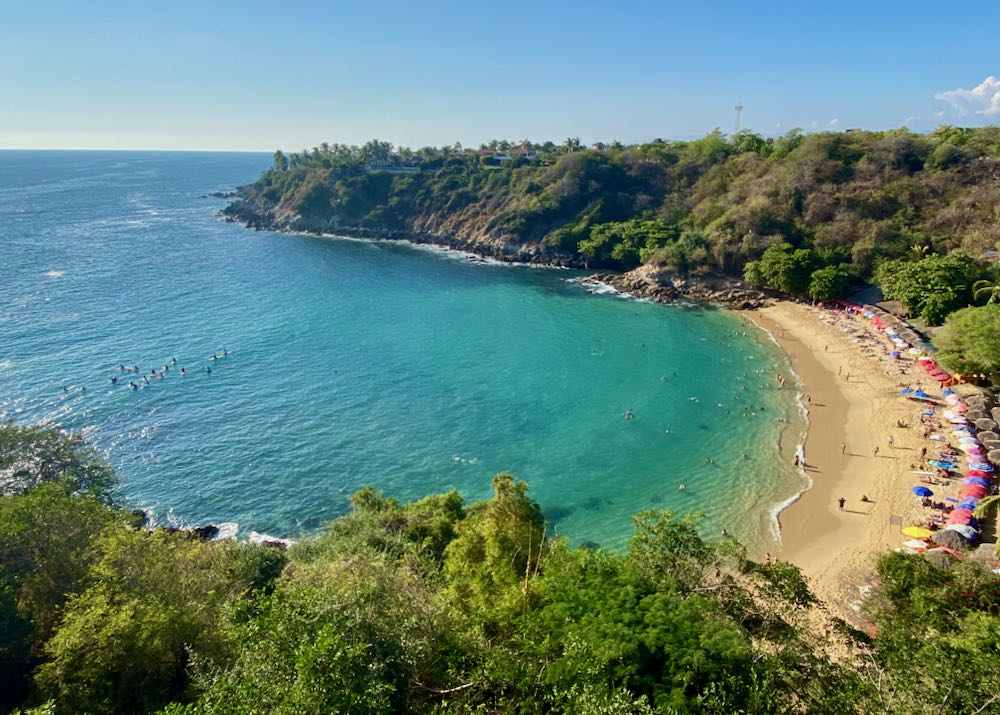
Laid-back La Paz is often overlooked by visitors in favor of the resorts of Los Cabos, but it is one of my favorite small Mexican cities. The waterfront malecón is one of the most attractive in the country, the surrounding beaches are sensational, and nearby Isla Espíritu Santo is teeming with marine life. The local dining scene is excellent, particularly the fish taco stalls and growing craft beer community.

playa balandra

Gorgeous Playa Balandra just north of La Paz.

Frequently Asked Questions about La Paz

Where is La Paz?

La Paz is the capital of Baja California Sur, situated on the Sea of Cortez. It is located roughly 1,470 km south of the US border at Tijuana and 150 km north of Cabo San Lucas. Non-stop flights from Mexico City take about 2 hours, while flights from Tijuana take 1 hour 45 minutes.

How big is La Paz?

The city has a metropolitan population of approximately 300,000. It feels much smaller and more manageable than Cabo, stretching for 11 km along the Bay of La Paz.

What is the history of La Paz?

Originally home to the Pericú people, the area proved difficult for the Spanish to colonize. A Jesuit mission founded in 1720 lasted only 28 years. La Paz finally began to grow after 1833 when it became the capital of the territory. The city thrived on silver mining and a world-famous pearl-fishing industry that even supplied the Spanish crown. American forces occupied the city in 1847, and it was briefly seized by American mercenary William Walker in 1853 before he was driven out.

John Steinbeck visited in 1940 and immortalized the area in The Log from the Sea of Cortez and The Pearl. By that time, the pearl industry had collapsed due to oyster disease. Today, the city prospers as a government hub and a premier destination for eco-tourism and sportfishing.

male con at sunset

Sunset on the waterfront malecon.

How do I get to La Paz?

La Paz International Airport (LAP) handles domestic flights from major Mexican hubs. Many travelers from the US use the Cross Border Xpress (CBX) to fly from Tijuana, which is often cheaper and offers more frequent non-stop options. Taxis from the airport into the city center cost approximately 450 to 550 pesos.

The city is also a 2.5 hour drive from Los Cabos. First-class Aguila buses run frequently between Cabo San Lucas, San Jose del Cabo, and La Paz. For those coming from mainland Mexico, Baja Ferries operates car and passenger service from Mazatlán and Topolobampo.

Can I use Uber in La Paz?

Uber is available and generally reliable within the city. However, drivers are often restricted from picking up passengers directly at the airport terminal due to local regulations. I recommend taking an official taxi from the airport and using Uber for trips around town or for returning to the airport. Rates for Uber are typically 30% to 50% lower than standard taxi fares.

Can I drive to La Paz?

Driving from the US border is a popular road trip. The Transpeninsular Highway (Highway 1) is generally in good condition but is mostly a two-lane road. I advise against driving at night due to livestock on the road and limited visibility. Ensure you fuel up at every opportunity as stations can be far apart in the central desert. Foreign-plated vehicles do not require a temporary import permit (TIP) to stay within the Baja peninsula.

If you prefer to rent, I suggest doing so in Mexico to ensure your insurance coverage is valid and to avoid the complexities of taking a US rental across the border.

waterfront promenade

Beautiful evening on the promenade in La Paz, Baja California Sur, Mexico.

Do I need a car in La Paz?

You do not need a car if you stay near the malecón. Most restaurants, shops, and tour operators are within walking distance. While a car is helpful for visiting remote beaches like Balandra, you can easily use the Playa Bus or Uber. If you plan to visit Todos Santos or explore the East Cape, a rental is recommended.

How do I get around La Paz without a vehicle?

Walking the malecón is the best way to see the city. For longer distances, taxis are plentiful. There are stands in front of the Seven Crown hotel and the main plaza. Always confirm the fare before departing. Most trips within the downtown area cost between 80 and 120 pesos.

When is the best time to go to La Paz?

The best weather is from November through May. This period coincides with the whale shark season (usually November to April) and whale watching in nearby bays. Summers (July to September) are extremely hot and humid, with temperatures often exceeding 35°C. October is a great shoulder month with warm water and fewer crowds.

cactus grove in mountains

A cactus grove in the mountains surrounding La Paz.

What are the best beaches in La Paz?

Playa Balandra is the most famous beach in the region, known for its iconic mushroom rock and crystal-clear, knee-deep water. Note that Balandra now has strict capacity limits and operates in two shifts (typically 8am to 12pm and 1pm to 5pm). I recommend arriving very early to secure a spot as it often reaches capacity quickly.

Playa Tecolote is just past Balandra and has no entry restrictions. It features several beach clubs and restaurants, making it better for a full day of eating and drinking. For something closer to town, Playa El Coromuel is a 5 minute drive from the malecón and offers excellent facilities including restrooms and shade.

Where should I stay in La Paz?

Stay on or near the malecón to be close to the best dining and sunset views. The Seven Crown is an excellent mid-range choice with a great rooftop. For a more boutique, traditional Mexican feel, Posada De Las Flores is beautiful. If you want to be in the heart of the historic center, Hotel Catedral is right next to the mission church.

What are the best things to do in La Paz?

A boat trip to Isla Espíritu Santo is essential. These tours offer the chance to swim with sea lions and see massive colonies of frigatebirds. Between November and March, swimming with whale sharks in the bay is a top highlight. I recommend Baja Outdoor Activities or Funbaja for these excursions. For scuba diving, the Cortez Club is the premier operator.

In the evenings, join the locals for a “paseo” along the malecón. Visit the Museo Regional de Antropología e Historia to see artifacts from the peninsula’s indigenous tribes and colonial era.

What are the restaurants like in La Paz?

The seafood is world-class. For authentic fish and shrimp tacos, go to Taquería Hermanos González or Mc-Fisher. For a more formal meal with a view, Bismark-Cito is a local institution. Doce Cuarenta is the best spot for specialty coffee and has a great atmosphere for working or relaxing. Do not miss the ice cream at La Fuente on the waterfront, recognizable by its bright pink exterior.

What currency is used in La Paz?

The Mexican peso is the official currency. While some large hotels and tour operators may quote prices in US dollars, you will get a much better rate paying in pesos. Credit cards are widely accepted at major establishments, but cash is necessary for street food, small markets, and buses. Use bank-affiliated ATMs (Banamex, Santander, BBVA) along 16 de Septiembre for the safest transactions and best rates.

Is La Paz expensive?

La Paz offers excellent value, especially compared to Cabo San Lucas. You can find high-quality meals for 150 to 300 pesos and comfortable hotel rooms for under $100 USD. Public transport and beach access are very affordable.

Is La Paz safe?

La Paz is widely considered one of the safest cities in Mexico. It maintains a relaxed, family-friendly atmosphere. As with any city, use common sense: don’t leave bags unattended on the beach and use the hotel safe for your passport and extra cash. Walking the malecón at night is generally very safe and popular with local families.

Puerto Vallarta Family Hotels

Mexico Puerto Vallarta › Kid-Friendly Hotels

The Best Family Hotels in Puerto Vallarta, Mexico.

See Also

14 Best Hotels for Families in Puerto Vallarta

1. Grand Velas Riviera Nayarit – Nuevo Vallarta

Best resort for families in Puerto Vallarta.
Luxurious, all-suite, all-inclusive, kid-friendly resort with a multi-tier infinity pool and exceptional family amenities and services. The enormous two-bedroom, three-bathroom family suites boast a private jacuzzi terrace. Kids’ amenities for all ages include a baby concierge, kids pool, kids club with culture, nature, and craft activities, and a teen lounge with gaming consoles, a dance floor, and karaoke. A host of local and international restaurants satisfies even the pickiest eaters. The Grand Velas sits on the powdery white Nuevo Vallarta Beach, near Aquaventuras water park (dolphins) and in between two golf courses.
Hotel phone: +52 322 226 8677
Hotel websiteCheck prices for Grand Velas Riviera Nayarit

2. Fiesta Americana – Hotel Zone

Fiesta Americana Hotel in Hotel Zone, Puerto Vallarta
Kid-friendly, all-inclusive, sprawling resort set right on the beach that offers bright family rooms (up to 6 people) with a double sofabed and ocean views (ask for rooms on the 4th floor or higher). Features contemporary Mexican architecture, a large pool, 11 different dining options (including 3 bars – a lounge bar, swim-up bar and a terrace bar) and a spa. Also offers a fiesta kids activities program, kids club and kids’ playground. Beach has strong currents; swimming with kids is not recommended. Great location close to the airport with the Malecon and the Marina a short taxi ride away. Also has 2 malls within 5-10 minute walking distance.
Hotel Phone: +52 322 22621
Hotel websiteCheck prices for Fiesta Americana

3. Westin Resort & Spa – Marina Vallarta

Great hotel for families in Puerto Vallarta.
A great beach, super-friendly service, a kids club, and a fantastic pool make the Westin a top choice for families. 2 restaurants, beach bar, golf privileges at Marina Vallarta Golf Club, state-of-the-art health club, sauna, and steam room, lighted grass tennis courts. There’s an all-inclusive option but personally I would not recommend it as half the fun of Puerto Vallarta is eating out.
Hotel phone: +52 322 226-1100
Hotel websiteCheck prices for Westin Resort & Spa

4. Sheraton Buganvilias Resort & Convention Center – Hotel Zone

The closest resort to downtown Puerto Vallarta and a 10 to 15 minute walk to the shops and restaurants along the malecon. The beach is rocky but the pool is great. This is not our favorite hotel in PV but great online deals often make it a good compromise especially given its location.
Hotel phone: 800 326 4600
Hotel websiteCheck prices for Sheraton Buganvilias Resort & Convention Center

5. Villa Del Palmar Beach Resort & Spa – Hotel Zone

Pretty, all-suite beach resort with Spanish colonial touches, offering colorful 2-bedroom suites (up to 6 people ) with kitchens and balconies sporting pool, garden or partial-ocean views. Also offers an optional all-inclusive plan. Has 3 swimming pools, a 12 person spa tub, kids’ club, picnic area, volleyball and basketball courts. Lots of activities such as aqua aerobics, cooking classes, beach volleyball and evening enterntainment. Resort is close to downtown and within walking distance of numerous shops and restaurants.
Hotel Phone: +52 322 226 1400
Hotel websiteCheck prices for Villa Del Palmar Beach Resort & Spa

6. Costa Club Punta Arena – Hotel Zone

Old resort offering clean, basic, good value 2-bedroom family suites (up to 6 people) with kitchenettes. There are 2 dining options and 3 pools. Opt for rooms in towers with balconies/patios closer to the pool for better views. Offers nightly entertainment, activities like aqua aerobics, and beach volleyball. Kids can enjoy Spanish lessons, arts & crafts and games. There’s a long, quiet beach in front and a grocery store a block away. By cab – Malecon (5 minutes), Puerto Vallarta International Airport (12 minutes).
Hotel Phone: +52 322 226 9654
Hotel websiteCheck prices for Costa Club Punta Arena

7. Los Arcos Suites – Old Town

Great central location with dozens of restaurants nearby. Suites are large and sleep a family of 4 – but there is not a separate bedroom. There’s a small pool and you can also use the facilities at the sister hotel across the street (and on the beach) that has 3 connected pools and a fitness gym.
Hotel phone: +52 322-226-7100
Hotel websiteCheck prices for Los Arcos Suites

8. Hotel Posada de Roger – Old Town

A great inexpensive hotel for families on a budget. 3 blocks from the beach, it has a small pool and is attached to a very kid friendly restaurant. The larger rooms need to be booked well in advance for high season.
Hotel phone: +52 322-222-0639
Hotel websiteCheck prices for Hotel Posada de Roger

9. Pinnacle Resorts 220 – Old Town

Pinnacle Resorts 220 in Old Town, Puerto Vallarta
Modern hotel offering sleek 2 storey townhouses (up to 4 people) and 3-bedroom suites (up to 6 people) with private terraces, fully equipped kitchens with blenders, washer/dryers etc. and a gas barbecue on the balcony. It has a spectacular infinity rooftop pool and a sky bar with a swim up area. Avoid the noisy streetside rooms and opt for ocean view rooms. While the building is located up a hill there’s a free funicular ride available. Also offers a shopping service. Great location that’s within walking distance of restaurants, bars, shops, and the beach. Caveats: Guests are required to wear wristbands.
Hotel Phone: +52 322 222 3556
Hotel websiteCheck prices for Pinnacle Resort 220

10. Rivera Del Rio – Old Town

Stunning, boutique hacienda in Puerto Vallarta’s old town area with true Mexican ambience, offering plush, whimsical suites (family of 5) with eclectic decor, gorgeous artwork, high ceilings, full kitchens, Victorian sunken tubs, marbled patios and fireplaces. Has many quirky stairways, so ask for room recommendations from the staff if stairs are an issue. Amenities include an outdoor rooftop pool, outdoor hot tub and an indoor lap pool. Great location beside the Cuale River/park close to the flea market and walking distance to many excellent restaurants, bars, the beach, and the Malecon (the lively walking path along the sea).
Hotel Phone: +52 1 322 205 6093
Hotel websiteCheck prices for Rivera Del Rio

11. Flamingo Vallarta Hotel & Marina – Marina Vallarta

Comfortable large rooms sleep family of 6 with private terraces, hotel benefits from a great location right on the Marina waterfront. Has 1 restaurant, a pool, gym, spa and garden. Many good restaurants & shops nearby and downtown/old town is a short bus/taxi ride away. There’s an interesting artisan-type market nearby (only on Thursdays).
Hotel Phone: +52 322 22 10880
Hotel websiteCheck prices for Flamingo Vallarta Hotel & Marina

12. Hyatt Ziva – South Vallarta

Beautiful, all-inclusive resort with a lovely private beach surrounded by mountains and a variety of suites (sleep family of 4) with private plunge pools and balconies with hot tubs. (Guests don’t need wristbands). Choose rooms with balconies or swim-up suites. Plenty of entertainment and activities with beachfront shows, cooking demos, whalew-atching, parasailing, jungle/kayak tours, zip lines, ATV tours and free kayaking. Has 6 pools (multiple infinity pools, adult-only pool, kid-friendly pools), 6 restaurants, 5 bars & lounges, an infinity hot tub, and cabana day beds. Old town Puerto Vallarta is a short cab ride away.
Hotel Phone: +52 322 226 5000
Hotel websiteCheck prices for Hyatt Ziva

13. Vallarta Shores Beach Hotel – South Vallarta

Vallarta Shores Beach Hotel in South Vallarta
Gorgeous beachfront hotel on Los Muertos beach, that blends modern elements with old-style Vallarta. Luxurious, large 3-bedroom sky suites (up to 6 people) with private infinity pool and a complimentary private chef sleep families of 4 to 6. Also offers one 4-bedroom penthouse (up to 8 people), exclusive (6-bedroom) villas, and (4-bedroom) condo rentals. Has exquisite rooms in brick & honey-earth tones, with stunning panoramic ocean views, expansive arched windows, fully equipped kitchens, and outdoor jacuzzis. Easy walking distance to downtown, numerous beach clubs, nightlife options, watersports, and restaurants.
Hotel Phone: +52 322 222 3939
Hotel websiteCheck prices for Vallarta Shores Beach Hotel

14. Quinta Maria Cortez – South Vallarta

Amazing boutique hotel offering 7 uniquely decorated oceanfront suites (up to 4 people) with old world charm and architectural flair with spectacular 360 degree views of the whole bay, private terraces overlooking the ocean, and full kitchens. Some suites have an open plan where the entire frontside is open to the ocean. Has excellent cooked-to-order breakfasts, classic furnishings, original art & antiques. (Also offers very spacious private villas with heated jacuzzis and pools at Casa Tres Vidas, that can be combined to accommodate up to 24 people). It is a 20 minute beach walk to the Old Town and its restaurants, bars, shops, and galleries. Caveats: No tv (which I consider a plus), pool is smallish, the beach in front is too rough for swimming and getting to the room involves walking up stairways.
Hotel Phone: +52 322 221 5317
Hotel websiteCheck prices for Quinta Maria Cortez

Family Hotels Near Puerto Vallarta

There are some wonderful towns north and south of Puerto Vallarta. Punta de Mita is home to several five star resorts. Bucerias is relaxed and family-friendly. Sayulita (my favorite) has a hippy vibe and good surf. Mismaloya is a small fishing village popular with Mexican tourists. Yelapa is accessible only by boat – secluded and beautiful but still plenty of restaurants and a few markets.

Four Seasons – Punta de Mita

Awesome luxury hotel that is still very kid-friendly. One-bedroom suites are wonderful and perfect for families. There are also huge 4 and 5 bedroom villas that will sleep from 8 to 12 people. The hotel is located 45 minutes north of Puerto Vallarta. 3 restaurants; beachfront bar; horseback riding; children’s programs; cooking classes, Spanish classes, dance classes; fitness center; yoga; Jacuzzi; oceanfront pool; lazy river kids’ pool; spa; tennis center w/10 courts of various surfaces; various watersports.
Hotel phone: +52 329 291-6000
Hotel websiteCheck prices for Four Seasons

Aventura Pacifico – Bucerias

Great hotel in the laid-back town of Bucerias, 40 minutes north of Puerto Vallarta. All suites have kitchens – some are one-bedroom, some two-bedroom. Medium sized pool with lots of sun and a few deck chairs. No restaurant but 2 blocks to the beach and a short walk to many places to eat. Bucerias is a friendly town with a nice beach, highly recommended if you want a quiet stay away from the crowds of PV.
Hotel phone: 52 329 298-2797
Hotel websiteCheck prices for Aventura Pacifico

Casas Garcia – Yelapa

Highly recommended! Situated right on beautiful Yelapa beach this is an open-air style apartment (and probably my favorite hotel in the PV area). There are 2 and 3 bed layouts that sleep 4 to 6. Some bedrooms are walled-off from the rest of the apartment but not completely enclosed. The waves slamming on the beach can be loud at night but it’s something I’m happy to contend with. Full kitchens are great for cooking.
Hotel phone: +52 322-209-5149
Hotel websiteCheck prices for Casas Garcia

Where to Stay in Punta de Mita

Mexico › Punta de Mita Hotels

Best Places to Stay in Punta de Mita

  • Punta de Mita is a small fishing village located on a peninsula about 45 minutes northwest of Puerto Vallarta. While the name technically refers to the town, it is commonly used to describe the entire coastline northwest of Bucerías. This region includes La Cruz de Huanacaxtle, Higuera Blanca, the Litibú development, and Punta Negra beach. It does not include Sayulita or San Pancho. Crucially, Punta Mita (without the “de”) is an ultra-exclusive, 1,500-acre gated resort and residential community at the tip of the peninsula. This private enclave is home to the area’s most famous golf courses, beach clubs, and high-end resorts.
  • The best areas to stay for travelers are in Punta de Mita village (authentic feel, excellent local taco stands, surf schools, and walking access to Anclote beach), the North End (Higuera Blanca and Litibú: quiet jungle settings with rugged beaches near Sayulita), and the South End (modern luxury resorts near the La Cruz marina with easier access to Puerto Vallarta).
  • The best hotels in each area are St Regis (Punta Mita), La Quinta del Sol (in the village), W Punta de Mita (South End), and Imanta (North End).
  • Transportation requires some planning. Public buses from Puerto Vallarta run to the village entrance, but they are infrequent and slow. There is no direct bus from the airport. I recommend renting a car if you want to visit different surf breaks or explore the dining scene in Sayulita. If you plan to stay put at your resort, take an authorized airport taxi or a pre-arranged private transfer. Airport taxis are generally cheaper than resort-arranged cars, though the resort vehicles are often newer and offer better service. Many visitors inside the gated Punta Mita community use golf carts as their primary mode of transport.
  • Always pay in pesos. While most hotels, upscale restaurants, and tour operators accept U.S. dollars, the exchange rate used by businesses is significantly worse than what you will get at an ATM. Using dollars effectively adds a 10% to 15% surcharge to everything you buy. Most smaller shops and taco stands in the village are cash only.

The 6 Best Luxury Hotels in Punta de Mita

1. St. Regis Resort – Punta Mita

Best beach resort with pool in Punta de Mita.
Impeccable, beachfront, luxury resort with gorgeous accommodations, gourmet dining, butler service for all, and thoughtful family amenities and services. Rooms, suites, and villas are all spacious and include indoor and outdoor showers, many with Jacuzzis. The largest villas are three-bedrooms and add full kitchens and private pools. Outstanding restaurants include five-diamond-winning Carolina and casual Mita Mary, housed in a little boat on the beach. Its Family Traditions program features an active kids club and child care, surf and SUP lessons for the whole family, and in-room amenities, such as child-sized robes and step stools. With plenty of romantic nooks and a blissful spa, this is also an excellent choice for a couples’ getaway. In the Punta Mita complex, near golf courses and beach clubs.
Hotel phone: +52 329 291 5800
Hotel websiteCheck prices for St. Regis Resort

2. Four Seasons Resort – Punta Mita

Punta de Mita resort with lazy river and water slides.
Elegant beachfront resort with two pools and a lazy river. Its range of accommodations includes rooms, suites, and villas with up to five bedrooms, all with private terraces and soaking tubs, some with private plunge pools. Their active kids’ club runs from 9 a.m. to 5 p.m. with plenty to do including craft, culture, and pool times; in the evening, kids’ activities include pirate nights, piñata parties, and beach time. Activities for adults include cooking classes, tequila blending, Huichol beading, and more. Food here is superb, with eight top-notch restaurants and bars serving gorgeous cuisine, especially their local seafood, along with cold beer and craft cocktails. Plus, you’ll find a gelato shack, popsicle stand, and a churro stall scattered around the property. Located in the Punta Mita complex near two golf courses (one on an island), luxury homes, and three beach clubs.
Hotel phone: +52 329 291 6000
Hotel websiteCheck prices for Four Seasons Resort

3. W Punta de Mita – South End, La Cruz de Huanacaxtle

Punta de Mita resort with large pool.
Stylish hotel with jungle and ocean suites, flavorful dining, and a sparkling pool. Rooms and common areas feature bold blend of Huichol, urban, and Mexican folk art in tropical colors. Spacious rooms feature private balconies or terraces and bespoke furnishings sourced locally. Haven Suites add a jetted bath, and Oasis Suites add a second bedroom, private pool, Jacuzzi, and foosball table. Their dazzling pool holds two infinity hot tubs inside it. The soothing spa offers a fantastic hydrotherapy circuit, while the on-site restaurants, especially the pan-Asian gem Spice Market, offer rich dining for even the pickiest palates. Fun little kids club here, plus a weekly pool party for all and nightly sunset drinks. The W sits on Destiladeras Beach, a year-round surf spot, just west of the fishing village of La Cruz de Huanacaxtle, with superb street food, a quaint market, and a small marina.
Hotel phone: +52 329 226 8333
Hotel websiteCheck prices for W Punta de Mita

4. Imanta Resorts – North End, Higuera Blanca

5-star hotel with private pool in Punta de Mita.
Tranquil resort in a secluded jungle locale with an outdoor spa, private beach, and eco-suites and casas. Accommodations are luxurious and enormous, with junior suites beginning at 177 sqm and three-bedroom casonas up to 929 sqm with private pools. Its ultra-private Tree House covers three stories with a waterfall pouring into three ponds for swimming (two are heated), plus its own beach. The outdoor spa features woven grass walls, the jungle canopy as a roof, the sounds of ocean waves, and traditional Aztec and Huichol-inspired treatments. The resort offers a variety of unique experiences for adults and kids, including jungle hikes, snorkel and kayak tours, temazcal (sweat lodge) rituals, and clifftop sunset dinners. Located in Higuera Blanca, just a ten-minute drive to the Litibú Golf Course or a 25-minute drive to Sayulita.
Hotel phone: +52 329 298 4200
Hotel websiteCheck prices for Imanta Resorts

5. La Quinta del Sol – Punta de Mita village

Family-friendly hotel with kitchen.
Quaint, all-suite, boutique hotel in Punta de Mita, overlooking the beach and walking distance to the town’s best restaurants and beaches. Each suite comes with a cozy but well-supplied kitchen. First floor suites are reserved for families, while second-floor suites are adults-only. The rooftop palapa has hammocks, a barbeque for guest use, and a wet bar. The hotel is just across the street from the beach at Stinky’s Surf Break, a perfect spot for beginning surfers. There is a reserved area on the beach for guests, plus complimentary surfboards, paddleboards, umbrellas, and other beach gear. La Quinta del Sol is in Punta de Mita village, walking distance to the downtown strip of restaurants, surf shops, and the marina.
Hotel phone: +52 329 291 5315
Hotel websiteCheck prices for La Quinta del Sol

6. Iberostar Selection Playa Mita – North End, Litibú

Family-friendly midrange hotel in Punta de Mita.
Family-friendly, luxury, all-inclusive hotel with three pools, fantastic kids’ and teens’ amenities, and a spa with complimentary hydrotherapy for all guests. Rooms and junior suites are available with connecting and club level options; all come with private balconies and sofabeds, some with soaking tubs. Their kids’ club includes a pool and mini water park; the teen lounge has video games. Over 40 activities are offered daily, including a mini-disco for kids, nightly theater, bike tours, and archery. Thirteen bars and restaurants serve a wide range of excellent food, the stand-out being the Pacific Express, a French fine dining experience styled after an antique train. Located in on a long white beach with soft sand, surrounded by the Litibú Golf Course and only 20 minutes by car to Sayulita (car rental available onsite).
Hotel phone: +52 329 298 4280
Hotel websiteCheck prices for Iberostar Selection Playa Mita

Staying in Punta de Mita Village/Punta Mita

The best hotels and restaurants in Punta de Mita Village.
The village of Punta de Mita sits northwest of Puerto Vallarta on a peninsula in Banderas Bay. The town itself is small and walkable, with a strip of restaurants, surf shops, and a small marina on Anclote Beach. This little strip is usually pretty hopping most of the time, but the downtown area is still pretty sleepy with just a couple of churches, a community center, and a number of local restaurants scattered around. To the north of the village proper is Punta Mita, a swanky, gated resort and residential area. Five star resorts, posh mansions and homes, golf courses, and stellar restaurants are all located here.

Indigenous Cora and Huichol history and traditions are celebrated in this area, and you’ll find lots of intricate, bright beadwork and art, especially in the Huichol style. Punta de Mita is the closest launching spot for boat tours bound for the protected Marietas Islands. Travelers will find ideal waters here for surfing, snorkeling, diving, and winter whale watching.

Punta de Mita/Punta Mita Hotels

Punta de Mita/Punta Mita Restaurants

  • Tuna Blanca • $$$$ • Refined, elegant dining on the beach. Seasonal menu with rich flavors, inspired preparations of local ingredients, and artistic presentations. Reservations recommended.
  • Naef Café • $$-$$$ • The best breakfast and lunch in Punta de Mita! Cute little garden café off the beaten path with fantastic food, great coffee, and homemade ice cream.
  • Norma’s Tacos • $ • Cheap and cheerful family restaurant with outstanding tacos. Visit on a Saturday or Sunday for some knockout pozole! Cash only, limited seating.

Staying in North End

The best hotels and restaurants in north Punta de Mita
The North End of the Punta de Mita peninsula boasts long stretches of soft sandy beaches at pristine Punta Negra, emerald golf courses and golden beaches at the Litibú resort area, and unspoiled beaches, jungle hills, and the quaint downtown of Higuera Blanca village. The North End is an ideal spot for relaxation off the beaten track. But its central location between Punta Mita resort and Sayulita village allows easy reach for fine dining and boat excursions to the southwest and for all-day surf and far out vibes to the northeast.

North End Hotels

North End Restaurants

  • Restaurante El Oasis • $ • Authentic Mexican flavors in a rustic setting under a palapa with a dirt floor. Known for their carne asada and their molcajete-made salsas.
  • Kilometro 5 Surf Bar & Restaurant • $$-$$$ • Casual restaurant with great food, strong drinks, and sunset views. “Surf Bar” is a misnomer; it is nowhere near the beach!
  • Tropical Crown • $$-$$$ • Laid back restaurant with ocean and jungle views and a nightly bonfire. Local ingredients and a Mexican and international menu. Closed in the summer.

Staying in South End

The best hotels and restaurants in south Punta de Mita
The South End of the Punta de Mita peninsula includes the pueblo magico (magic town) of La Cruz de Huanacaxtle (usually shortened to La Cruz) and the strip of resorts to its west before reaching Punta de Mita village. La Cruz is home to several amazing restaurants, a Huichol Art Gallery, a sizeable marina, and family attractions at Playa la Manzanilla. La Cruz’s location is at the start of the peninsula, only ten minutes’ drive to another pueblo magico Bucerías and only half an hour to the Puerto Vallarta airport and the city’s attractions. The long strip of beach and jungle to the west of La Cruz is largely untouched, save for a few newer resorts spread out along the oceanfront. This area is ideal for families or couples who want a more independent vacation, with lots of room to explore authentic Mexican pueblos, with occasional visits to the city, and quiet, starry nights.

South End Hotels

South End Restaurants

  • Tacos on the Street • $ • Outstanding, affordable restaurant serving killer carne asada and cold beer. Open Wednesdays through Sundays from 6-11pm.
  • Restaurant Black Forest • $$-$$$ • A hidden gem, this is an awesome little German restaurant serving authentic flavors and a wide selection of German beers.
  • La Cava de las Martínez • $$-$$$ • Casual Mexican restaurant with great margaritas and mariachi on Monday nights.

Read More

Where to Stay in Mazatlán

Mexico › Best Places to Stay in Mazatlan
Updated: January 7, 2023

See Also

mazatlan bay hillside

The Best Areas to Stay in Mazatlán

Sitting on the Pacific Coast in the state of Sinaloa, Mazatlán is both a historic port city, with a sensitively-restored colonial old town, and one Mexico’s top beach resort destinations, with a ten-mile-long white-sand beach. A sleepy fishing village until the early 19th century, Mazatlán was then transformed into Mexico’s busiest international port. Then, when the port’s fortunes waned, tourism took over. By the 1970s, Zona Dorada resorts were attracting visitors from the U.S. and beyond, and in recent years, the city has benefitted from its proximity to other popular Pacific Coast destinations, such as Puerto Vallarta and Sayulita, further south, with many tourists travelling between the three. While Mazatlán is rather spread-out, stretching for miles along the coast, most neighborhoods along the coast are well-served by the frequent “Sábalo-Centro” buses and taxis, and most of its attractions are concentrated in the Centro Histórico and the Zona Dorada.

centro historico at night

Beautiful historical buildings in downtown Mazatlán at night.

Mazatlán stretches for around 13 miles along the coast. The southern part of the city, consisting of a peninsula sticking out into the sea, is occupied mainly by the walkable Centro Histórico, Mazatlán’s historical heart – a walkable and easy-to-navigate grid of narrow streets. This is where you’ll find the majority of the city’s best boutique and budget hotels inside former colonial mansions that line the streets around the cathedral square, as well as a good mix of restaurants, food markets, craft stores, and two worthwhile museums.

Adjoining the Centro from the west are three compact neighborhoods, fringed by the malecón (seafront walk): Olas Altas, encompassing the most popular and busiest part of the malecón, Loma Linda, centred on the hill that looms over the waterfront, and Los Pinos, further north. Loma Linda and Los Pinos are both largely residential neighborhoods, with some boutique hotel options, whereas Olas Altas boasts seafront restaurants and bars and several inexpensive accommodations.

olas altas beach

The beach at Olas Altas.

Flanking Centro to the south, across the Avenida Miguel Alemán, is Playas Sur, another residential neighborhood that’s somewhat removed from the bustle of Centro but still within easy walking distance. Its west side comprises some hilly streets with beautiful views of the coast, while its south end is taken up by the ferry terminal. Jutting off to the southwest is El Faro, a rocky outcrop topped by a lighthouse.

Avenida Gutiérrez Nájera is the official northern border of Centro Histórico, where it meets a clutch of small neighborhoods collectively referred to as Playa Norte, after the 3-mile sweep of sand that takes you all the way up to the promontory that marks the border with the Zona Dorada. The beach is lined with palapas (inexpensive seafood restaurants) and a few wallet-friendly beach hotels. Further inland, the southern half of Playa Norte is mostly residential, but in the northern half you’ll find the main bus station, aquarium, baseball stadium, the Grán Plaza shopping mall and the Parque Central.

Separating Playa Norte from the Zona Dorada to the northwest is Avenida Rafael Buelna, lined with some excellent taquerias that comes alive in the evenings. The relatively compact Zona Dorada is where you’ll find a dense concentration of beach hotels lining the golden-sand beach, and international restaurants catering largely to an American clientele, all within a block or two from the beach. There’s a lively nightlife scene too, also catering to gringos.

The Zona Dorada is bordered to the north by the El Cid golf course that separates it from Sábalo, also with a fine sweep of beach, good range of restaurants and with numerous all-inclusive and midrange beach hotels. It’s quieter than the Zona Dorada, with more condominiums, but also well-connected to the Centro Histórico by regular buses.

Just north of Sábalo is the Mazatlán Marina, filled with yachts, beyond which, another white-sand beach stretches for three miles, flanking the spread-out neighborhood of Nuevo Mazatlán. It’s the newest part of the city, with department stores, strip malls, a golf course, condominiums, a few high-end hotels, plus international restaurants. It’s not easily walkable and you ideally need your own wheels here.

Best Best Places To Stay in Mazatlán

Best luxury resort in Mazatlan.

The 5-star Pueblo Bonito Emerald Bay in Mazatlan.

Best Neighborhood in Mazatlán for Sightseeing: Centro Histórico, Loma Linda, Playas Sur

Mazatlán is better known for its beaches than its cultural heritage. That said, exploring the streets and markets of the city’s historical core – the Centro Histórico – plus the waterfront promenade in Olas Altas, is a great way to take Mazatlán’s pulse. The Centro Histórico has two excellent museums: the Museo Arqueológico, which focuses on pre-Hispanic Sinaloan civilisations, and the Museo del Arte, that stages changing exhibitions of contemporary art. Just up from Olas Altas, in Loma Linda there’s a rocky outcrop where you can watch the local clavadistas (cliff divers) plunge into the sea from high diving platforms twice daily (tip generously), particularly when coachloads of tourists roll up from the Zona Dorada. Finally, it’s well worth doing an early morning hike up El Faro – the hill topped with a lighthouse at the southern end of Playas Sur – for great views of the city; it’s safe and many locals do it as their early morning exercise.

Best Neighborhood in Mazatlán for Nightlife: Zona Dorada, Sábalo, Olas Altas, Centro Histórico

The Zona Dorada is the undisputed epicentre or Mazatlán’s nightlife. There are sports bars, bars attached to hotels with never-ending happy hour and oyster shooters, expat-owned resto-bars (such as Veintiocho) with live music, beer gardens, and raucous nightclubs, popular with visiting gringos and young locals alike. Nearby Sábalo’s scene is more sedate – mostly hotel bars and some open-air cocktail bars. Further south, Olas Altas might be tiny, but in the evenings, the malecón is really hopping, with a couple of vintage bars with busy outdoor seating serving pints of Pacifico beer, michelada-style (with lime and clamato juice and chilli powder on the rim). Next door, the Centro Histórico features the city’s oldest and best craft beer brewery, Cervecería Tres Islas, as well as several excellent cocktail bars, all within several blocks of the Plazuela Machado (square surrounded by restaurants and bars).

El Aljibe de San Pedro restaurant

El Aljibe de San Pedro Restaurant in the historic city center.

Best Neighborhood in Mazatlán for Food and Restaurants: Centro Histórico, Zona Dorada, Playa Norte, Sábalo
The Centro Histórico has excellent coffee shops and some of the city’s most varied dining to suit any budget: from fusion and fine dining restaurants (Nao Kitchen Bar, Aljibe the San Pedro, Pedro y Lola, Hector’s Bistro) around or near the Plazuela Machado, to inexpensive, traditional, family-run restaurants (Cenaduria Chayito), taco stands (Tacos Jose, Tacos El Veneno, Taqueria Playa Sur), plus food markets with food stalls around the edges, the largest being the Mercado Pino Suarez, a block north of the cathedral square. Dining along Playa Norte tends to focus on inexpensive beachside eateries that specialise in seafood; El Muchacho Alegre and Mariscos Puerto Azul are good bets. Zona Dorada offers good fusion and international dining (Rico’s Café, Yokiro Sushi, Restaurant Panama), as well as stellar family-run restaurants and taco stalls along Avenida Rafael Buelna, on the border between the Zona Dorada and Playa Norte (Mi Ranchito Los Osuna, Taqueria Martin, Tacos Alejandro). Sábalo’s offerings fall into the international or seafood categories (Angelo’s, La Costa Marinera, Cenaduria Chayito, Los Arcos).

Best Neighborhood in Mazatlán for Families: Zona Dorada, Sábalo, Nuevo Mazatlán

If you’re looking for all the conveniences and facilities of an upmarket, all-inclusive, family-friendly beach hotel, close to international dining and with plenty of beach activities, then either the Zona Dorada or Sábalo are your best bets, especially since it gives you the flexibility of easy day trips into the Centro Histórico. If you prefer to stay in one place, in an even quieter location, and don’t mind being quite far away from the city’s cultural attractions, then all-inclusive beach hotels in Nuevo Mazatlán are a good choice.

Best Neighborhood in Mazatlán to Stay for First Timer: Centro Histórico, Zona Dorada
It rather depends on what you’re after. If you have a beach holiday in mind, then the Zona Dorada, with its fine white-sand beach, waterfront hotels offering water sports and proximity to excellent international restaurants, is your best bet. That said, the Zona Dorada feels like a beach resort place that could be anywhere; if you’re after a real sense of history, wonderful atmosphere in the evenings, varied dining – from high-end restaurants to some of Mazatlán’s best street food, and museums, then look no further than the Centro Histórico. Staying in one doesn’t mean missing out on the other, given the excellent transport connections.

historical building downtown

The facade of a historical building in downtown.

Most Romantic Neighborhood in Mazatlán: Centro Histórico
The city’s historic heart, with its cobbled streets, mood lighting in the evenings, and appealing colonial buildings – some in a state of genteel decay, others beautifully restored – is undoubtedly the most atmospheric part of Mazatlán. Add some boutique hotels and al fresco dining at some of the city’s most imaginative restaurants, and you’ve got a recipe for a great romantic vacation.

Best Neighborhood in Mazatlán for a Local Vibe: Playas Sur, Los Pinos, Centro Histórico
Playas Sur, being mostly residential, is a great way to experience Mazatlán from a local’s perspective, particularly if you stay near the coast, where colourful houses line the hilly streets. Los Pinos, adjacent to the Centro Histórico, is a good place to base yourself if you want to be within easy walking distance of the historical center while staying in a quiet and local part of town, and watching the fishermen with their catch on the Playa Los Punitos or the southern end of Playa Norte. In the Centro Histórico, while the streets around the Plazuela Machado are pretty touristy, just a few blocks away, it’s a bustle of unvarnished local life, with its bustling streets, mom-and-pop tortilla shops, taco stands and produce markets.

seafood market

The seafood market in the Playa Norte area.

Best Neighborhood in Mazatlán for Shopping: Centro Histórico, Zona Dorada, Playa Norte
It depends on what you’re after. The Centro Histórico is best for quality Mexican crafts from the Sinaloa region and beyond. Check out Casa Etnika for Huichol beadwork and psychedelic weavings and tiny, brightly painted papier-mâché skeletons, copper-wire and wool jewelry, bold contemporary art, and colorful weavings; Nidart Gallery for handmade leather masks, plus sculptures and ceramics; La Querencia for striking ceramics, painted wood objects, sculptures and jewelry; and Gandarva Bazaar for colorful Mexican masks, dolls made from gourds, handmade Mexican journals, and reproduction Chinesco (an early-1st-millennium culture in Nayarit) ceramics. In souvenir stores in the Zona Dorada, keep an eye out for locally produced mango liquour, made at the Onilikan distillery just out of town, while Playa Norte features the city’s largest shopping mall, Gran Plaza, complete with local and international boutiques.

Safest Areas of Mazatlán

Mazatlán has a low crime rate for a Mexican city, and neighborhoods frequented by visitors, such as the Centro Histórico, Zona Dorada, Olas Altas, Playa Norte, Sábalo, etc, tend to be fine to walk around, particularly during the day. That said, opportunistic pickpocketing does happen, so be aware of that while exploring the markets, or if in the near vicinity of the city’s bus station. Standard precautions apply: don’t flash lots of cash, expensive jewellery or electronic gear, and avoid deserted, poorly-lit streets at night; take a taxi back to your hotel if you’ve stayed out till late. Unsafe Areas of Mazatlán
Visitors are advised to take taxis/pulmonias at night if staying outside the Zona Dorada, Sábalo, and the few blocks in the Centro Histórico in the near vicinity of the Plazuela Machado, because opportunistic muggings do occasionally take place.

Loma Linda diver on beach

A cliff diver in the Loma Linda area takes flight.

The Best Neighborhoods in Mazatlán for Tourists

Staying in Centro Histórico

In the south part of Mazatlán, the city’s historic heart is undoubtedly the most characterful and interesting part to explore or stay in, particularly if a beach holiday is not a deal-breaker. It’s centred on two main plazas: the cathedral square, and Plazuela Machado, a little farther south, surrounded by restaurants and bars. The neighborhood is quite a large one, but its logical grid of streets is easily walkable and this is where you’ll find the city’s beautiful (and in some cases dilapidated) colonial architecture, including the Angela Peralta Theater and the mansions that currently house intimate boutique hotels. Whether you’re looking to visit the Archeological Museum, to sit and people-watch over coffee, immerse yourself in the bustling produce markets, or sample its extensive dining scene, from daring fusion to some of the city’s best taco stands, Centro Histórico is the place for you.

Best Hotels in Centro Historico

Staying in Olas Altas/Loma Linda/Los Pinos

Ajoining the Centro Histórico to the west, these three compact neighborhoods run along the malecón (seafront walk). Olas Altas is southernmost of the three, encompassing the busiest and most popular stretch of the waterfront, with a handful of excellent bars and restaurants overlooking the beach (okay for swimming when calm, otherwise popular with surfers) and several hotels, ranging from cheap to boutique. Just to the north of Olas Altas is Loma Linda, a residential neighborhood centred on the eponymous hill. Next to the hill is diving spot where you can watch the city’s cliff divers do their thing. Sandwiched between the sea, the northern part of Centro and Loma Linda is Los Pinos, another quiet residential neighborhood with a small beach, Playa Los Pinitos.

Best Hotels in Olas Altas/Loma Linda/Los Pinos

south beach from el faro

View of the South Beach area from El Faro.

Staying in Playa Sur

Just south of the Centro Histórico and Olas Altas, and easily walkable from the dining scene and attractions of both, Playa Sur is a quiet, somewhat gentrifying, residential neighborhood offering an authentic slice of Mexican life. Accommodations are limited to just a few options, while the dining scene consists of a handful of seafood restaurants near the cruise ship port at the southern end of Playa Sur, and a few taquerias (taco stands) along Avenida Miguel Alemán that marks the informal border with the Centro Histórico to the north. Attraction-wise, the port makes a handy jumping-off point for trips to Isla Piedra (not really an island), with a decent sandy beach and lots of beachside palapas (inexpensive seafood restaurant) – a favourite with local families on weekends. It’s also well worth climbing up El Faro, the hill topped with lighthouse, for expansive views of the city.

Best Hotels in Playa Sur

Staying in Playa Norte

Collectively referred to as “Playa Norte” after the city’s longest stretch of beach that runs alongside it, the busy neighborhoods that make up the central part of Mazatlán is where you’ll find offices, banks, hardware stores, the city’s bus station. The northern half of Playa Norte is home to the baseball stadium, Gran Plaza mall, a string of newly built beach hotels (mostly midrange), and Central Park – an ambitious project and the city’s largest green space, complete with new aquarium, bike paths and picnic areas. Considerably less touristy than the Zona Dorada or the Centro Histórico, it’s within walking distance of both. While the beach is better for sunbathing than swimming (it gets hit by some big waves), there’s good casual seafood dining along the waterfront, and the fishermen haul in their catch at the south end of the beach.

Best Hotels in Playa Norte

Zona Dorada

The waterfront in Zona Dorada.

Staying in Zona Dorada

Stretching between the rocky Punta Camaron that marks the north end of Playa Norte, and the El Cid golf course, the Zona Dorada is Mazatlán’s most popular beachside neighhourhood. Its compact and walkable size, proximity to the beach, proliferation of restaurants and bars to suit all tastes and excellent transport connections attract a range of visitors, from sun-seeking families to spring breakers. Parts of the Zona Dorada can be quite loud, with late-night parties, but the location and the prime slice of beach is hard to beat.

Best Hotels in Zona Dorada

Staying in Sábalo

Sandwiched between the El Cid golf course to the east, Zona Dorada to the south and the yacht marina to the north, this compact, oceanfront neighborhood is a mix of condos, midrange and 5-star beach hotels, with some excellent restaurants and excellent beach access. It’s much quieter than the Zona Dorada, but an easy ride (or longish walk) away from the Zona Dorada’s nightlife, and well connected to the rest of the city by frequent public bus. (Those travelling in the rainy season may wish to note that the coastal road connecting Sábalo to the rest of the city sometimes floods during heavy rains).

Best Hotels in Sábalo

Staying in Marina/Nuevo Mazatlán

At the very north of the city, just north of the yacht marina that separates the Zona Dorada from Nuevo Mazatlán, is the newest part of the city and one of Mazatlán’s upmarket neighborhoods, spread out along miles of golden-sand beach. It comprises a dozen or so hotels, ranging from 3-star beach joints to 5-star all-inclusives, beachside palapas (seafood restaurants), strip malls, the Marina Mazatlan golf course and a waterpark, popular with tourists and local families. Nuevo Mazatlán is pretty far from the Centro Histórico and not well-served by public transport, so having your own car is a boon.

Best Hotels in Marina/Nuevo Mazatlán

Read More
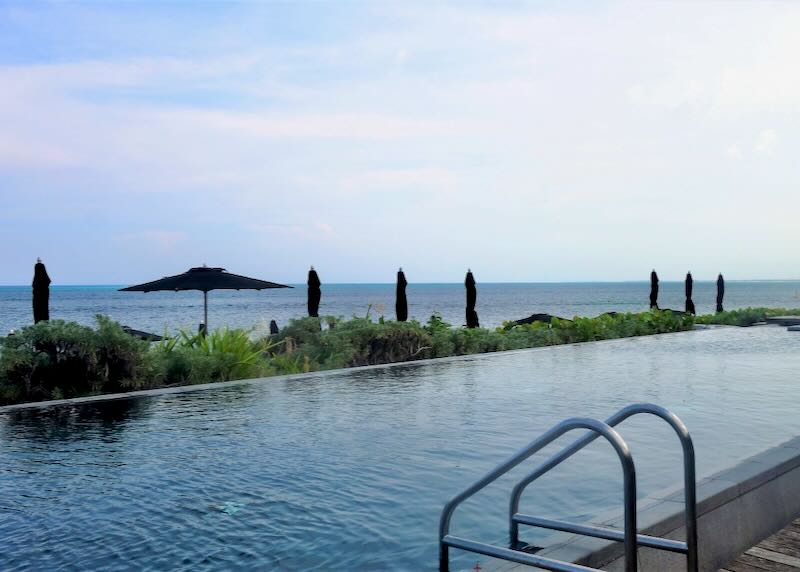
Tulum Travel Videos

MexicoTulum › Travel Videos
Updated: November 30, 2022

See Also

Tulum: The Basics

Where to Stay in Tulum
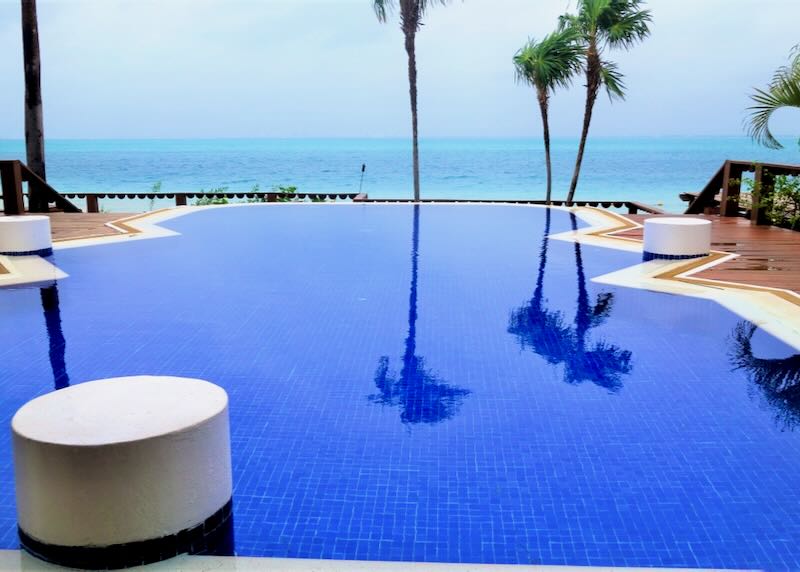
Best Hotels in Tulum

Best Restaurants in Tulum

Best Cafes in Tulum

Best Cenotes in Tulum

Best Beach Clubs in Tulum

Best Taco Spots in Tulum

Best Things to Do in Tulum Videos

Salsa Dancing by the Beach
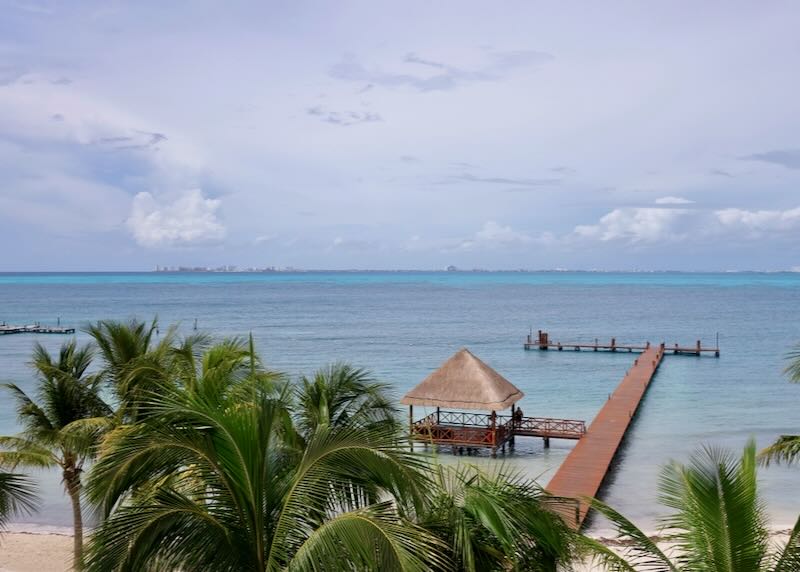
Kayaking the Sian Ka’an Biosphere Reserve with Yucatan Outdoors

Tulum Murals on Tulum Murals Art Tour

Chef’s Table @ La Zebra Hotel

Tulum’s Best Vegan & Vegetarian Restaurant

Tulum’s Best Ice Cream

Mayan Dancers in Valladolid

Birds of Fortune

Handmade Clothing and Handicrafts Boutique

Gitano Beach Club

Flying Dancers on the Plaza at the Mayan Ruins

Cocktails On The Beach

Tulum Hotel Videos

Mezzanine

Sueños

La Valise

Encantada

Una Vida

El Pez

La Zebra

Mi Amor

Bardo

Read More