Category Archives: Travel

Where to Stay in Puerto Vallarta

Mexico › Best Places to Stay in Puerto Vallarta
Updated: April 15, 2026

See Also
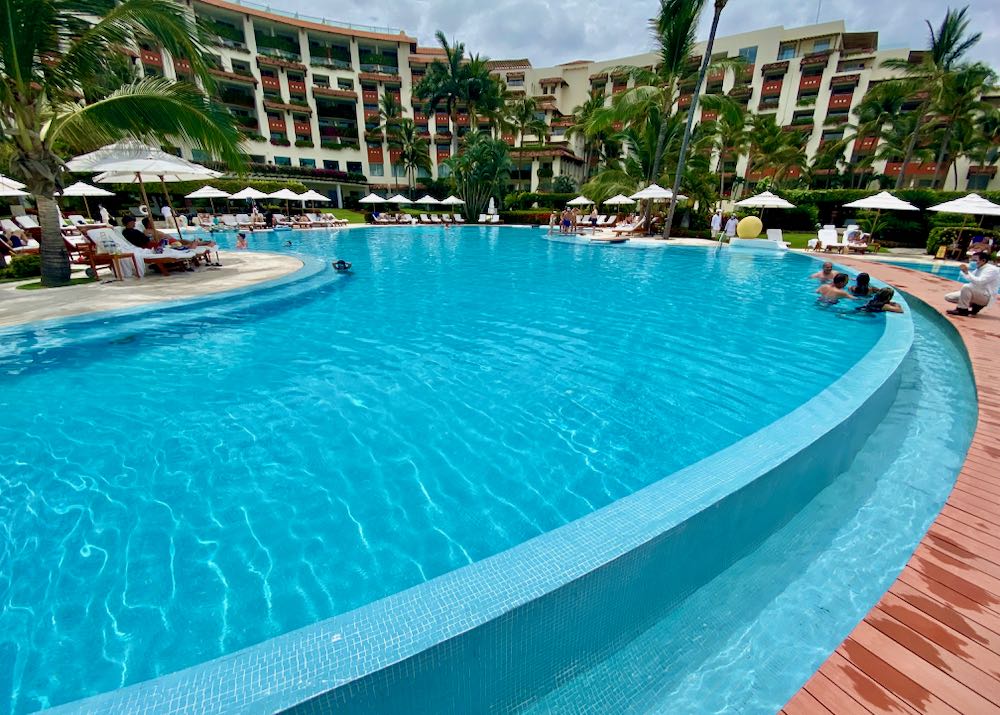
The best place to stay in Puerto Vallarta area.

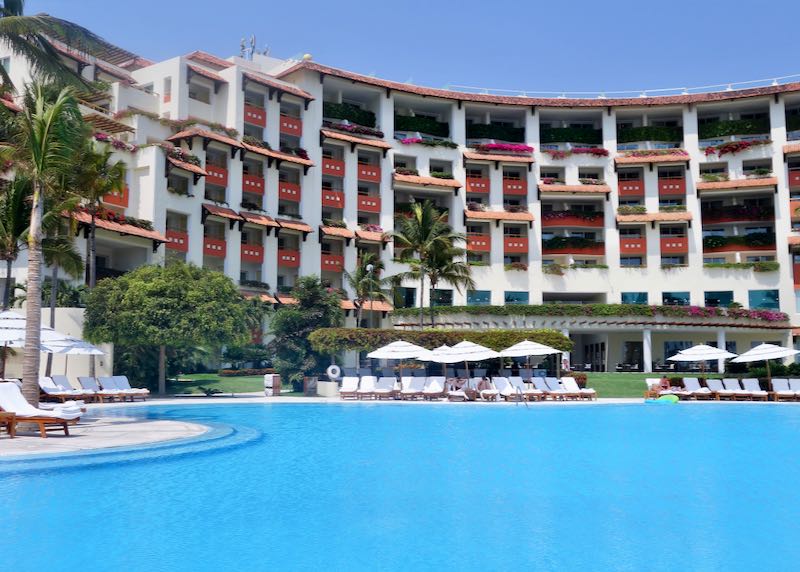
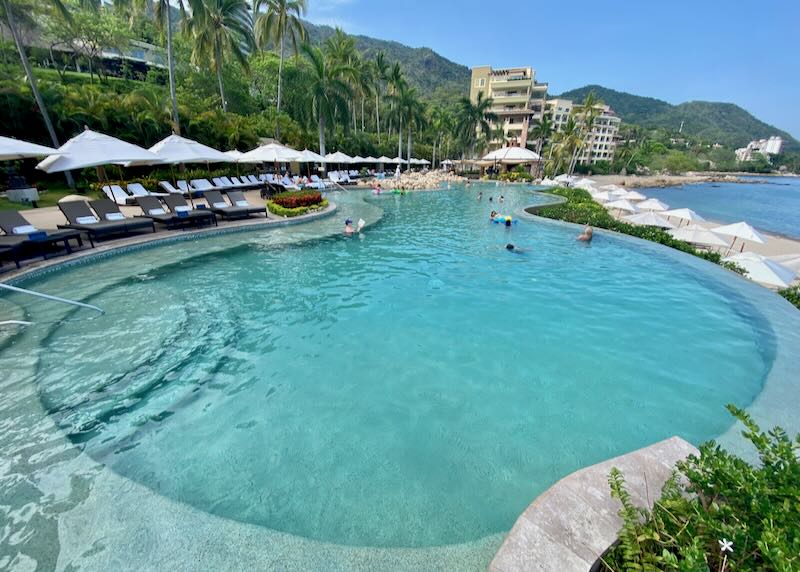
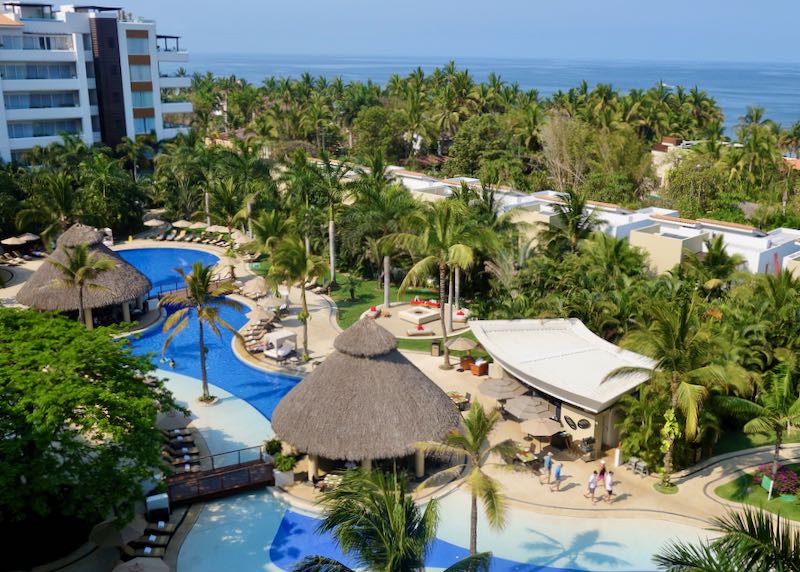
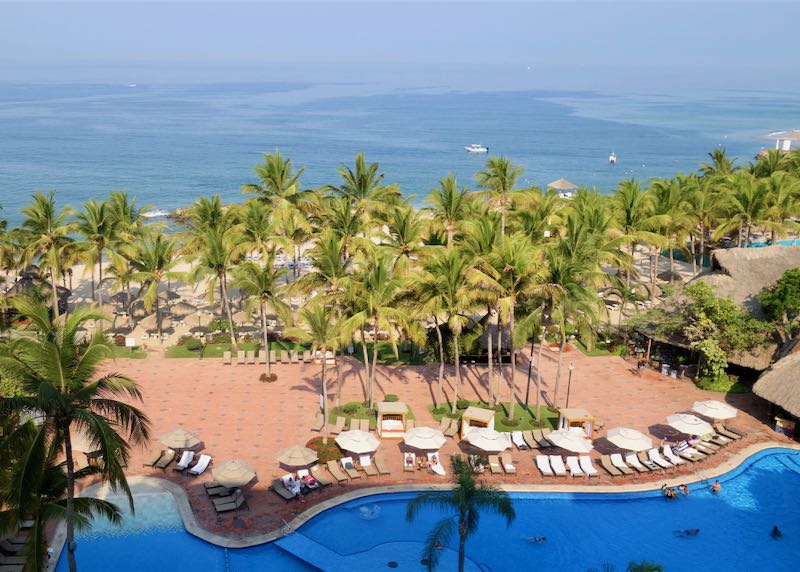
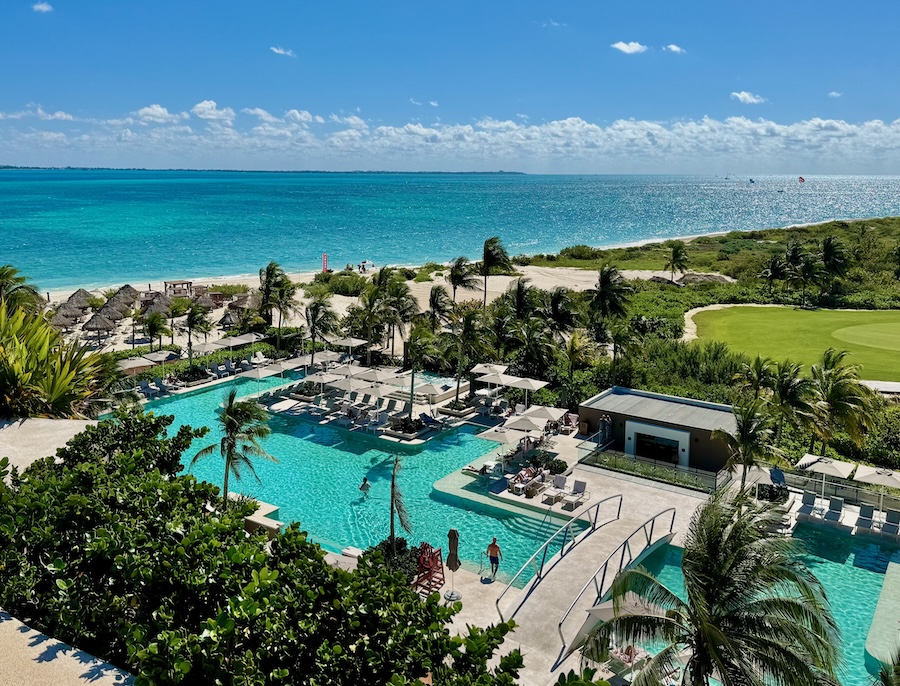
The Grand Velas is one of our favorite hotels in the Puerto Vallarta area. Fantastic for families.

Best Areas to Stay in Puerto Vallarta

Stretching for miles along the Bahía de Banderas and framed by the lush Sierra Madre mountains, Puerto Vallarta (or simply ‘Vallarta’ to locals) is Mexico’s most vibrant and authentic Pacific coast destination. While many Mexican beach towns feel like purpose-built resorts, Vallarta is a real city with deep history. It first gained international fame in the 1960s during the filming of Night of the Iguana, and today I see it as a perfect blend of old-world charm and modern energy. Visitors come for the golden-sand beaches, a world-class dining scene, and the iconic Malecón (beachfront boardwalk). The city is also the undisputed LGBTQ+ capital of Mexico, with a massive social scene centered in the south.

The city is roughly divided into several distinct zones, each with a different character. Navigating is easy thanks to a constant stream of yellow taxis and Uber, though I find the central neighborhoods are best explored on foot.

El Centro (The Historic Center)

El Centro is the historic heart of Vallarta. It consists of a compact grid of narrow streets, centuries-old plazas, and the city’s most famous landmark, the Parroquia de Nuestra Señora de Guadalupe. This area is highly walkable and home to the main stretch of the Malecón, which is lined with sculptures, bars, and high-end art galleries. If you want to be in the middle of the traditional culture and close to the best sightseeing, I recommend staying here.

Zona Romántica (Old Town)

Located just south of El Centro across the Rio Cuale, the Zona Romántica is the city’s social engine. This is where you’ll find Playa Los Muertos, the busiest and most popular beach in town, as well as the famous pier. The neighborhood is packed with sidewalk cafes, boutique hotels, and craft breweries. It is also the center of the city’s nightlife and LGBTQ+ scene. The streets closer to the beach are bustling and tourist-friendly, while the areas further inland retain a more local, traditional feel.

Amapas and Conchas Chinas

South of the Zona Romántica, the terrain turns steep and rocky. Amapas and Conchas Chinas are upscale residential areas tucked into the hills. These neighborhoods are much quieter and offer some of the most spectacular views of the bay. You’ll find luxury villas and high-end boutique hotels here. While it feels worlds away from the noise of the city, you are still only a five-minute taxi ride from the restaurants of the Zona Romántica.

5 de Diciembre and Versalles

For a more local, bohemian vibe, I suggest 5 de Diciembre. It sits just north of El Centro and features steep, cobbled streets and authentic Mexican life. It is home to Playa Camarones, a Blue Flag-certified beach that is much less crowded than Los Muertos. Just north of here is Versalles, which as of 2026 has become the city’s top culinary hotspot. While it isn’t directly on the beach, Versalles is where I go for the best new bistros, bakeries, and independent cafes.

Zona Hotelera (Hotel Zone)

The Zona Hotelera is a wide stretch of coastline between downtown and the marina. This area is dominated by high-rise hotels and all-inclusive resorts. It is a practical choice for families or travelers who want a classic resort experience with easy beach access and modern amenities. The area also features the La Isla Shopping Village and several excellent standalone restaurants like Campomar and La Leche.

Marina Vallarta

Located near the airport, Marina Vallarta is a self-contained, upscale community built around a massive yacht basin. It is very safe, quiet, and features a flat, pedestrian-friendly boardwalk lined with shops and international restaurants. It is an excellent base for golfers, as it hosts a championship course, and for those who plan on taking multiple fishing or sailing charters.

Nuevo Nayarit (formerly Nuevo Vallarta)

About 20 minutes north of the airport, across the state line in Nayarit, is Nuevo Nayarit. This area is vastly different from downtown Vallarta; it features wide, manicured boulevards, massive luxury resort complexes, and long, flat stretches of sandy beach. It is home to the VidantaWorld theme park and multiple world-class golf courses. It is the best choice for those who want a secluded, high-end resort bubble rather than a city experience.

Best Places to Stay in Puerto Vallarta

Best luxury hotel in Puerto Vallarta.

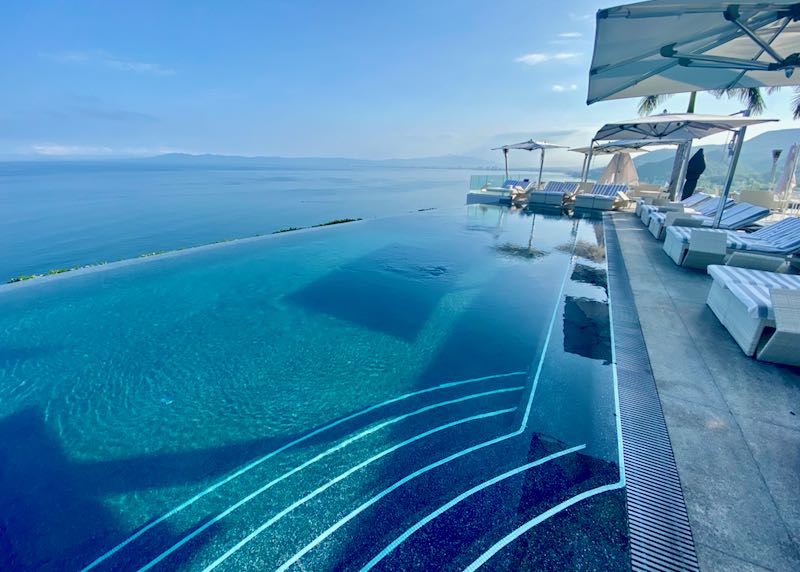
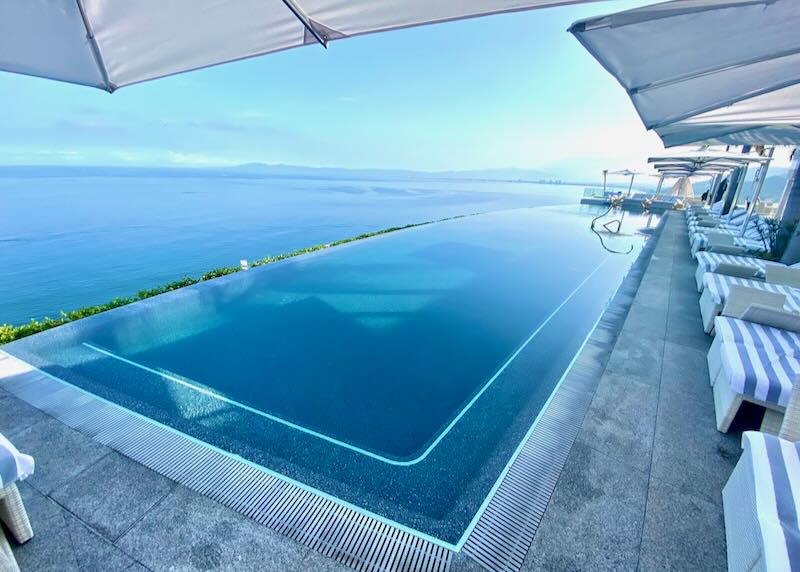
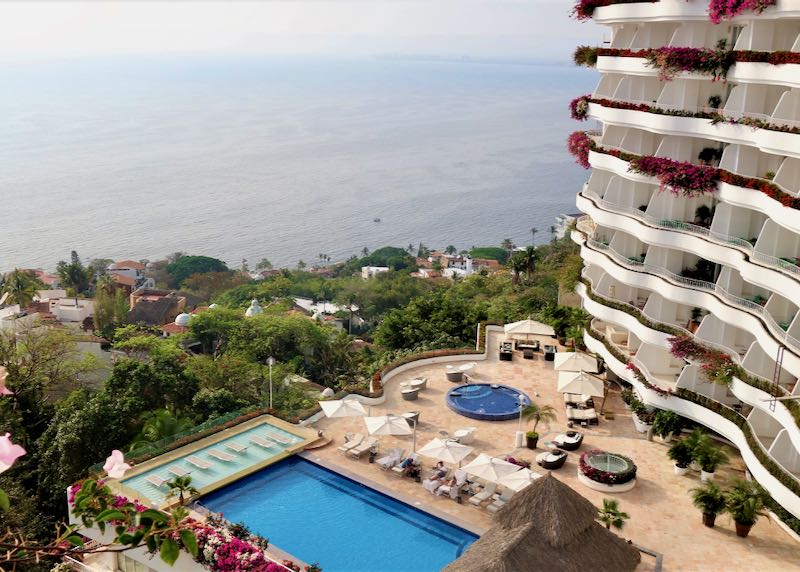
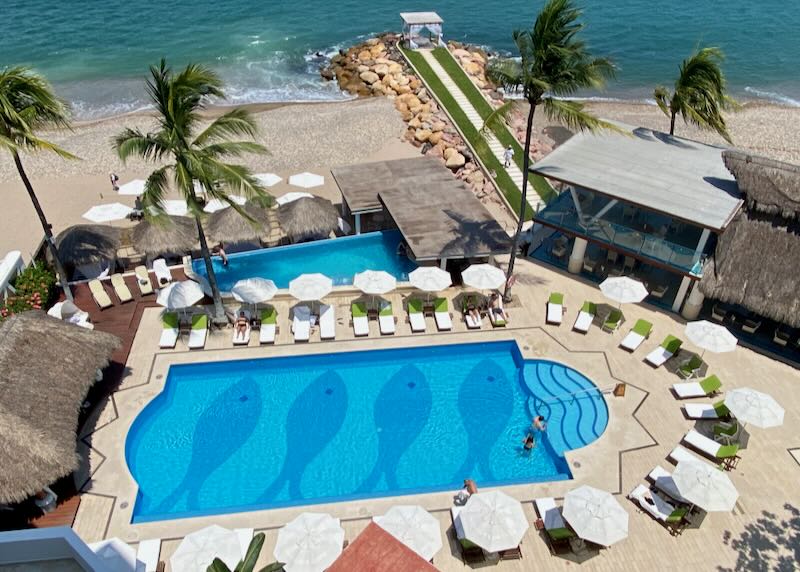
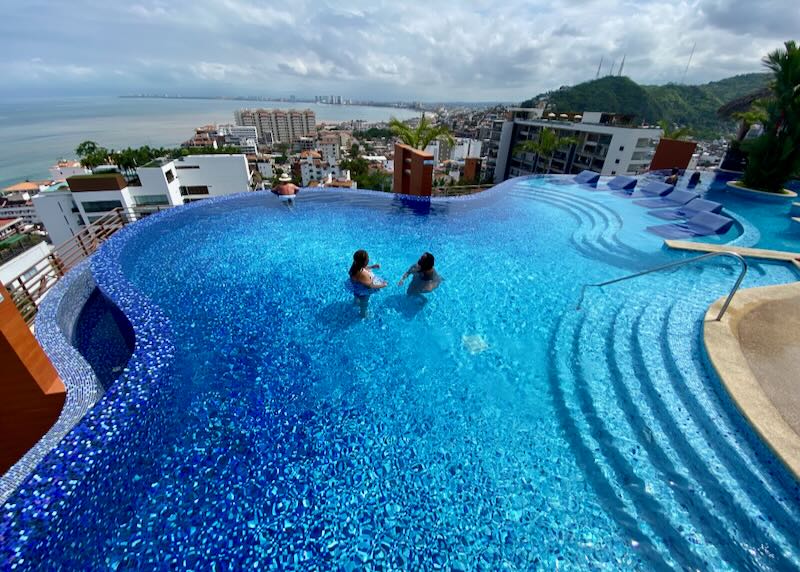
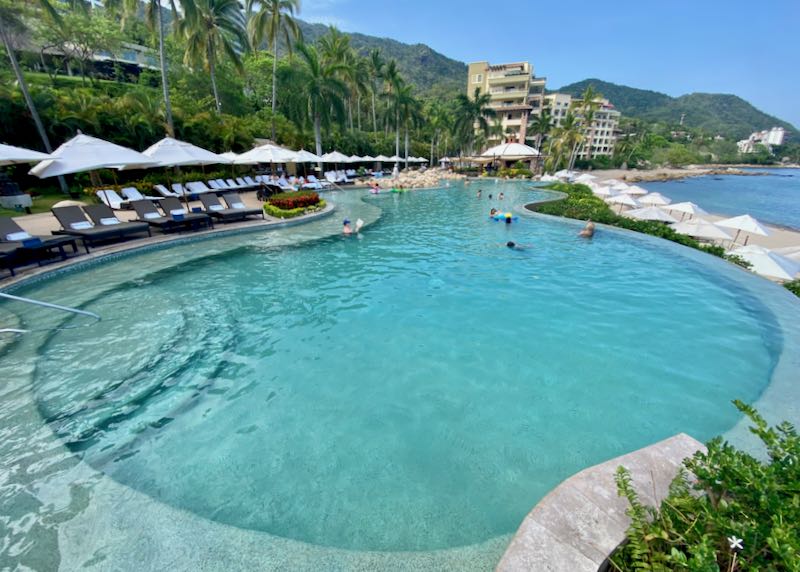
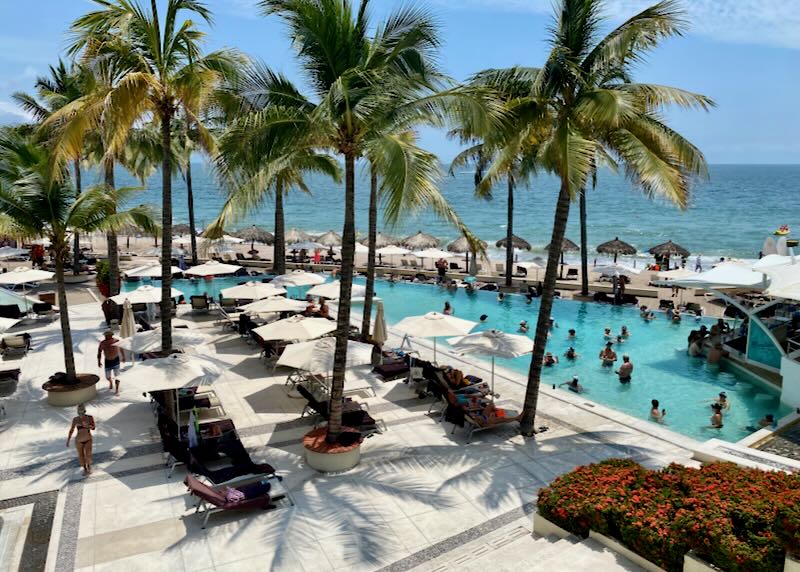
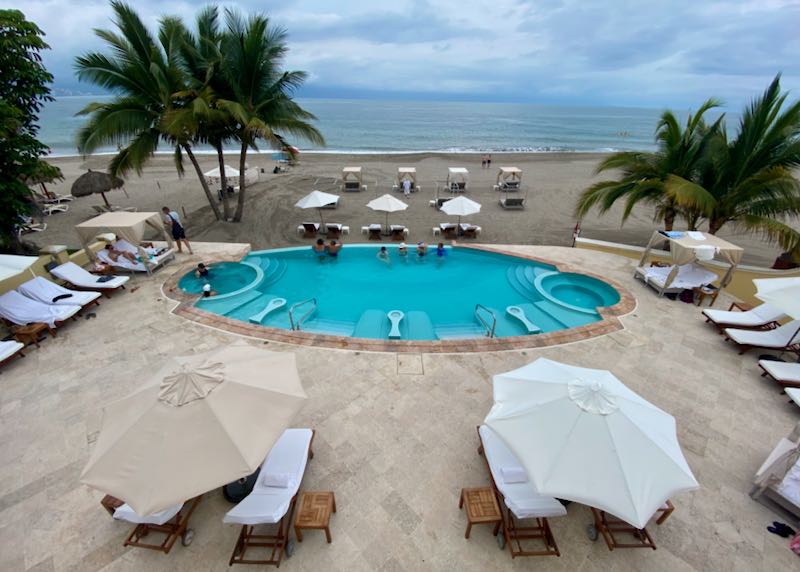
The pool and ocean views at Hotel Mousai – a great place to stay for couples.

Where to Stay in Puerto Vallarta for…

  • Best Neighborhood for First Timers: El Centro & Zona Romántica
    For a first visit, stay in either El Centro or the Zona Romántica. El Centro is the historic heart of the city and highly walkable, featuring a mix of traditional cantinas, high-end art galleries, and the famous Malecón. The Zona Romántica, just south across the river, is the center of the city’s social energy with Playa Los Muertos (the most popular city beach), dense nightlife, and a high concentration of restaurants. Since these areas are connected by a pedestrian bridge at Isla Cuale, you can easily experience both on foot regardless of which side you choose.
  • Best Neighborhood for Families: Zona Hotelera, Marina Vallarta, & Zona Romántica
    For a standard beach vacation with all-inclusive resorts and kids’ clubs, the Zona Hotelera is best. The beaches here, such as Playa de Oro, have calmer waves suitable for swimming. Marina Vallarta is a top choice for families wanting a quiet, gated environment; it is very safe and features a flat, stroller-friendly boardwalk with a weekly evening market. If traveling with teenagers, the Zona Romántica is more engaging. It provides more independence, easy access to parasailing at the beach, and the pier for boat trips to Yelapa. El Centro is the best pick for families on a budget, as the nightly free performances on the Malecón provide great entertainment without the cost.
  • Best Neighborhood for Couples: El Centro & Amapas
    While the name implies romance, the Zona Romántica can be too loud and crowded for a quiet getaway. Instead, look at the hills of El Centro. The narrow cobblestone streets and boutique hotels tucked into the hillside offer privacy and panoramic views of Banderas Bay. For modern luxury, head to Amapas. Located on the cliffs south of the main pier, this area features high-end villas and suites with private infinity pools. It offers a secluded, exclusive atmosphere while remaining a short taxi ride from the fine dining in the Zona Romántica.
  • Best Neighborhood for Food & Restaurants: Zona Romántica, El Centro, & Versalles
    You will find excellent food throughout the city, but the Zona Romántica has the highest density of options, ranging from the famous al pastor tacos at Pancho’s Takos to contemporary Mexican at Makal. El Centro is home to the city’s landmark fine-dining spots, most notably Café des Artistes and The Iguana at Casa Kimberly. For 2026, the essential food neighborhood is Versalles. This residential area north of downtown has become a culinary destination with trendy spots like Cha’ for brunch and El Puerco de Oro for specialized pork belly tacos.

    In the Zona Hotelera, visit Campomar for seafood or the high-concept La Leche. For the best street food, head to the 5 de Diciembre neighborhood for a taco crawl, specifically seeking out Pepe’s Taco and El Carboncito. Marina Vallarta offers a more polished waterfront dining experience with standouts like Tintoque and Portobello.

  • Best Neighborhoods for Sightseeing & Activities: El Centro, Zona Romántica, & Marina Vallarta
    El Centro is the primary hub for sightseeing. Key landmarks include the Parroquia de Nuestra Señora de Guadalupe (the iconic crown-topped church) and the Malecón, which is lined with unique sculptures. At the north end of the boardwalk, you can watch the Voladores de Papantla perform their traditional ritual. The Museo del Cuale on the island is excellent for a brief history of the region.

    The Zona Romántica is the best base for water-based activities. The Los Muertos Pier is where you catch water taxis to south-shore beaches like Yelapa or snorkeling tours to Los Arcos Marine Park. For golf and deep-sea fishing, Marina Vallarta is the best choice as most charters depart from its docks. Nuevo Vallarta (now known as Nuevo Nayarit) is worth a visit for the VidantaWorld theme park. Most zip-line and ATV tours provide pickups in the Zona Hotelera.
  • Best Neighborhoods for Nightlife: Zona Romántica & El Centro
    The Zona Romántica is the center of the city’s nightlife and is world-famous for its LGBTQ+ scene, with high-energy clubs clustered around Calle Lázaro Cárdenas. It is also the best spot for craft beer, specifically at Los Muertos Brewing. El Centro offers a more varied vibe, with cocktail lounges and mezcalerías like El Colibrí hidden in the side streets. For live music and a pub atmosphere, Murphy’s Irish Pub on the Malecón is a staple.

    Marina Vallarta offers a more relaxed evening with wine bars and sports pubs catering to a more mature crowd. If you want the massive, high-production nightclub experience with DJs and bottle service, the largest venues like Mandala are located in the Zona Hotelera.

Zona Romantica in Puerto Vallarta.

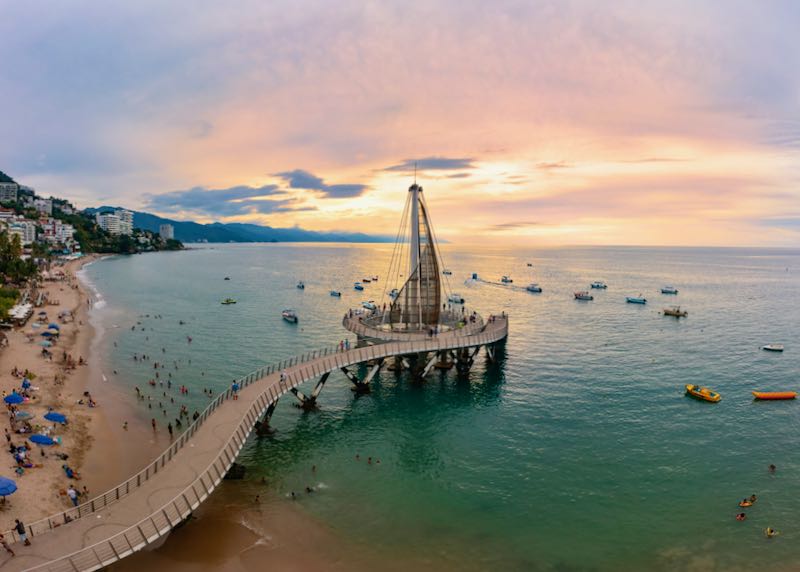
Boat tours and water taxis to southern beaches depart from the Los Muertos pier in the Zona Romántica.

  • Best Neighborhood for Shopping: El Centro & Zona Romántica
    Puerto Vallarta is one of the best places in Mexico to buy Huichol (Wixárika) art, characterized by intricate beadwork and yarn paintings. In El Centro, the Wednesday night Art Walk (October through May) is the best time to visit galleries. Essential stops include Galeria Colectika for indigenous art, Galeria de Ollas for fine ceramics, and Peyote People. For Oaxacan textiles and black clay, visit Caballito de Mar.

    The Zona Romántica features a mix of art and fashion. Tierra Huichol has museum-quality pieces, while Mundo de Azulejos specializes in Talavera tiles. For modern Mexican apparel, check out Manyana. For affordable souvenirs and local crafts, the Mercado Municipal Río Cuale and the Isla Cuale Flea Market offer the best variety in a shaded, riverside setting.

  • Best Neighborhood for a Local Vibe: 5 de Diciembre & Versalles
    To get away from the tourist crowds, stay in 5 de Diciembre. It is a steep, traditional neighborhood with a bohemian feel and excellent street food. Playa Camarones here is a great local beach with Blue Flag certification. Versalles is another excellent choice for a modern local vibe. It is located just inland from the Hotel Zone and has evolved into a residential culinary hub filled with independent cafes and bakeries. It lacks a beach but offers better value and a more authentic glimpse into daily life in Vallarta.
  • Safest Areas of Puerto Vallarta
    Puerto Vallarta is consistently ranked as one of Mexico’s safest cities for tourists. Marina Vallarta and the Zona Hotelera are the most secure areas, featuring resort-style security and well-lit streets. El Centro and the Zona Romántica are also very safe for walking at night due to the high volume of people and frequent patrols by the Tourist Police. As of 2026, Puerto Vallarta remains free of travel restrictions for visitors, though you should always use authorized transportation apps like Uber or official taxi stands rather than hailing random vehicles.
  • Unsafe Areas of Puerto Vallarta
    There are no specific “no-go” zones within the main tourist areas. However, avoid wandering into the unlit residential hills far inland from the coast late at night. The most important safety rule is to strictly avoid any involvement with illegal drugs. Nearly all serious safety incidents in Mexico are related to the narcotics trade, and avoiding this scene significantly reduces your risk profile. Stick to well-trafficked areas and use the same common sense you would in any major international city.

The 20 Best Hotels in the Puerto Vallarta Area

1. Hotel Mousai – South Hotel Zone

Hotel Mousai in South Hotel Zone
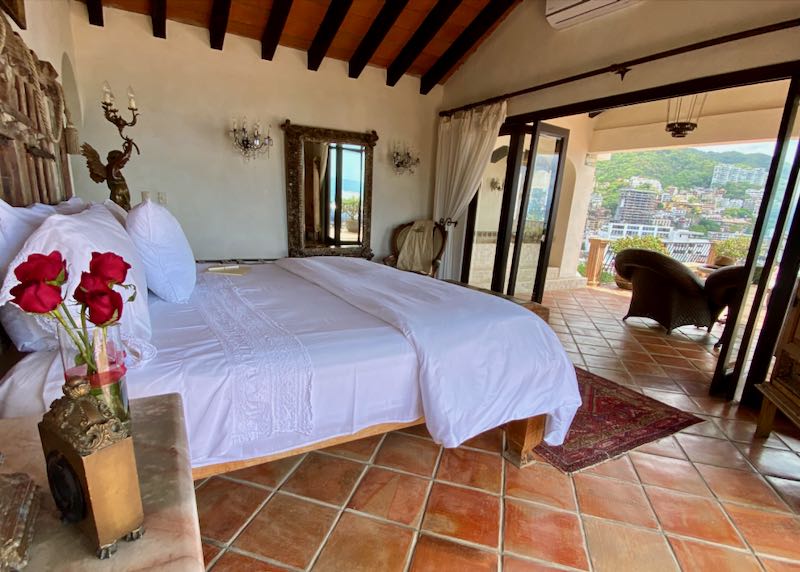
Five Diamond, adults-only hotel with a rooftop infinity pool overlooking their 85-acre jungle preserve, Garza Blanca Beach, and the Sea of Cortez. All accommodations include outdoor, tile jacuzzis on private balconies. Ultra Suites add upgraded amenities, the hotel’s most expansive views, and unlimited access to the hydrotherapy circuit in their decadent spa. Expect impeccable service along with phenomenal dining and drinks on site or at their sister property, Garza Blanca. Guests may choose to reserve a suite only, or an all-inclusive package. Located just north of Mismaloya, near Los Arcos Park, the Botanical Gardens, and the Puerto Vallarta Zoo. Hotel phone: +52 322 176 0738

2. Grand Velas Riviera Nayarit – Nuevo Vallarta
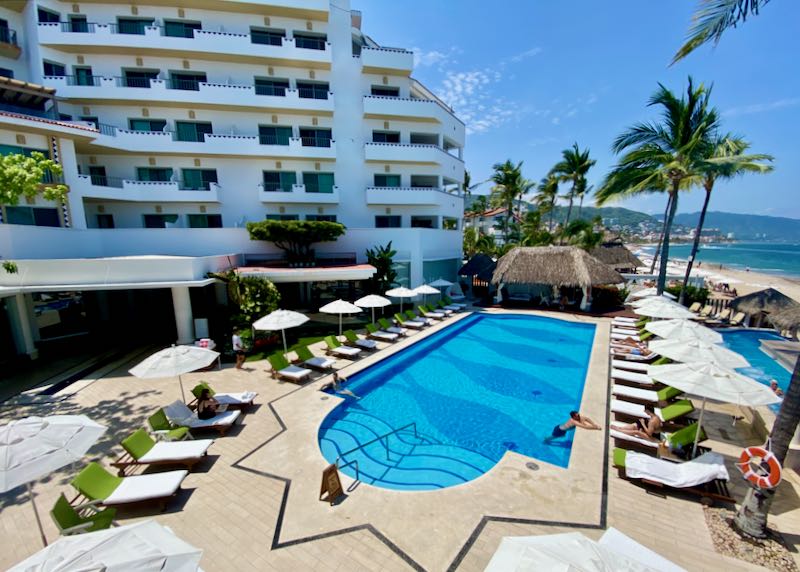
Best hotel for families in Puerto Vallarta.
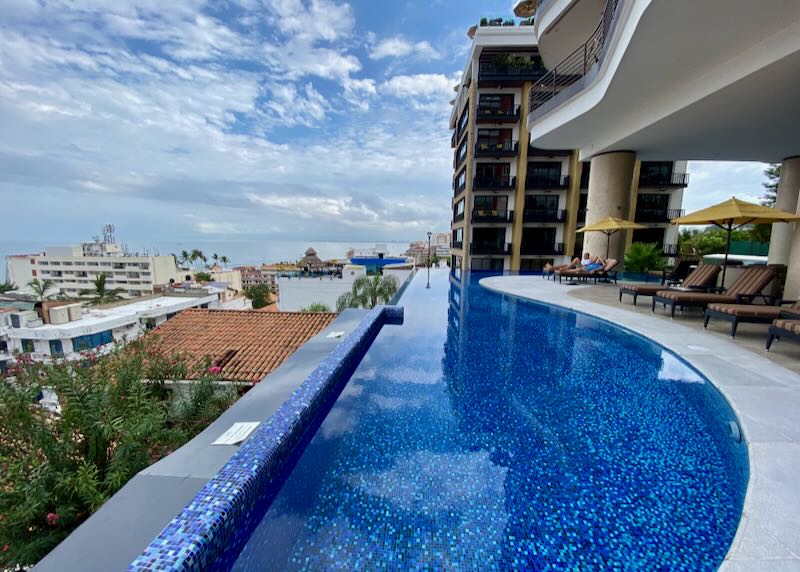
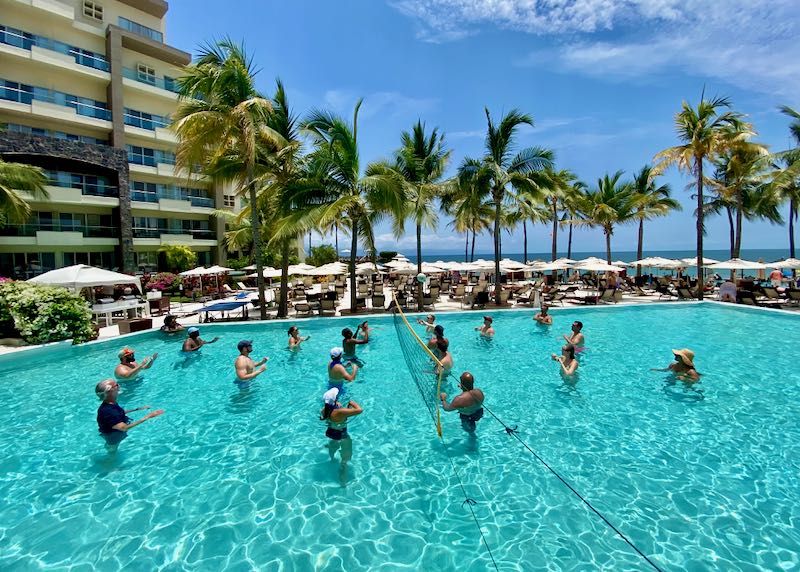
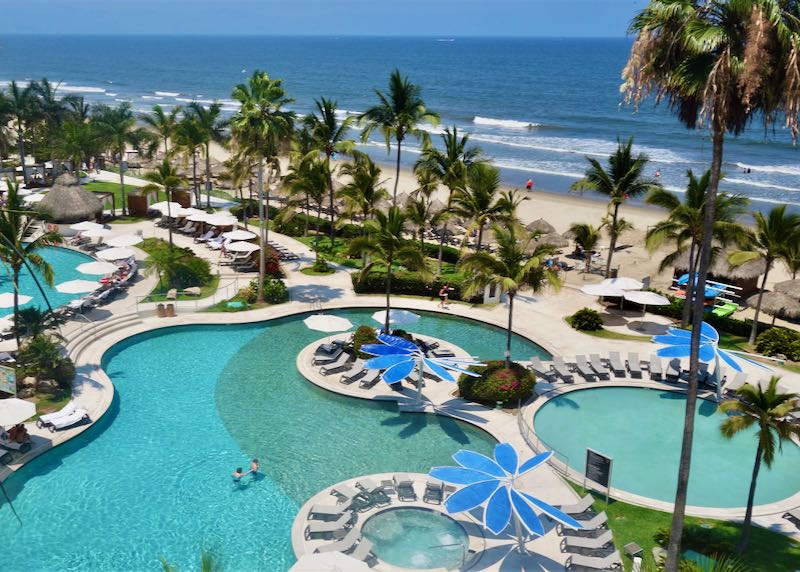
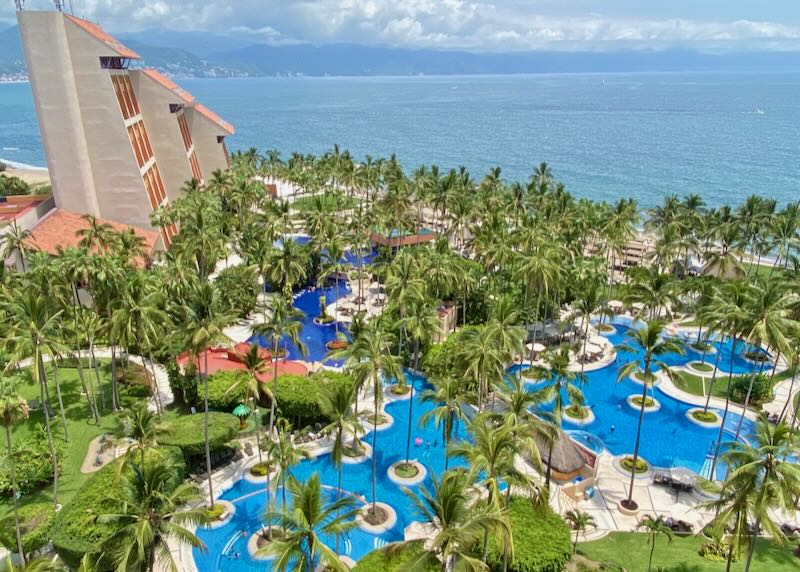
Luxurious, all-suite, all-inclusive, family-friendly resort with a multi-tier infinity pool and exceptional family amenities and services. Their enormous two-bedroom, three-bathroom family suites boast a private jacuzzi terrace, a 50 minute massage per person per day, and round-trip airport transfer. Kids’ amenities for all ages include a baby concierge, kids’ pool, kids’ club with culture, nature, and craft activities, and a teen lounge with gaming consoles, a dance floor, and karaoke. A host of gourmet local and international restaurants satisfies even the pickiest eaters. The Grand Velas sits on the powdery white Nuevo Vallarta Beach, near Aquaventuras water park (with dolphins!) and in between two golf courses. Hotel phone: +52 322 226 8677
3. Hacienda San Angel – El Centro, Old Town

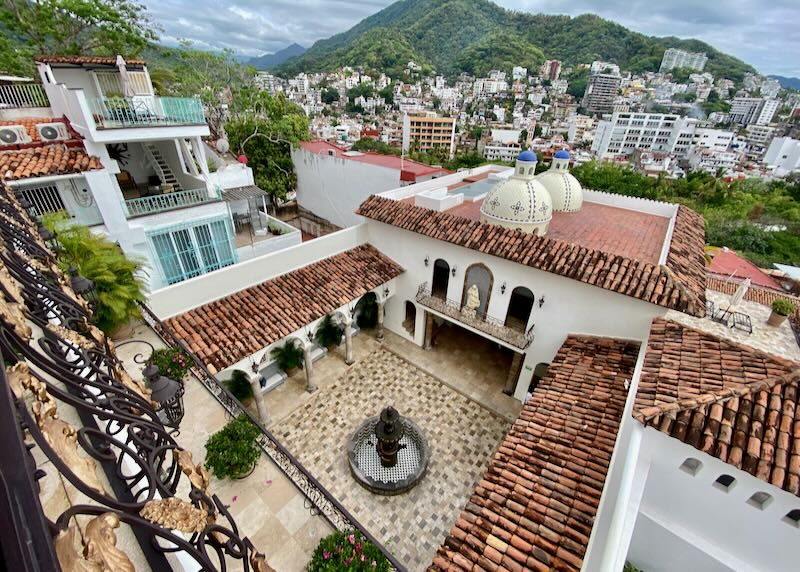
Best boutique hotel in Old Town Puerto Vallarta.
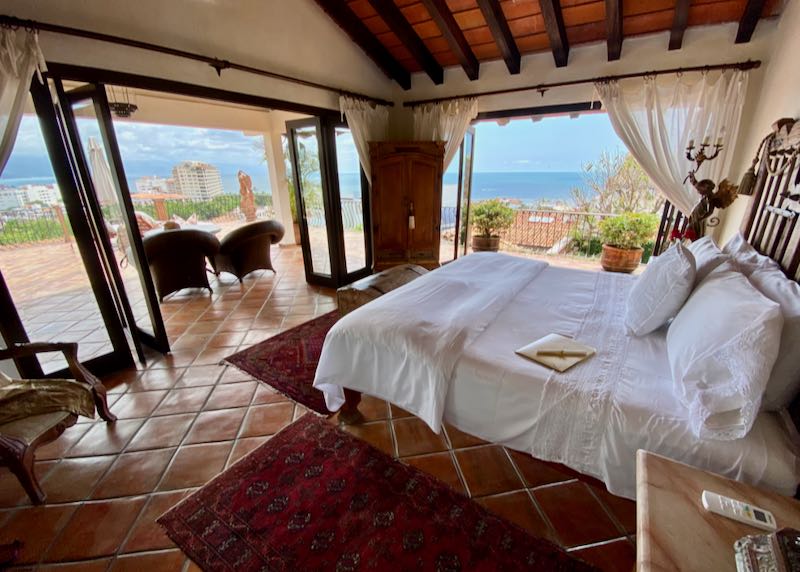
Four romantic, colonial-style villas house 20 total rooms, with a lush garden courtyard overlooking Guadalupe Church and the ocean. All rooms include dramatic Mexican and European antique décor, plus modern marble floors and French windows; Presidential and Royal suites add outdoor terrace jacuzzis. Three pools, a small chapel, and a gourmet restaurant are spread throughout the grounds, linked by ivy-covered terraces and garden paths. Its fine dining restaurant serves sumptuous Mexican and international dishes, with sweeping sea and city views, live mariachi nightly, and seasonal Sunday brunches. The restaurant is popular for celebrations, so reserve in advance, especially during the high season. The hotel sits amid winding cobblestone streets in El Centro, just steps from the Church, the Malecon, and the city’s best dining and nightlife. Hacienda San Angel is the former home of Richard Burton. Hotel phone: +52 322 222 2692

4. Villa La Estancia – Nuevo Vallarta
Best hotel villa in Nuevo Vallarta near Puerto Vallarta.
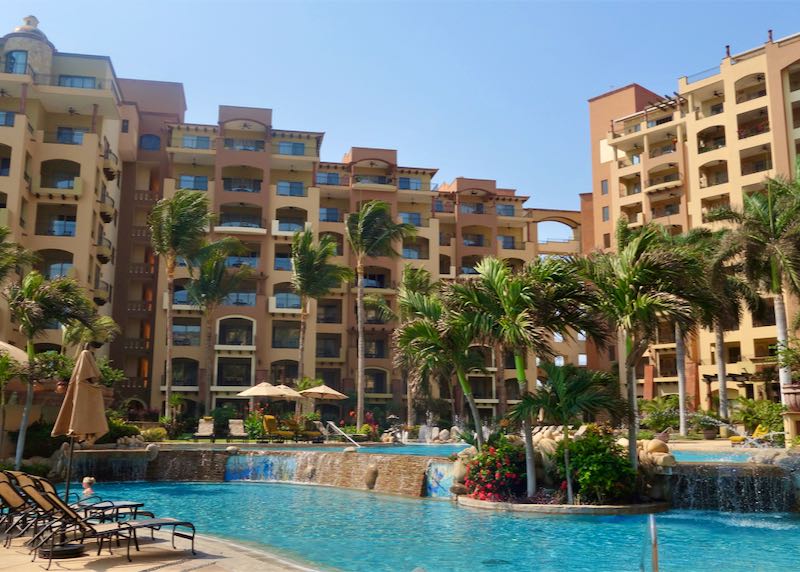
Luxury, family-friendly resort with spacious suites, a two-level pool, and exclusive beachfront location. Suites are generous, up to three bedrooms, with a full kitchen, and a washer and dryer. All rooms include a jacuzzi in the master bathroom and a private balcony. Excellent on-site restaurants and bars, plus guests have access to dining options at the sister resort next door. Though this resort is very popular with families, it remains peaceful and quiet: no loud pool parties, and the bars close early, around 10:30. Villa la Estancia sits at the north end of Nuevo Vallarta, on a long, tranquil beach; just a fifteen-minute bike ride to the pueblo magico Bucerias and about thirty-minutes’ drive to Old Town. Hotel phone: +52 800 483 0088

5. Casa Velas – Marina Vallarta

Best beach hotel for honeymooners in Puerto Vallarta.
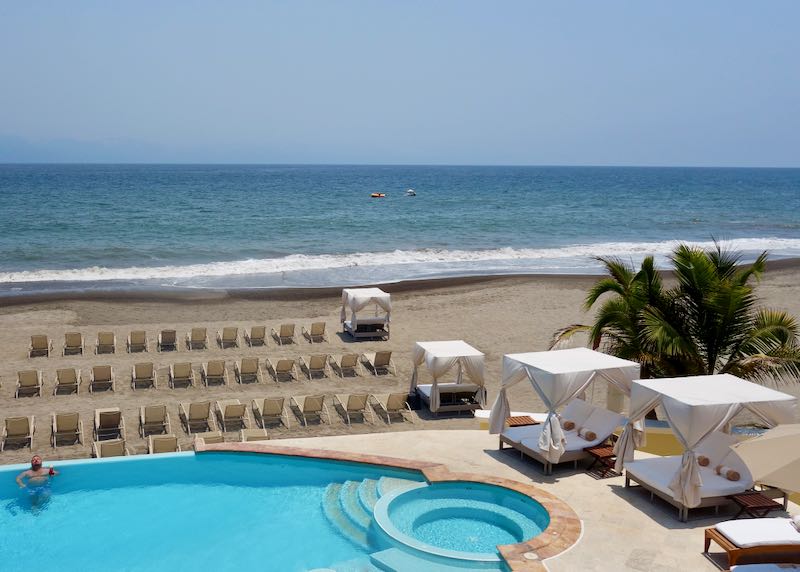
Luxury, adults-only boutique hotel with a free form pool, a beach club with an infinity pool, and a holistic spa featuring hydrotherapy and ingredients grown onsite in their botanical garden. A wide range of spacious suites are available, many with private jacuzzis or plunge pools. The Presidential suites is the largest and most luxurious with four bedrooms, three and a half bathrooms, free golf, and massage for all guests. Wellness suites add in room jacuzzis, private plunge pools, a massage table, and fitness amenities. Thoughtful perks include a handbag bar and complimentary beach transfer all day. Located in Marina Vallarta, surrounded by the golf course, near sailing, diving, and marine parks. Hotel phone: +52 322 226 8670

6. Marriott Resort & Spa – Marina Vallarta

Marriott Puerto Vallarta Resort & Spa in Marina Vallarta
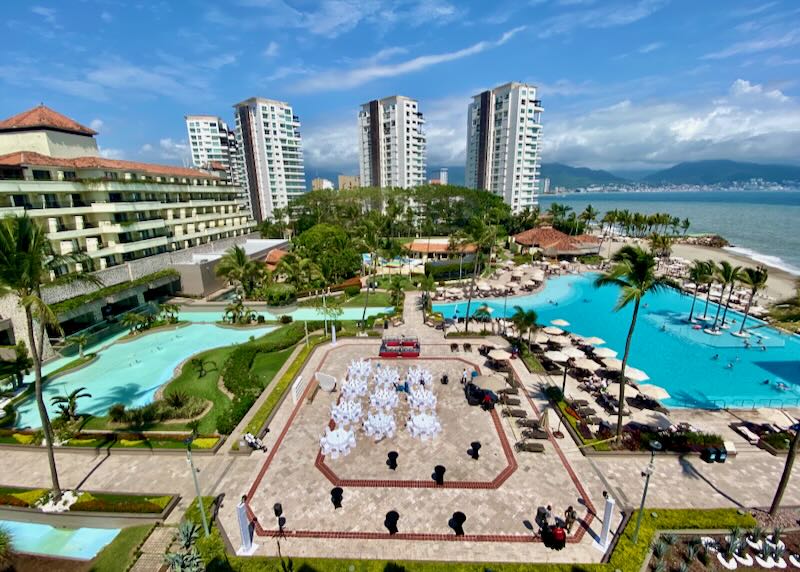
Upscale, beachfront resort with infinity, kids’, and lap pools, plus Puerto Vallarta’s largest spa. Family amenities include a kids’ club, teen gaming area, and a sea turtle hatchery and release program (June – November). Its indulgent spa spotlights indigenous Huichol treatments, a hydrotherapy circuit, and in-pool massage. Fantastic restaurants are around every corner here, but the star is their Ceviche & Tequila Bar, offering outstanding seafood and 270 tequilas. Rooms are airy and bright, but average in size; families should opt for a larger suite or connecting rooms. This resort sits right on the Marina Beach, walking distance to the Marina Vallarta Golf Club, boat tours, and marine parks. Hotel phone: +52 322 226 0000
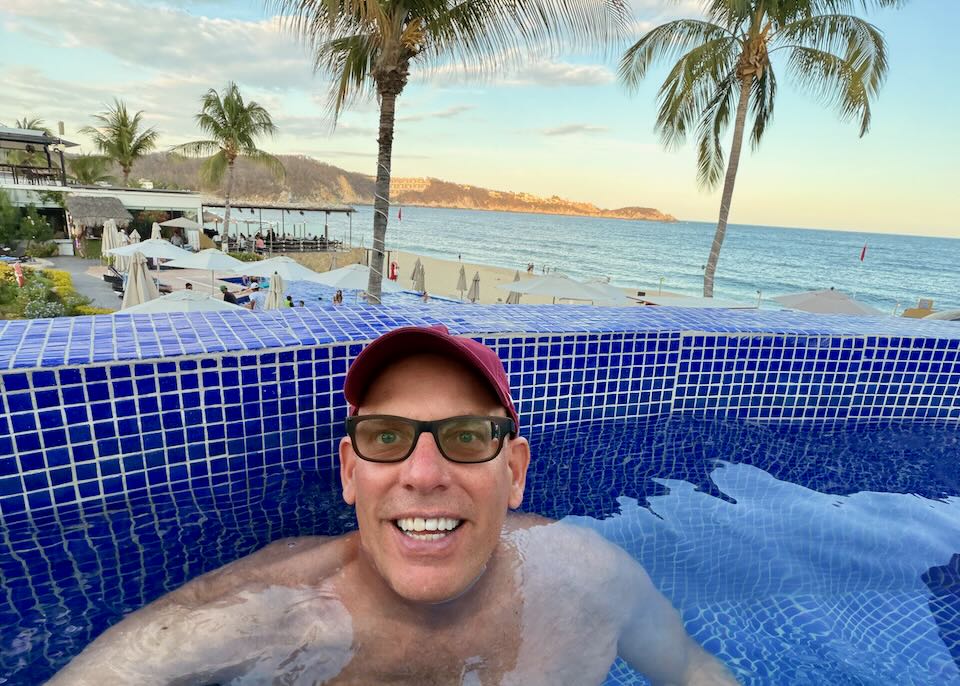
7. Garza Blanca Preserve Resort & Spa – South Hotel Zone

Garza Blanca Preserve Resort & Spa in South Hotel Zone
Sophisticated resort in a jungle mountain preserve with two free-form infinity pools, contemporary dining, and a host of nature activities. All rooms and suites feature a private terrace with a hammock, while suite types one bedroom and up include a full kitchen, washer and dryer, and one extra bathroom per bedroom. Its top-notch kids club gets little ones up close with nature through hiking, planting trees, kayaking, and more. Succulent dining, a tranquil spa, and serene tropical view of Banderas Bay rounds out the experience. Garza Blanca sits on a sugary white sand beach with a rock wall and gentle waves just north of Mismaloya, near the Botanical Gardens, Puerto Vallarta Zoo, and Los Arcos Park. Hotel phone: +52 322 176 0718
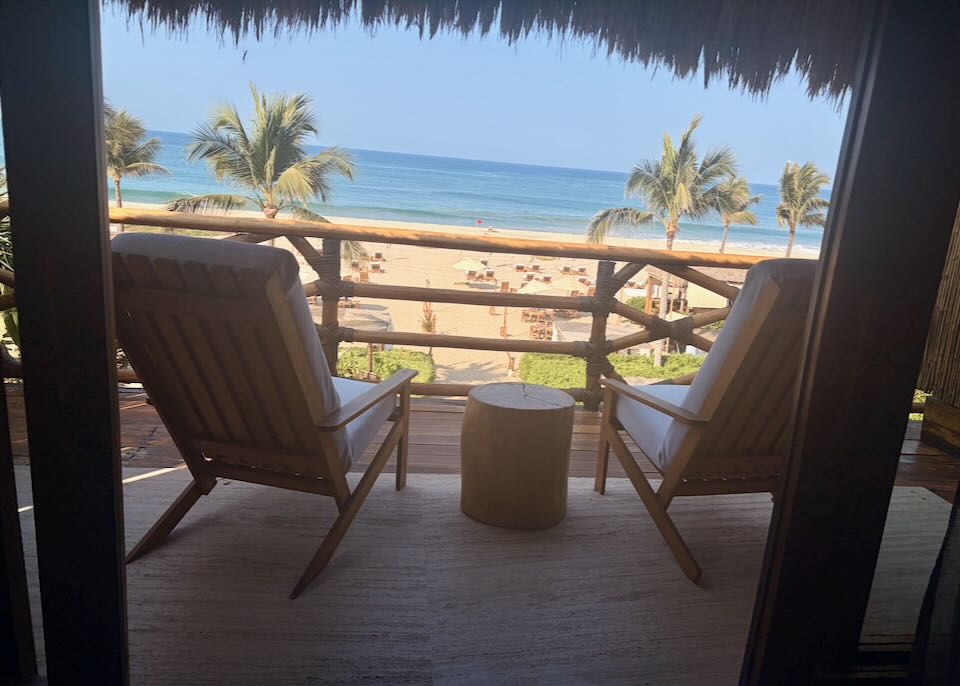
8. Casa Kimberly – El Centro, Old Town

Casa Kimberly Hotel in El Centro, Old Town
Dramatic and glamorous boutique accommodations, featuring a rooftop al fresco restaurant and bar, cozy spa, and lozenge-shaped pool. This adults-only hotel is comprised of two villas connected by a bridge; the older formerly owned by Richard Burton, and the other built by him for Elizabeth Taylor – each room is named and designed after one of Taylor’s films. Suites all feature indulgent baths and rain shower, plus lavish décor that blends Hollywood glitz with hacienda charm. Most include a private terrace with a whirlpool, plunge pool, or both. Its restaurant, The Iguana, is one of the top in the city, specializing on contemporary Mexican cuisine and a variety of tequilas. Located in El Centro, near Guadalupe Church, the city’s best restaurants and nightlife, and the Malecon. Hotel phone: +52 322 222 1336

9. Grand Miramar – Conchas Chinas

Puerto Vallarta hotel with best sea and sunset view.
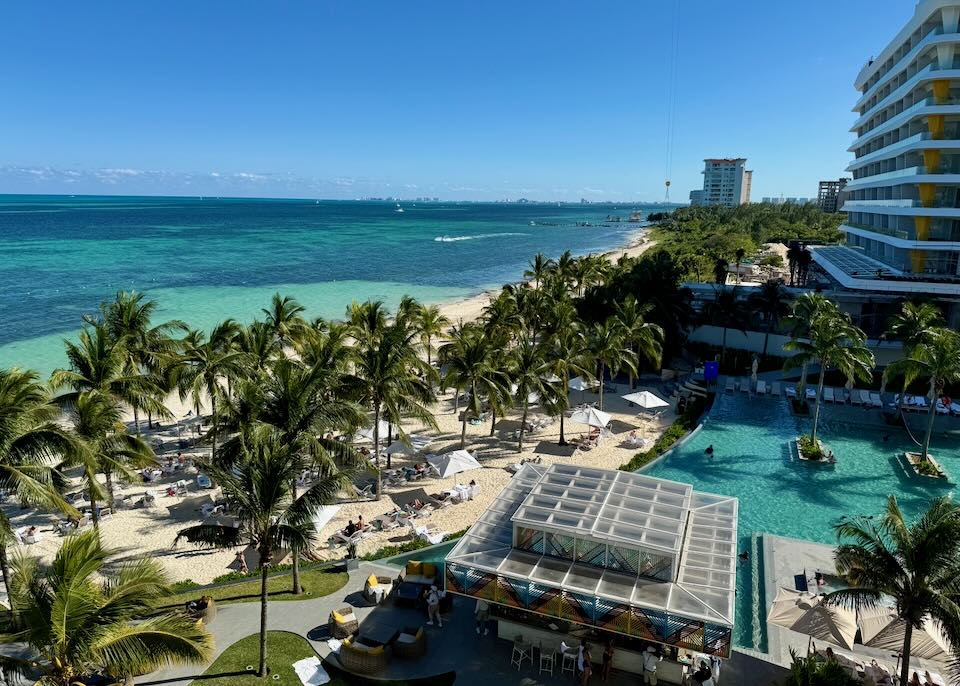
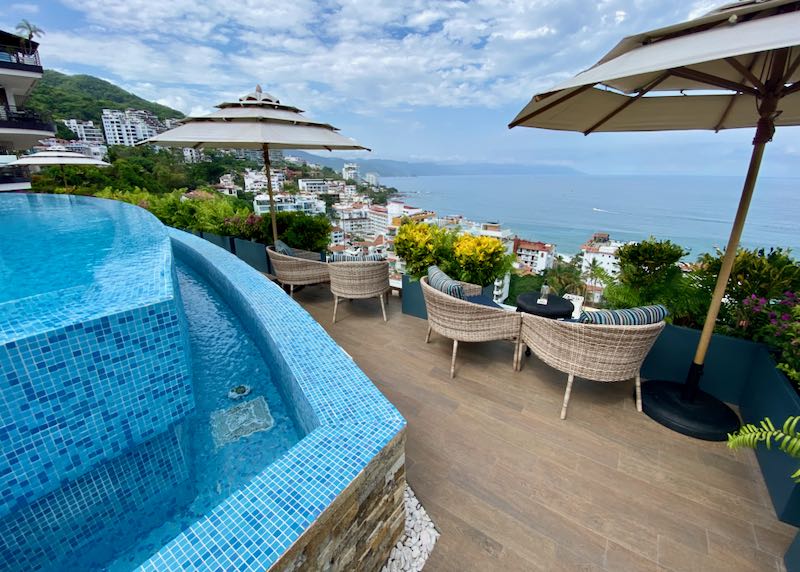
On the highest point overlooking Banderas Bay, the Grand Miramar offers panoramic views from its rooftop bar, plus three dazzling pools, a pool-sized jacuzzi, and contemporary suites. All suites include a private terrace and a kitchenette with a stovetop. Two- to four-bedroom residences include full kitchen and dining room; many have private terrace whirlpools. The resort offers five great restaurants, but the stars are Casianos, with its three- to five-course surprise dinner menu, and the Gin Joint, especially popular for sunset cocktails and tapas. From its privileged location in Conchas Chinas, the resort is walking distance to two swimmable beaches and near the nightlife and dining in Zona Romantica. Hotel phone: +52 322 221 5120

10. Velas Vallarta Suite Resort – Marina Vallarta
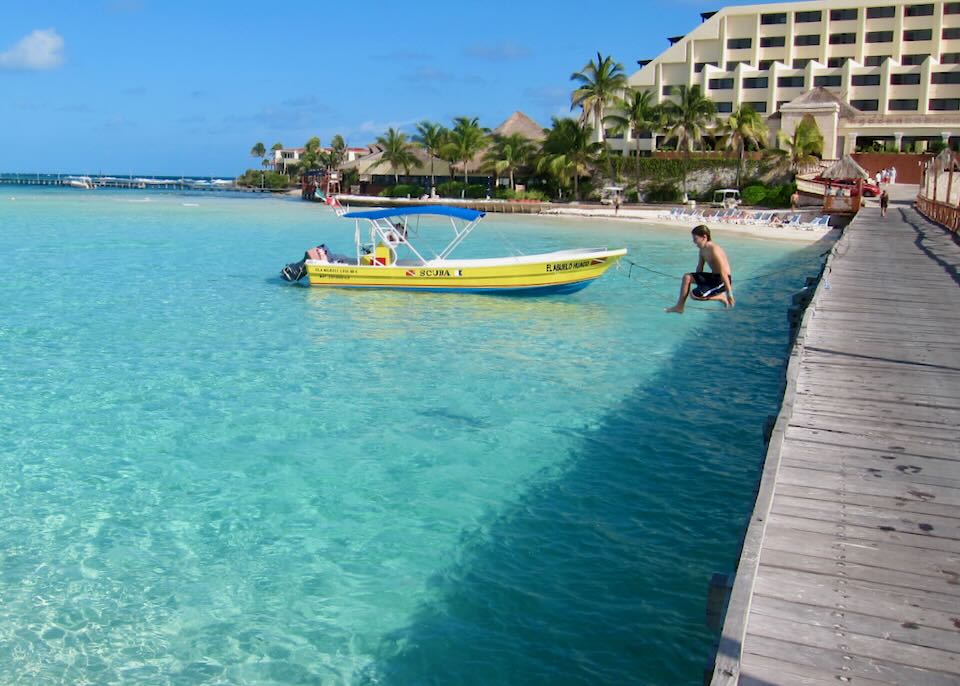
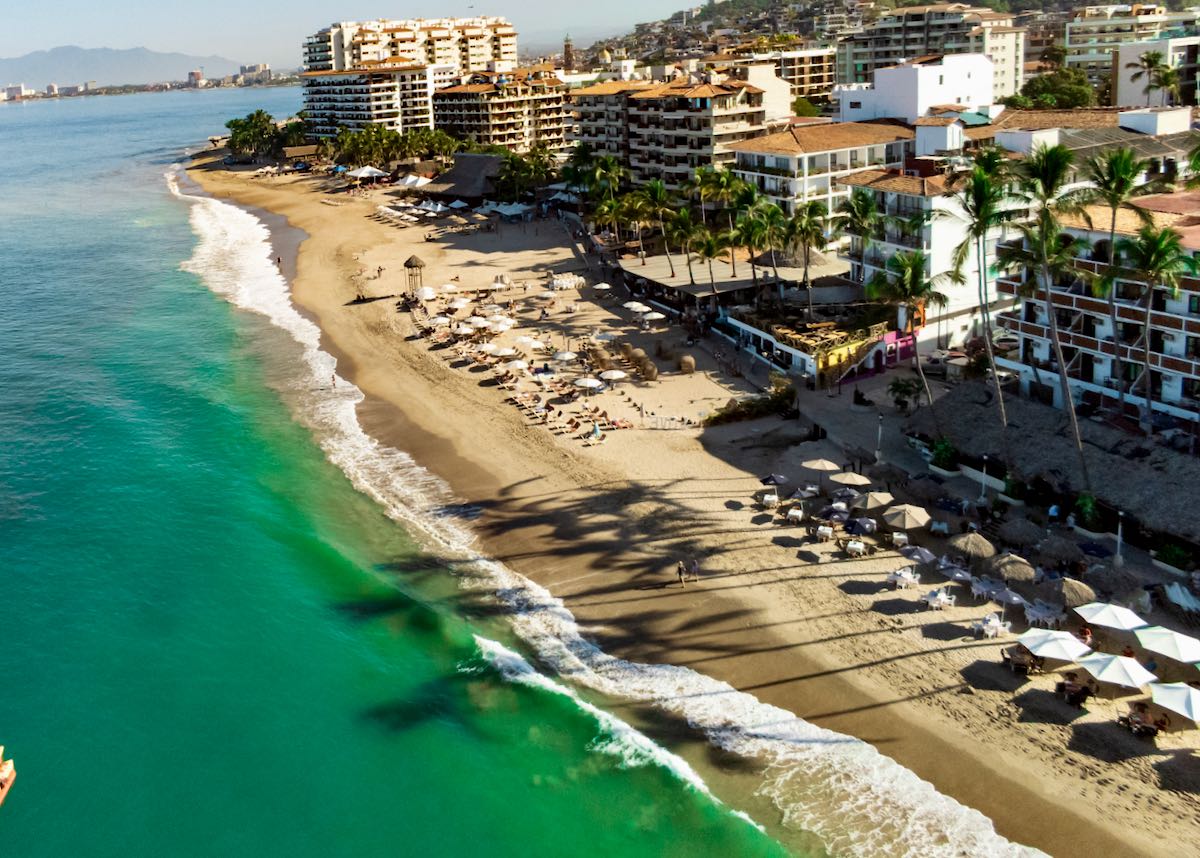
Best all-inclusive resort near Puerto Vallarta.
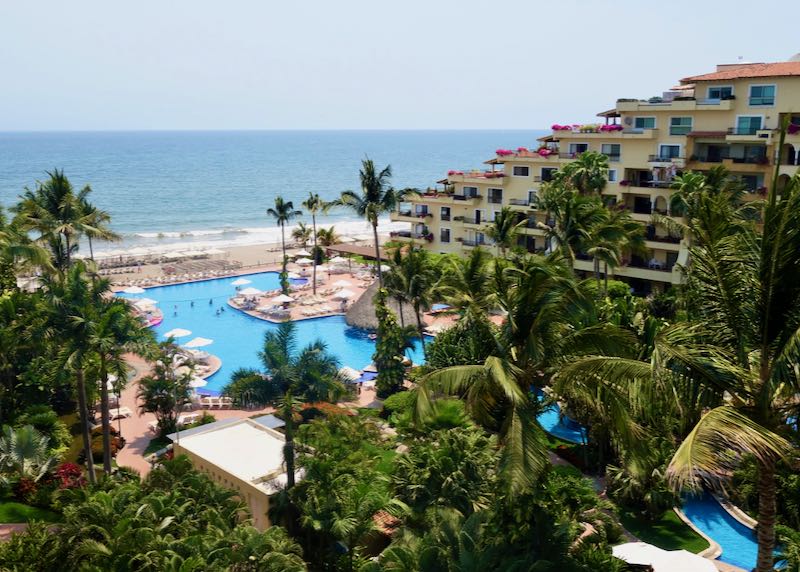
This family-friendly, all-inclusive, all-suite luxury beachfront resort showcases two free-form pools connected by a lazy river. Spacious, ocean view accommodations with up to three bedrooms, each with a full kitchen, including a stovetop and dishwasher. Its kids’ club offers a third pool, plus activities such as sandcastles, painting, and Summer Camp with beach bonfires. There’s an organic spa, and superb food and drinks on-site, and golf just next door. Velas Vallarta is located on Marina Vallarta Beach, walking distance to boating and marine attractions. Hotel phone: +52 322 226 8673
11. Villa Premiere Boutique Hotel – El Centro, Old Town
Villa Premiere Boutique Hotel & Romantic Getaway Hotel in El Centro, Old Town
Four-diamond, adults-only, boutique resort, with luxurious rooms and two beachfront pools. Spacious, ocean view rooms and suites are all inclusive of personal butler service; most feature a private indoor or outdoor whirlpool. Sumptuous dining onsite offers the best in Mexican cuisine, whether traditional or contemporary, plus 24 hour room service. Thoughtful amenities include a poolside “Draw Your Moment” art station, in-room pillow and aromatherapy menus, and loaner bikes and kayaks. Their indulgent spa offers hydrotherapy and an oxygen bar. Villa Premiers is well-located on Camarones Beach in El Centro, just a five minute walk to the city’s best restaurants, the Malecon, and Guadalupe Church. Hotel phone: +52 322 226 7040

12. Pinnacle Resorts 180 – Zona Romantica, Old Town

Pinnacle Resorts 180 in Zona Romantica, Old Town
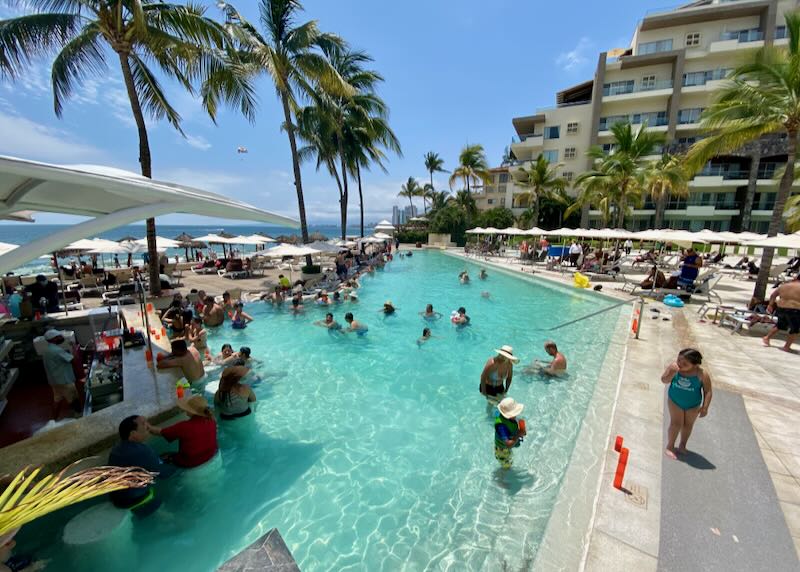
Family-friendly, stylish condo boutique with ocean views and private balconies. Each suite is uniquely designed, but all are one- or two-bedrooms with full kitchens, washer-dryer units, and private balconies; many have outdoor jacuzzis. Top-tier condos include private plunge pools, plus upgraded features such as wraparound balconies. The cozy infinity pool has swim up access to the main bar with a popular happy hour. These chic condos are located in Zona Romantica, in the heart of Puerto Vallarta’s dining and nightlife district, just five minutes’ walk to Los Muertos Beach and Pier. Hotel phone: +52 322 222 3556

13. Secrets Vallarta Bay – North Hotel Zone

Best adults-only all-inclusive in Hotel Zone of Puerto Vallarta.
Romantic, adults-only, all-inclusive resort on Camarones Beach, with gorgeous pools, a full-service spa, upscale dining, and a champagne bar. Suites are intimate yet spacious, many with private terrace jacuzzis or swim up options; Presidential suite adds a private plunge pool and whirlpool bath. Its holistic spa emphasizes indigenous treatments with hydrotherapy pools. Fine dining and casual restaurants offer an array of indulgent flavors, from local Mexican recipes, to Pan-Asian and Mediterranean bites. Guests at Secrets also have full access to the nightclub, casino, and restaurants at Dreams, its sister property next door. The resort sits just south of the North Hotel Zone on a golden sand beach, about thirty minutes walking to the Malecon and all of Puerto Vallarta’s nightlife. Hotel phone: (866) 467-3273

14. Marival Distinct Luxury Residences – Nuevo Vallarta

Puerto Vallarta hotel with view and near golf course.
All-inclusive, all-suite resort with outstanding services and amenities for families, plus a pool and beach club. Suites are one- to four-bedrooms, with a full kitchen and in room laundry; swim up suites and villas with full sized private pools are also available. Family amenities included in the rate are the kids’ club, free nanny service, and one free tour (options include sea lions, zip lining, pub tours, and more). Add on a “Family Emotions” package for a second tour, customized family picnic, exclusive concierge, and upgraded amenities. There are several restaurants and bars onsite, serving drinks as late as 2 a.m., plus more dining just a three minute shuttle away at their beach club. This secluded hotel is north of Puerto Vallarta in the exclusive Nuevo Vallarta complex, near golf, dining, and a small marina. Hotel phone: +52 322 226 9740

15. Fiesta Americana – North Hotel Zone

Puerto Vallarta hotel on best swimmable beach.
All-inclusive resort with a tropical vibe on a sandy, swimmable beach. The resort offers two pools (one main pool and one adults-only), ten bars and restaurants, excellent family amenities, and club level upgrades for added luxury amenities, top floor rooms, and a private lounge. Family rooms are generously sized, sleeping up to six, with a large private terrace. Presidential suites are the largest and have a separate bedroom and private terrace with a whirlpool. Fantastic little kids club with a playground, plus beach and pool activities; the teen club offers video games and foosball tables. A wide range of restaurants suiting all tastes, with Mexican, pan-Asian, and Italian options, plus great cocktails and 24 hour room service. Located in the North Hotel Zone, walking distance to La Isla Mall and the Marina. Hotel phone: +52 322 226 2100

16. Hard Rock Hotel – Nuevo Vallarta

Best Puerto Vallarta hotel for partying.
Family-friendly hotel with a party vibe. The Hard Rock showcases two pools, fun bars and restaurants, plus their signature music-themed activities and amenities. All rooms come equipped with a two-person jacuzzi bath and a private balcony. Spacious family suites are all two-bedrooms, though larger suites up to three bedrooms are also available. Entertainment for all includes a kids club with a pool, waterslides, and games; an all-ages club with billiards, arcade games, and music; nightly theater, and a decadent spa. Great food and phenomenal cocktails with syrups made onsite from local fruits, plus a nightclub on weekends until 3 a.m. Sound of Your Stay package includes loaner guitars, mixing stations, turntables, and records. Located in Nuevo Vallarta on a shallow, swimmable beach, perfect for boogie boarding. Hotel phone: +52 322 226 8470

17. Westin Resort & Spa – Marina Vallarta

Westin Resort & Spa in Marina Vallarta
Exceptional family resort with two free-form pools, a full service spa, and an array of spacious accommodations. Rooms and suites begin at 54 square meters, all with balconies and free-standing bathtubs, and many with jacuzzis or plunge pools. This wellness-focused resort features a full service spa with hydrotherapy, an active kids club with beach and pool games, and tennis and basketball courts. Its long stretch of beach is nearly private, boasting a beach club with attentive service. Great dining onsite features seasonal ingredients, with Mexican and international menus. Located on the southern tip of Marina Vallarta, walking distance to the golf club, Vallarta Adventures, and a mall. Hotel phone: +52 322 226 1100

18. Dreams Vallarta Bay Resort & Spa – North Hotel Zone

Dreams Vallarta Bay Resort & Spa in North Hotel Zone
Family-friendly, all-inclusive resort boasting three refreshing pools (one just for kids), kids’ and teens’ clubs, a nightclub, and a casino. Suites all include a freestanding bath and private balcony, some with swim up access or private terrace jacuzzis. Kids as young as three can enjoy activities at the kids club, while teens have their own space for tabletop and video games. Family entertainment includes breakdancing, fire-breathing, and karaoke, while adults can enjoy the brand new casino and nightclub until 1 a.m. Nine bars and restaurants range from casual to fine dining, with food available 24 hours at Coco Café or through room service. Adult guests have access to the spa next door at Secrets Vallarta Bay. Located just south of the North Hotel Zone on Camarones Beach, twenty minutes walking distance to La Isla Mall and thirty to the Malecon. Hotel phone: +52 322 226 2900

19. Pinnacle Resorts 220 – Zona Romantica, Old Town

Pinnacle Resorts 220 in Zona Romantica, Old Town
Family-friendly, elegant condo boutique with a rooftop infinity pool and well-appointed suites. Each condo is individually owned, so the décor differs, but all have full kitchens, washer-dryer units, and private balconies, some with whirlpools. Spacious one- to three-bedrooms units all offer striking views of the jungle-covered mountains or of Puerto Vallarta’s red tiled roofs and the Sea of Cortez. Its rooftop Sky Bar offers outstanding sunset views and cocktails. Pre-arrival shopping service can be arranged to stock the fridge with personalized foods and drinks. Ideally located in Zona Romantica, the nightlife and dining hub of the city, and walking distance to Los Muertos Beach and the Malecon. Hotel phone: +52 322 222 3556

20. Vallarta Shores Beach Hotel – Zona Romantica, Old Town

Vallarta Shores Beach Hotel in Zona Romantica, Old Town
This boutique condo hotel offers large suites (up to four bedrooms), lots of great indoor/outdoor spaces, and an excellent beachfront location. Well-equipped kitchens are featured in all suites, with a private chef included in the rate for larger, three- to four-bedroom suites. Each suite is a little different, but most include one extra bathroom per bedroom, with Sky Suites and Penthouses adding whirlpool baths and private plunge pools. There is a common area with a larger pool, plus a full kitchen, dining room, and living room for all guests to share. Perfectly situated in the nightlife hub of Zona Romantica on Los Muertos Beach with a view of the original “Boy on the Seahorse” statue (the one on the Malecon nearby is a replica). Hotel phone: +52 322 222 3838

The Best Areas in Puerto Vallarta for Tourists

1. El Centro

Stretching from the Rio Cuale in the south to the northern end of the palm-lined malecón, El Centro is Vallarta’s historic heart. This busy, walkable neighborhood is packed with excellent restaurants, art galleries, and the landmark Parroquia de Nuestra Señora de Guadalupe. As you move inland, the streets become steeper and more lush, hiding some of the city’s most romantic boutique hotels and high-end dining spots.

The malecón is the center of the action, featuring sand sculptures, street performers, and a rotating collection of contemporary art. At the north end, you can watch the Voladores de Papantla perform their traditional ritual. For high-quality Mexican arts and crafts, El Centro is unbeatable; I recommend visiting during the Wednesday night Art Walk (October through May) to meet local gallery owners. For more affordable souvenirs, head to the Mercado Municipal at the river’s edge. While the waterfront can be loud at night due to several open-air bars, the streets further up the hill are quieter and offer spectacular views of the sunset over the bay.

2. Zona Romántica

Bounded by the Rio Cuale to the north and the cliffs of Amapas to the south, the Zona Romántica (also called “Old Town”) is the most popular neighborhood in Vallarta. It perfectly balances historic charm with a high-energy social scene. The western blocks near the beach are home to the city’s best-known beach clubs and boutiques, while the area east of Calle Insurgentes maintains a more traditional Mexican feel with local markets and authentic taco stands.

The neighborhood’s center main attraction is Playa Los Muertos, the most active beach in the city. The iconic, sail-shaped Los Muertos Pier is not just a landmark; it’s the primary hub for boarding water taxis (pangas) to southern gems like Yelapa, Las Ánimas, and Quimixto. At night, the pier lights up in shifting colors, providing a dramatic backdrop for the many beachfront restaurants. For shopping and dining, Calle Basilio Badillo and Calle Olas Altas are the two main arteries, lined with everything from upscale art galleries to sidewalk cafes. On Saturday mornings from November through April, Lázaro Cárdenas Park hosts the popular Olas Altas Farmers Market, a must-visit for local food and handmade crafts.

3. Amapas & Conchas Chinas

Beach resort in Puerto Vallarta.

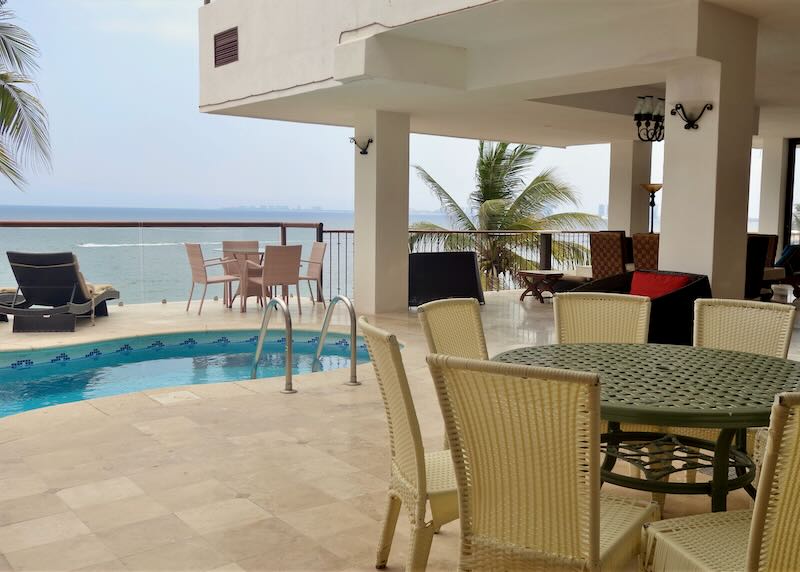
Garza Blanca, just south of Puerto Vallarta.

Just south of the Zona Romántica, the shoreline rises into jungle-covered cliffs. This is the quietest and most affluent part of the city. Amapas sits closest to the action, offering a mix of luxury hillside villas and beachfront condos. It is an easy, though very steep, walk or a short taxi ride into the heart of Old Town. If you want a secluded feel while remaining near the city’s best restaurants, stay here.

Farther south is Conchas Chinas, often called the “Beverly Hills of Puerto Vallarta.” This is an exclusive residential neighborhood where the accommodations are primarily high-end villas and a few luxury boutique hotels. The beaches here are smaller, rockier, and much more private than those in town. It remains the top choice for travelers seeking quiet and the most impressive views of Banderas Bay. Continuing south along the highway leads you to the South Zone, home to large-scale luxury resorts like Hotel Mousai and Garza Blanca, as well as Playa Mismaloya – the famous filming location for The Night of the Iguana.

4. 5 De Diciembre

A compact grid of streets hemmed in between the Playa Camarones and the mountains, the neighborhood of 5 de Diciembre sits conveniently between El Centro and the Hotel Zone. This up-and-coming area has a bohemian vibe and showcases Vallarta’s traditional architecture, with narrow cobbled streets and brightly painted one and two-story houses. The hillier parts of the neighborhood offer some of the most spectacular sunset views of the coast.

It is quieter and far less “touristy” than the historic center, yet easily walkable to the malecón and the attractions of downtown. The local beach, Playa Camarones, holds Blue Flag certification, making it one of the cleanest and safest swimming spots in the bay. For foodies, this neighborhood is legendary for its authentic street food; some of the city’s most famous taco stands, including Pepe’s Tacos and El Carboncito, are located here. Accommodations in this area range from midrange beachfront hotels to boutique guesthouses and high-value apartment rentals.

5. Zona Hotelera

The Zona Hotelera (Hotel Zone) stretches along the coast between 5 de Diciembre and the Marina. This is where you will find the city’s high-rise hotels, large all-inclusive resorts, and modern shopping centers. The neighborhood was designed to handle the bulk of Vallarta’s tourism, leaving the historic downtown architecture intact. The beaches here, such as Playa de Oro, are wide, golden-sand stretches that are frequently awarded Blue Flag status for cleanliness and safety.

While many visitors stay on-property for meals, the area is home to La Isla Shopping Village, an open-air mall with international brands, a cinema, and several good restaurants. For high-end dining, the neighborhood features Campomar and the visually striking La Leche. The Hotel Zone is very well-connected; it is a quick 10-minute bus or Uber ride south to the historic center or north to the Marina. It’s an ideal base for travelers who want easy beach access and resort amenities without being fully isolated from the city.

6. Nuevo Vallarta & Marina Vallarta

At the north end of the city near the international airport, Marina Vallarta is one of the most upscale neighborhoods. It is built around a large yacht marina and features a high-end 18-hole golf course, the city’s cruise ship terminal, and a long boardwalk lined with international restaurants and boutiques. It is a self-contained, very safe area that is well-connected to the rest of the city by public transport and taxis.

Farther north, across the state line into Nayarit, is Nuevo Vallarta (now officially renamed Nuevo Nayarit). This area is home to some of the widest, flattest beaches in the bay, making it ideal for long walks and family swimming. The biggest draw here is VidantaWorld, a massive new theme park and entertainment complex. The neighborhood also features luxury condos, world-class golf courses, and a clean marina where you can frequently spot pelicans and herons. The downside is the distance; Nuevo Nayarit is far from the historic charm and cultural attractions of downtown Vallarta. While you can use Uber or local buses, I recommend having a rental car if you plan to explore beyond the resort gates.

Read More

10 Best Beach Towns in Mexico: Where to Go in 2026

Mexico › Best Beach Destinations
Updated: April 15, 2026

See Also

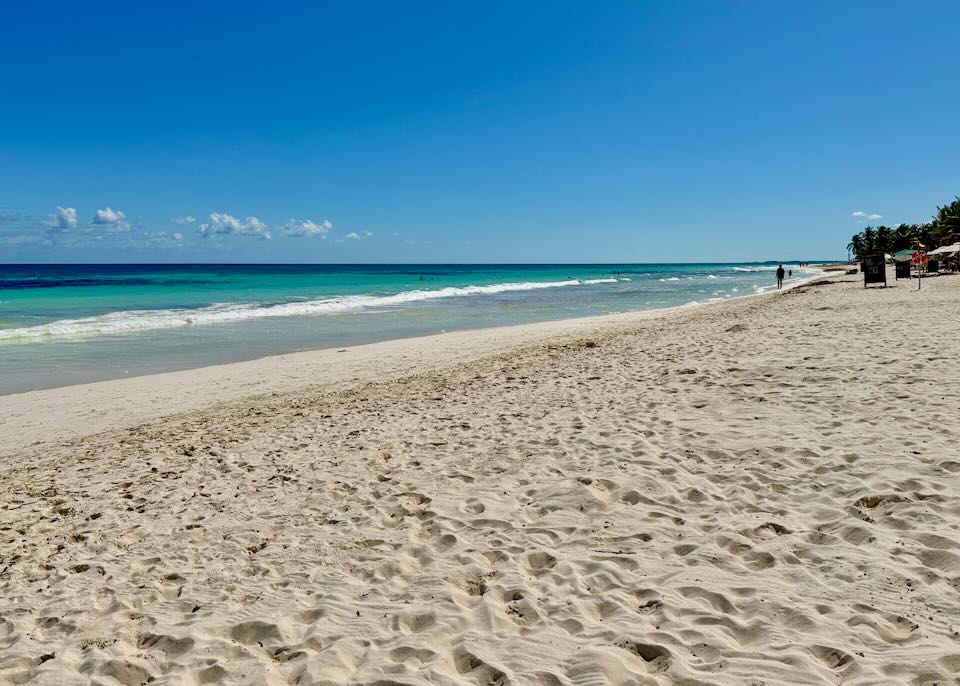
Beach in Tulum, Mexico.

Tulum – My favorite beach destination in Mexico.

Best Fits by Travel Style

Best for calm swimming water: Isla Mujeres and Puerto Morelos.
Best without renting a car: Puerto Vallarta, Playa del Carmen, and Isla Mujeres.
Best for food and culture: Puerto Vallarta, Mazatlán, and Tulum.
Best for luxury without the nightlife: Huatulco or the Cabo Corridor.
Best for a short trip: Puerto Vallarta or Cabo.
Best if you want a real town (not a resort zone): Mazatlán, Puerto Vallarta, and Zihuatanejo.

For most first-timers, the smartest choice is not necessarily the most famous destination, but the one whose trade-offs fit your style. If calm, swimmable water matters most, choose differently than if you want nightlife, food, surfing, or a real city.

1. Tulum

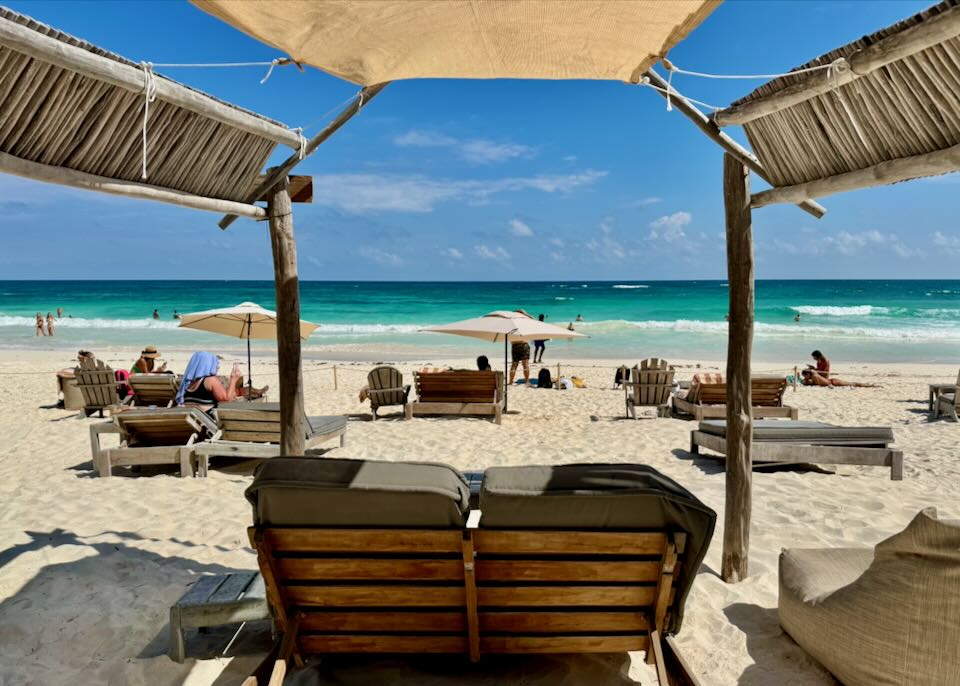
Hotel on Tulum Beach.

Ahau Hotel on Tulum Beach.

Tulum is Mexico’s most stylish beach destination, but it is a specific taste. It works best for travelers who prioritize exceptional food, design-forward boutique hotels, and a bohemian atmosphere over easy logistics or affordability. The new airport makes getting here easier, but the “town vs. beach” divide still requires effort to navigate. It remains my favorite single beach town in Mexico, provided you know what you’re signing up for.
Best for: Boutique hotel lovers, nightlife seekers, and foodies.
Skip if: You’re on a strict budget or don’t like people from Brooklyn.
Swimming: Beach-specific. Excellent when clear; unusable when sargassum is high.
Food Scene: The authentic scene is centered in the Pueblo, where Antojitos La Chiapaneca is my fave for al pastor tacos carved fresh from the spit. The upscale scene is a mix of wood-fired “barefoot luxury” dining and innovative menus that highlight regional ingredients in a jungle setting.
Direct flights from: NYC, Chicago, Atlanta, Dallas, Houston, LAX, Toronto, Montreal.
Airport Transfer: The new Tulum airport (TQO) is about 35 minutes from the Pueblo and 40 to 60 minutes from the Beach Zone hotels. Book a private transfer ahead of time to avoid the airport taxi stands. The ADO bus is a solid budget option that drops you in the town center, but you will still need a local taxi to reach the beach. If you are staying at the far south end of the hotel zone, give yourself at least 90 minutes for the return trip to the airport to account for the unpredictable traffic.
Best area to stay: Beach Road for the scene; Pueblo for value and local food.

2. Puerto Vallarta

Puerto Vallarta is a real Mexican city, not just a resort strip. You feel like you’re in Mexico, not a manicured version of Southern California. The mountain-meets-ocean setting is stunning, and the food is world-class.
Best for: Foodies and culture seekers.
Skip if: You insist on Caribbean-style white sand and bright turquoise water.
Swimming: Mixed. The water is clean but darker than the Caribbean. Waves are generally manageable.
Food Scene: The authentic scene is best explored through street carts in local neighborhoods, serving Jalisco staples like birria and fresh ceviche. The upscale dining scene is one of the most sophisticated in the country, featuring a mix of long-standing institutions and newer kitchens that play with traditional Mexican recipes.
Direct flights from: NYC, Chicago, Atlanta, Dallas, Houston, LAX, SFO, Seattle, Vancouver, Calgary, Toronto.
Airport Transfer: Very easy. 10 to 15 minutes to most hotels.
Best area to stay: Zona Romantica for charm and walkability. Avoid the Hotel Zone high-rises to the north if you want an authentic vibe.

3. Isla Mujeres

A small island that offers a more relaxed pace than the mainland. The ultimate spot for a pure vacation vibe.
Best for: Families with young kids and anyone seeking calm, shallow water.
Skip if: You want long hiking trails, big shopping malls, or hate golf carts.
Swimming: Great. Playa Norte is waist-deep for 100 yards and rarely has waves.
Food Scene: The best authentic options are found at small local spots away from the main tourist strip, serving island flavors and fresh daily catches in the southern residential neighborhoods. The town center is convenient, lively, and walkable but with a few exceptions, it’s not terribly exciting.
Airport Transfer from Cancun: Multi-step day involving a taxi to the ferry terminal and a 20-minute ferry.
Best area to stay: North End near the town center and Playa Norte.

4. Los Cabos

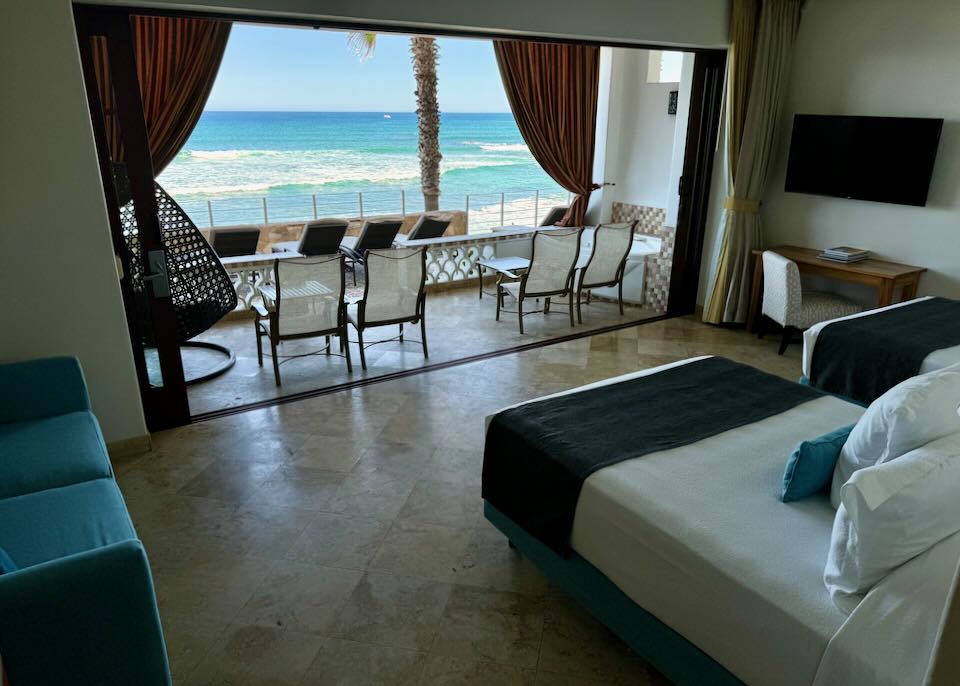
Hotel in Los Cabos.

Our room at the Cabo Surf hotel just outside of San Jose del Cabo.

The Cabo Corridor is essentially one long, stunning stretch of high-end beach resorts where the desert crashes into the sea. It has a rugged beauty that you just don’t get anywhere else along the Mexican coast. Because the airport is so well-connected and the infrastructure is so polished, it’s easily my top pick for a quick getaway.
Best for: Luxury splurge trips, nightlife, and some of the best contemporary Mexican dining.
Skip if: You want an authentic Mexican village feel or universal swimmability.
Swimming: Highly beach-specific. Do not assume your hotel beach is swimmable just because it is beautiful. Medano, Chileno, Santa María, and Palmilla are the main safe spots.
Food Scene: The most authentic spots are in the backstreets of San José del Cabo at traditional taquerias famous for arrachera and battered fish tacos. The luxury dining scene is home to Michelin-recognized restaurants and high-end kitchens that do contemporary takes on regional Mexican favorites.
Direct flights from: Los Angeles, San Francisco, San Diego, Seattle, Portland, Sacramento, San Jose, Phoenix, Las Vegas, Denver, Dallas–Fort Worth, Houston, Chicago, New York City, Newark, Salt Lake City, Minneapolis, Vancouver, Calgary, Toronto, and Montréal.
Airport Transfer: 25 minutes to San Jose del Cabo; 40 minutes to Cabo San Lucas from SJD airport.
Best area to stay: Medano Beach if you want to swim; The Corridor for secluded luxury resorts; San Jose del Cabo for galleries and trendy dining.

5. Sayulita

The social surf town. And great for beginners wanting surf lessons. I love the color and vibrancy of the town but it can feel very busy at times (a victim of its own success).
Best for: Solo travelers, beginner surfers, and people looking for a party vibe.
Skip if: You are sensitive to noise or want a quiet, secluded retreat.
Swimming: Water quality issues can occur, particularly after heavy rains. The main beach is lively and convenient, but for a quieter beach day head to nearby San Pancho.
Food Scene: Most of the authentic scene is found around the central plaza, where family-run kitchens serve straightforward, affordable Mexican staples like tacos al pastor and fresh seafood. The social scene is dominated by “hippie-chic” and international fusion, with wood-fired pizza spots, health-conscious smoothie bars, and locally-roasted coffee houses.
Airport Transfer: 1 hour from the Puerto Vallarta airport.
Best area to stay: North End for a slightly quieter but still walkable experience.

6. Huatulco

Beach hotel with private pool in Huatulco.

The private pool at Quinta Bella Hotel in Huatulco.

Huatulco is well organized, clean, and quiet. It was planned to preserve the surrounding national park and nine bays.
Best for: Nature lovers and families who want a quiet, hassle-free experience.
Skip if: You want nightlife or a buzzy dining scene.
Swimming: Great. Several protected bays that have some of the calmest water on the west coast of Mexico.
Food Scene: The authentic scene is the real highlight, rooted in Oaxacan tradition. In La Crucecita, look for outdoor local spots serving tlayudas, mole, al pastor, and grilled seafood. The broader tourist scene can feel a bit uninspiring with its reliance on competent comfort food like pizza and pasta.
Direct flights from: Dallas, Vancouver, Calgary, Toronto, Edmonton. The Huatulco airport is clean, modern, and a delight to use.
Airport Transfer: Very easy; 15 to 20 minutes.
Best area to stay: Tangolunda Bay for resorts; Santa Cruz for boat access to the bays.

7. Mazatlán

A large, working port city with a stunning historic district. It offers the best value for money of any destination on this list.
Best for: Value-focused travelers, history lovers, and seafood fans.
Skip if: You want a quiet, tropical resort enclave. This is a loud, busy city.
Swimming: Mixed. Wide beaches with Pacific swells. Always check for flags indicating rip currents.
Food Scene: The authentic scene is centered on the city’s famous shrimp and seafood street carts found along the Malecón. The innovative regional scene is centered in the historic district, highlighting traditional Sinaloan flavors inside beautifully restored colonial buildings.
Direct flights from: Dallas, LAX, SFO, Vancouver, Calgary, Toronto.
Airport Transfer: 30 minutes to the historic center.
Best area to stay: Centro Historico for culture; Zona Dorada for the main beach stretch.

8. Playa del Carmen

Playa is a convenient hub, but I treat it as a base for exploring the region rather than a pure beach winner.
Best for: Travelers who want to see cenotes, ruins, and theme parks.
Skip if: You want a quiet, pristine beach. The central beaches are often crowded and narrow.
Swimming: Mixed. Very dependent on seasonal sargassum and local erosion.
Food Scene: Avenida 30 is one of the best places to go for local tacos, especially al pastor, away from the main tourist walk. The international scene is concentrated on the north end near Calle 38; here you will find modern kitchens that highlight regional ingredients through beach club atmospheres. Lots of pub grub too.
Airport Transfer: 45 to 60 minutes from Cancun or Tulum airports.
Best area to stay: North end (near Calle 38) for a more sophisticated atmosphere.

9. Puerto Escondido

Our room in Puerto Escondido.

The view from our room at Casa Joseph Zicatela in Puerto Escondido.

A collection of distinct neighborhoods that feels much less commercial than other top destinations.
Best for: Surfers, backpackers, and travelers seeking an authentic vibe.
Skip if: You want high-end all-inclusive resorts or easy swimming on every beach.
Swimming: Limited. Zicatela is for pro surfers only and is dangerous for swimmers. Head to Carrizalillo for a safe, calm bay (160+ stairs required).
Food Scene: The authentic scene centers on Oaxacan staples like tlayudas and tamales. The contemporary scene is split between the beach vibes of La Punta and the more residential Rinconada, with a mix of traditional Oaxacan cooking and fresh seafood.
Direct flights from: Vancouver, Calgary, Toronto.
Airport Transfer: Very easy; the airport is in the town.

10. Puerto Morelos

A fishing village that has resisted mega-resort development. A low-key alternative to Playa del Carmen.
Best for: Snorkelers, families, and those wanting a quiet Riviera Maya base.
Skip if: You want late-night clubs.
Swimming: Great. The reef keeps the water calmer, but parts of the shoreline can be less postcard-perfect than other Riviera Maya destinations.
Food Scene: The town’s fishing village roots shows with small stands near the main square serving fresh shrimp and ceviche. The dining scene is surprisingly strong for a town this size, offering polished, high-quality menus that emphasize creative presentation and fresh-off-the-boat ingredients.
Direct flights from: NYC, Chicago, Atlanta, Dallas, Houston, LAX, SFO, Seattle, Vancouver, Calgary, Toronto.
Airport Transfer: Very convenient; only 20 minutes from Cancun airport.

Cancun (The First-Timer Beach Trip)

Beach hotel in Cancun.

Garza Hotel in Cancun.

Cancun is not one of my favorite places – it is loud, commercial, and often feels like a concrete version of Las Vegas on the sea – but it is the most popular first destination in Mexico for a reason. It is exceptionally easy to visit and serves as a highly efficient hub for the rest of the Yucatan.
Who this is best for: First-time travelers, families with young kids, and anyone who wants a massive resort experience with zero friction.
Skip if: You want quiet, boutique charm or a destination that feels like “real” Mexico without the high-rise hotels.
The Reality: Still, Cancun works extremely well for a certain kind of trip. It has some of the strongest family-resort infrastructure anywhere in Mexico and a massive range of accommodation from budget hostels downtown to high-end luxury in Costa Mujeres. For better value and more local flavor, I suggest eating at least a few meals in Centro rather than staying entirely in the Hotel Zone.
Swimming: Very beach-specific. The North Hotel Zone (like Playa Langosta and Playa Caracol) has calmer, shallower water that works well for families. The more exposed Caribbean-facing stretches farther down the Hotel Zone are more dramatic and beautiful, but waves and undertow can be much stronger.
Food Scene: The best authentic food is found downtown in Parque Las Palapas, where you can graze on local street snacks like marquesitas and cochinita pibil tortas alongside local families. The upscale scene in the Hotel Zone is defined by theatrical, high-energy restaurants specializing in everything from molecular gastronomy to grilled meats and seafood.
Direct flights from: Atlanta, Austin, Baltimore/Washington, Boston, Charleston, Charlotte, Chicago O’Hare, Chicago Midway, Cincinnati, Cleveland, Colorado Springs, Columbus, Dallas–Fort Worth, Denver, Detroit, Fort Lauderdale, Harlingen, Houston Intercontinental, Houston Hobby, Indianapolis, Kansas City, Las Vegas, Los Angeles, Miami, Milwaukee, Minneapolis–Saint Paul, Nashville, New Orleans, New York JFK, Newark, Norfolk, Oklahoma City, Orlando, Philadelphia, Phoenix, Pittsburgh, Portland, Providence, Raleigh/Durham, Salt Lake City, San Antonio, San Francisco, Seattle/Tacoma, St. Louis, Tampa, Tulsa, Washington Dulles, Calgary, Charlottetown, Deer Lake, Edmonton, Fredericton, Gander, Halifax, Hamilton, Kelowna, Kitchener/Waterloo, London (Ontario), Moncton, Montreal, Ottawa, Quebec City, Regina, Saskatoon, St. John’s, Thunder Bay, Toronto, Vancouver, Victoria, Windsor, and Winnipeg.
Airport Transfer: Very easy but requires a plan. Private transfers remain the most reliable.
Best area to stay: Costa Mujeres for quieter resorts and often calmer conditions; North Hotel Zone for calmer swimming; Downtown (Centro) for value and better local food.

What First-Time Visitors Often Get Wrong

Sargassum (Seaweed): On the Caribbean side, sargassum is most likely from spring into summer, but severity varies month to month and beach to beach. Conditions can be perfect one week and messy the next.

The Swimming Reality: Just because a beach is beautiful does not mean it is safe for swimming. Many Pacific coast beaches have dangerous shore breaks and rip currents.

Transfer Logistics: A short flight can still result in a long travel day once you account for ground transfers and ferries. If you want a short travel day San Jose del Cabo is the best for most North American starting points.

For Families

I’ve already mentioned Isla Mujeres, but it really deserves a dedicated shout-out for anyone traveling with kids. Playa Norte is, hands down, the best beach in Mexico for families. The water is warm, crystal clear, and stays waist-deep for what feels like forever, with almost no waves to worry about. Best of all? It’s rarely affected by sargassum (seaweed). The town itself has a wonderful, low-key energy that feels safe and manageable. Sure, it might feel a touch “boring” at times, but honestly, that’s part of the charm.

Isla Mujeres has the best beach in Mexico for kids and families.

My son jumping into the Caribbean Sea in Isla Mujeres.

Puerto Vallarta Beaches

Mexico Puerto Vallarta › Nearby Beaches

See Also

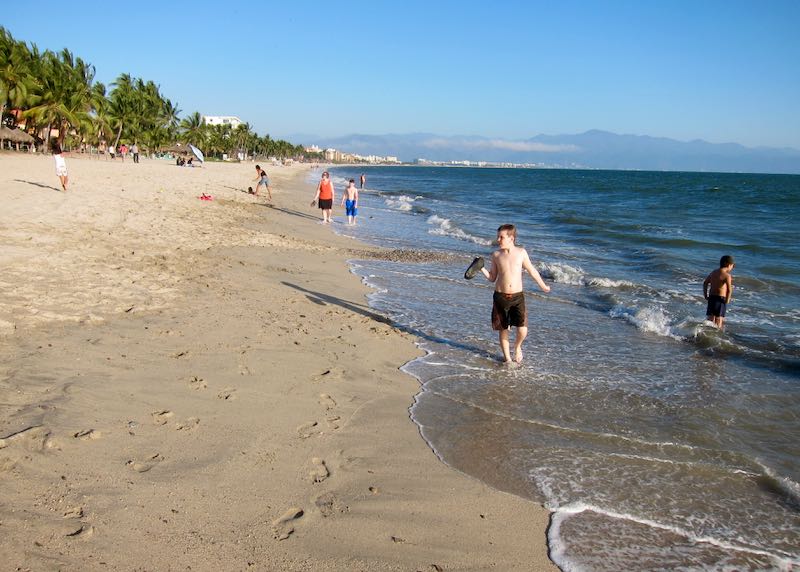
Beach in downtown Puerto Vallarta.

Puerto Vallarta Beaches – My Advice

Best Beach Weather in Puerto Vallarta

I recommend visiting between November and April for the most consistent sunshine and comfortable temperatures. During these months, the humidity is low and the sky is often clear blue.

Weather by Priority:

  • Dry and Sunny: April is statistically the driest month of the year. It is perfect for beach days.
  • Warm Ocean Water: If you like the water to feel like a bath, visit between July and October. This is the rainy season, but the water temperatures are at their highest.
  • Snorkeling and Diving: October and November offer the best water visibility once the summer rains begin to subside.
  • Whale Watching: Plan your trip between December and March to see humpback whales in the bay.
  • Travel Deals: May and June are the shoulder season months. You will find much lower hotel rates, though the humidity starts to climb.

The Rainy Season: The rains usually start in late June and last through October. Most storms happen in the late afternoon or at night, so you can still enjoy the beach in the morning. September is the wettest month and the most humid time of year.

The Best Beaches by Category

  • Best for Partying: Playa Los Muertos in the Zona Romántica. This is the main hub for beach clubs, restaurants, and chairs for rent.
  • Best for Quiet and Solitude: Playa Conchas Chinas is a short taxi ride south of town and offers scenic rock pools. Playa Palito Verde near Quimixto is a hidden gem that feels very remote.
  • Best for Watersports: Las Caletas and Las Ánimas are the top spots for kayaking, paddleboarding, and snorkeling.

Arrival and Airport Transportation: The airport is 10 km north of the Old Town. Head to the official taxi kiosk inside the terminal. Rates are zone-based. Expect to pay approximately 450 to 550 pesos ($25 to $30 USD) for the Zona Romántica or Old Town. Major car rental desks are located in the arrivals hall.

Saving Money on Taxis: If you have light luggage, walk out of the terminal and cross the orange pedestrian bridge over the highway. You can catch an Uber here (which is restricted from picking up at the terminal) or a yellow city taxi for about half the price of airport cabs. Local buses marked “Centro” or “Olas Altas” also stop here and cost about 10 pesos.

Time Zones: Puerto Vallarta (Jalisco) and Nuevo Vallarta (Nayarit) both operate on Central Time. You do not need to worry about a time difference when traveling between the two states in the Banderas Bay area.

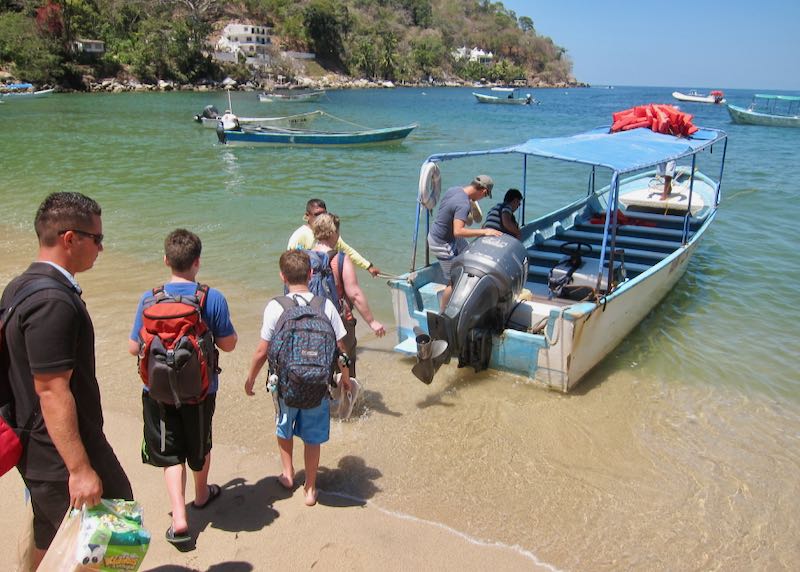
Water Taxis from Boca de Tomatlán: To reach southern beaches like Yelapa or Quimixto, take a bus or taxi south to the village of Boca de Tomatlán. Water taxis depart from the pier regularly. Prices usually range from 100 to 200 pesos per person. Always confirm the price and the time of the last return boat before you depart. Water taxis from the Los Muertos Pier in town are more expensive and the ride is often bumpier.

Tours and Excursions: Puerto Vallarta Tours runs reliable trips to Las Ánimas and Yelapa. For an all-inclusive beach club day with lunch and an open bar, Vallarta Adventures runs excellent trips to their private cove at Las Caletas.

Best Beach for Surfing: Sayulita is the top spot for surfing in the region. It has a consistent break that is perfect for beginners and intermediate surfers. It is about an hour north of Puerto Vallarta by taxi or bus.

Practical Beach Tips

  • Cash is Mandatory: Most beach restaurants and water taxis are cash only. Bring pesos. Using US dollars will result in a poor exchange rate.
  • Avoid Weekends: Local beaches get very crowded on Saturdays and Sundays. Visit on a weekday for a much quieter experience.
  • Watch Your Belongings: Petty theft can happen on the beach. Never leave your valuables unattended. If you are alone, use a waterproof dry bag to take your essentials into the water with you.
Water taxi to Yelapa.

The water taxi from Boca de Tomatlán to Yelapa, Las Ánimas, and Quimixto.

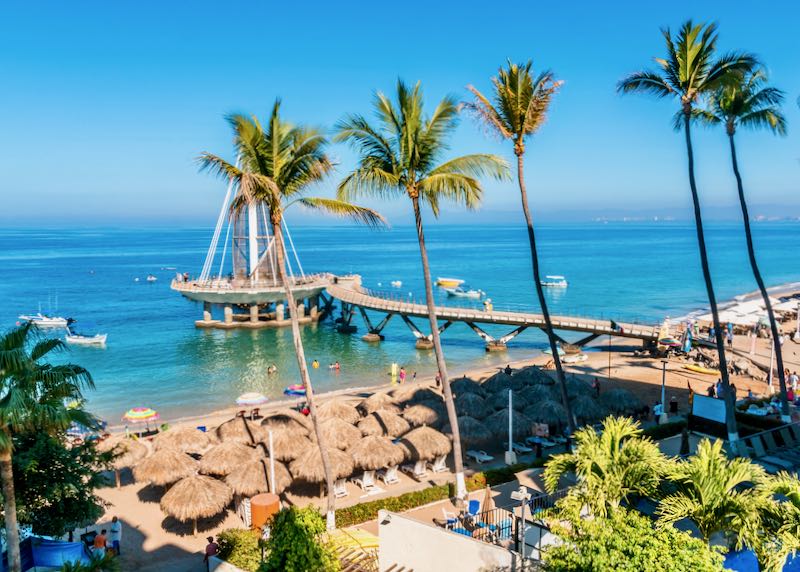
Boat pier from Puerto Vallarta to southern beaches.

The pier at Playa Los Muertos with boats to Las Ánimas (25 minutes), Quimixto (40 minutes), and Yelapa (55 minutes).

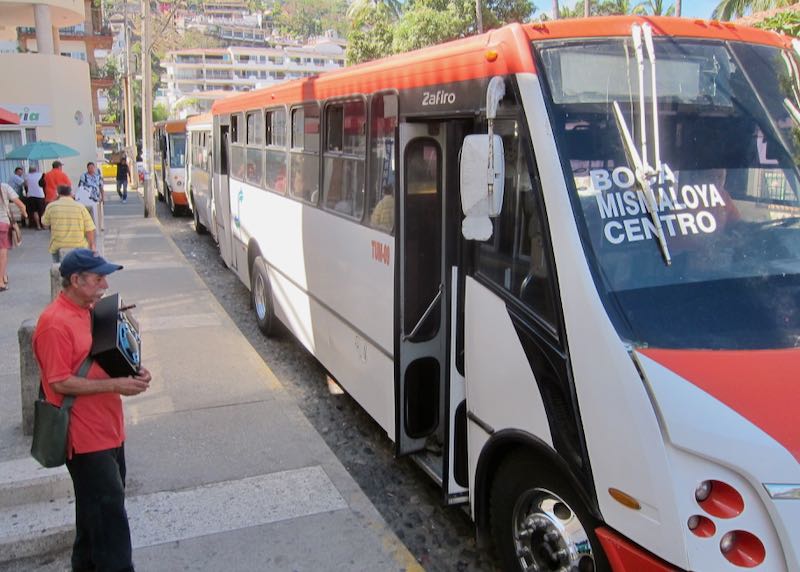
Bus from Puerto Vallarta to Mismaloya.

The bus from Puerto Vallarta to Mismaloya.

Buses to Mismaloya and Boca de Tomatlán: These orange and white buses depart every 10 to 15 minutes from the corner of Basilio Badillo and Constitución in the Zona Romántica. The fare is 10 pesos (cash only). The trip takes about 25 minutes to reach Mismaloya and roughly 40 minutes total to reach Boca de Tomatlán, the final stop and the main hub for southern water taxis.

The 17 Best Beaches in and around Puerto Vallarta

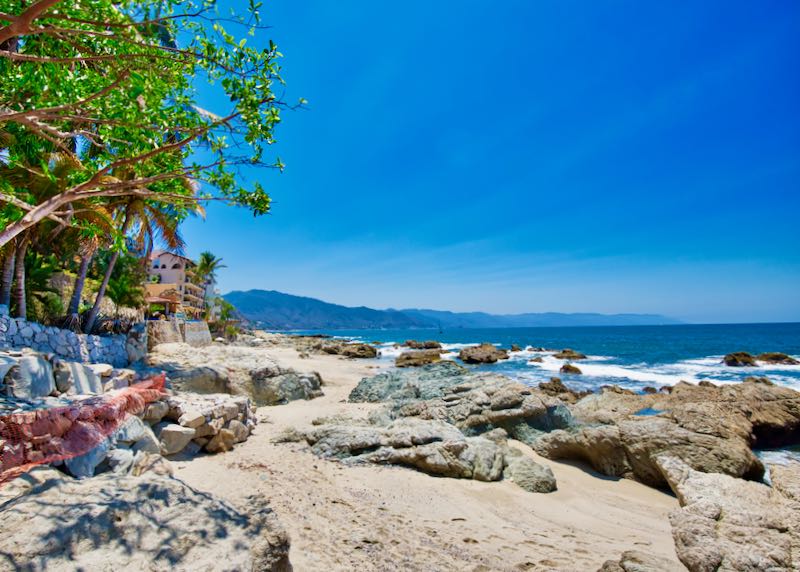
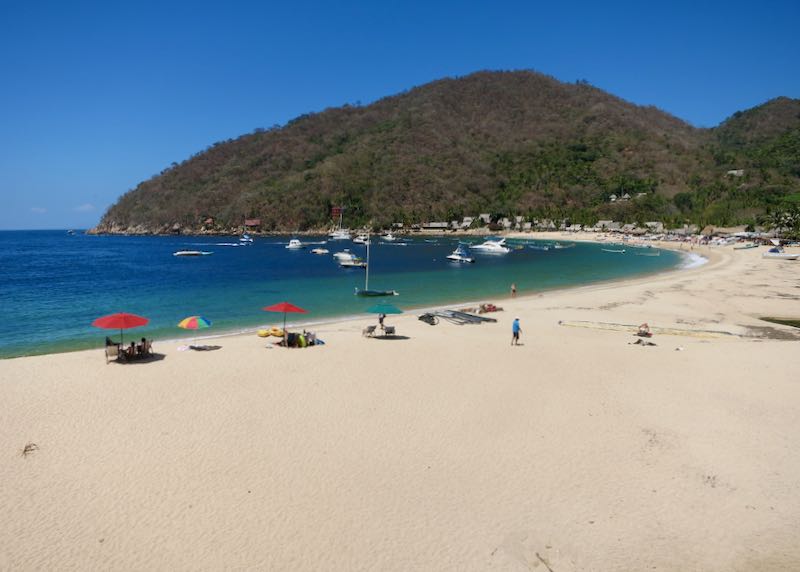
The enticing beaches of Banderas Bay, backed by the jungle-covered slopes of the Sierra Madre, stretch for more than 40 km (25 miles) north and south of Puerto Vallarta’s Old Town, Viejo Vallarta. There’s plenty of variety, from fun beaches backed by condos and hotels, to wilder locations accessible only by boat.

Our personal favorite is Playa Caballo, a short water taxi ride from Boca de Tomatlán. A tranquil setting with great sand, palm trees, and wonderful swimming. Playa de los Muertos has a deserved reputation for partying and a vibrant nightlife. While Playa Conchas Chinas (south) and Playa Palito Verde (north) are great for beach lovers looking for a quieter, more relaxed experience.

SOUTH OF PUERTO VALLARTA
Note that beyond Boca de Tomatlán, beaches are accessible only by water taxi and private boats.

1. Playa Caballo (10 minutes by boat from Boca)

Gorgeous and often empty beach backed by shady palm trees. Other than two boutique hotels, there are no facilities or activities, and nowhere to eat or drink, but bustling Las Ánimas (see below) is a short walk around the headland. Water taxis and boats only.

Recommended Hotels: Hotelito Mio (luxury/boutique) • Casitas Maraika (luxury/boutique)

2. Playa Colomitos (5 minutes by boat from Boca)

Tiny, sheltered cove with a small beach of soft, white sand, and a snacks and drinks kiosk. Great for swimming and snorkeling. Has a real “hidden beach” feel, but because of its size, can get packed if a couple of tour boats come in. Note also that high tides can sometimes flood the whole beach. Water taxis and boats only – or an energetic 30–40 minute hike from Boca. The nearby Ocean Grill restaurant offers tasty meals and sea views.

3. Playa Conchas Chinas (2 km south of Old Town PV)

Conchas Chinas near PV.

The most scenic city beach, easily accessible by bus or taxi (or an easy 30 minute walk from Zona Romántica). A series of small sandy coves, backed by condos but rarely busy (there are no restaurants or bars). Good for swimming but rip tides can be strong here. The shallow tide pools along the rocky sections of shore are crammed with marine life.
Recommended Hotels: Quinta Maria Cortez (B&B) • Casa Villa Verde (mid-range) • Marboka Hotel & Suites (budget)

4. Playa Palmares (7 km south of Old Town PV)

Fine white-sand beach just below the coastal highway, popular with locals. Calm and perfect for swimming (it’s warm and relatively shallow), though there are very few places to eat and drink. There is a rare public bathroom here with showers (around 10 pesos), and it’s possible to rent umbrellas with table and chairs. Accessible by bus or taxi.

5. Las Caletas (15 minutes by boat from Boca)

Tiny and isolated beach, run as a watersports hub by Vallarta Adventures. Great for swimming and snorkeling. Water taxis and boats only.

6. Yelapa (30 minutes by boat from Boca)

Yelapa Beach near PV.
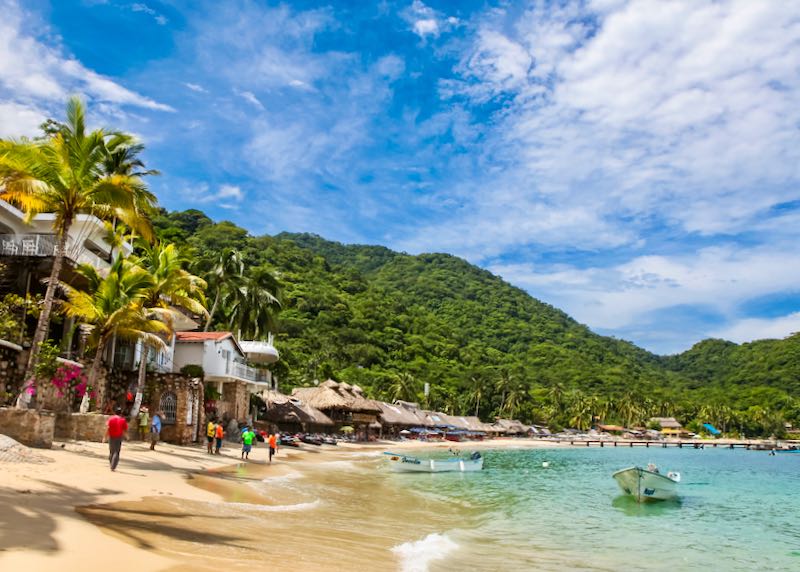
Hemmed in by jungle-smothered hills and coconut palms, this beach and tiny village has a rustic, laidback vibe, despite the steady stream of day-trippers. The white-sand beach is good for swimming and is lined with palapa restaurants. From here it’s a pleasant stroll up the Rio del Tuito to cascading waterfalls. Accessible by boat only – it’s the final water taxi stop.

Recommended Hotels: Casa Berita (luxury/boutique) • Pura Vida Wellness Retreat (mid-range) • La Loma Yelapa (mid-range) • Casa Isabel (mid-range)

7. Playa de los Muertos (Zona Romántica)

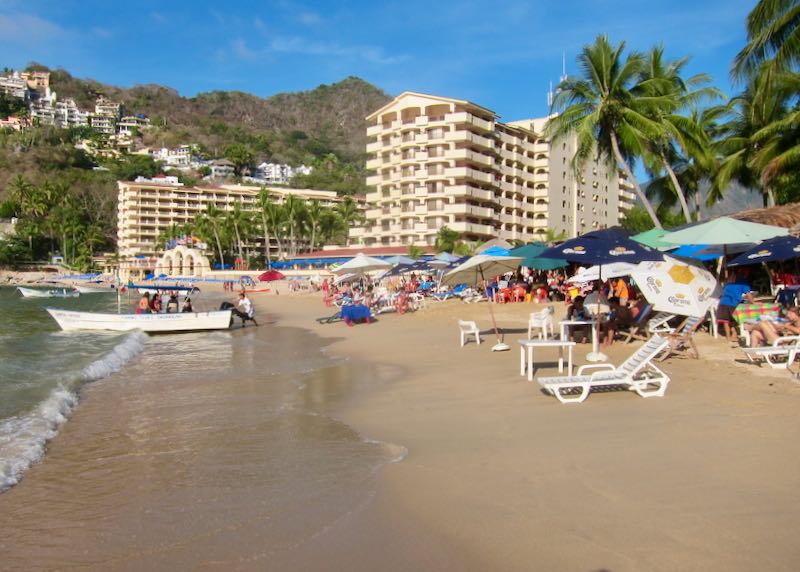
The primary (and most fun) city beach lies just south of the old town. It’s crowded, is lined with hotels, features mostly coarser, brown sand and is fairly narrow but it’s by far the best beach for eating, drinking, and partying – swimming is good too. The stylish Playa Los Muertos pier divides the beach in two, with the LGBT section lying at the southern end, opposite the Blue Chairs Resort.

Recommended Hotels: Playa Los Arcos Beach Resort (mid-range) • Almar Resort (mid-range, LGBT-friendly) • Villa Verano (luxury)

8. Mismaloya (12 km south of old town PV)

Mismaloya near Puerto Vallarta.
The best-known and most accessible southern beach (take a bus or taxi), made famous by John Huston’s film “The Night of the Iguana”. Today it’s a small, sandy strip dominated by the Barceló hotel, but with a handful of cheap palapa restaurants and local vendors. Good for watersports and wonderful snorkeling trips to Los Arcos, tiny islets just offshore rich in marine life.

Recommended Hotels: Barceló (luxury) • Villa Los Arcos (luxury) • Casa Iguana (budget, great pool)

9. Playa Quimixto (15 minutes by boat from Boca)

Relatively quiet and empty beach backed by a small village. Just a couple of beach restaurants and not much else. Trails lead up river to a refreshing waterfall and swimming hole. Water taxis and boats only.

Recommended Hotel: Xinalani Retreat (luxury)

10. Las Ánimas (10 minutes by boat from Boca)

Las Animas Beach in Mexico.
Long, sandy, but narrow beach crammed with restaurants and bars, just around the headland from Playa Caballo. Haven for fun activities – jet skiing, banana boats and parasailing – but can get very busy. Water taxis and boats only – or a strenuous 2hr-hike from Boca.

NORTH OF PUERTO VALLARTA
All the beaches north of Old Town PV are accessible by taxi/car and bus.

11. Playa Palito Verde (34 km north of Old Town PV)

First of the northern beaches free of all development – it’s a gorgeous, shallow bay a short walk off the main road, with no facilities, no shade, and no food. Best place to escape the crowds and great for swimming.

12. Bucerías (25 km north of Old Town PV)

Bucerias near Puerto Vallarta and Sayulita.
Wonderful sand and calm waters for people who like to swim. Bucerías is a busy town but its chalk-white beach is rarely packed and there are plenty of low-key beach restaurants.

Recommended Hotels: Royal Decameron (luxury) • Aventura Pacifico (mid-range) • Unelma Bungalows (budget)

13. Playa Destiladeras (36 km north of Old Town PV)

Wide, sandy beach that’s isolated and rarely busy but offers a bit more in the way of services and food options than nearby Palito Verde.

Recommended Hotel: Marival Armony Luxury Resort & Suites (luxury)

14. Nuevo Vallarta (20 km north of Old Town PV)

Nuevo Vallarta near Puerto Vallarta airport and cruise terminal.
The long stretch of sand that runs along this newer, upscale resort area is flat, calm, and rarely busy, lined with hotels and palm trees. Good for swimming.

Recommended Hotels: Hard Rock Hotel (luxury) • Bahía del Sol (mid-range) • Paradise Village (mid-range)

15. Playa Camarones (Zona Hotelera, 1 km north of Old Town PV)

“Shrimp Beach” is at the heart of PV’s hotel zone for good reason, with a gorgeous swath of sand (always very clean), plenty of activities, vendors, and relatively pricey dining options. Good for swimming and it’s big enough absorb visitors without feeling busy.

Recommended Hotels: Sheraton Buganvilias (luxury) • Dreams Vallarta Bay (luxury) • Villa Premiere Boutique Hotel (luxury)

16. Playa la Manzanilla (32 km north of Old Town PV)

Small white-sand beach in a sheltered bay perfect for swimming, with several cheap (and excellent) seafood restaurants and beach bars. Always busy at weekends.

17. Punta de Mita (49 km north of Old Town PV)

Punta de Mita near Puerto Vallarta.
Right at the very northern tip of Banderas Bay, the pristine, empty beaches along this headland are mostly reserved for the private “Club Punta Mita” development and its associated properties, but are stunning nonetheless. Day passes available but expensive.

Recommended Hotels: Four Seasons (luxury) • St. Regis (luxury)

Read More

Where to Stay in Cancún

Mexico › Best Areas to Stay in Cancún
Updated: April 14, 2026

My Favorite Cancún Hotels
• 5-star: Atelier
• 4-star: Hyatt Ziva
• 3-star: Crown Paradise
• For families: Grand Residences
• For couples: Nizuc
• Best all-ages all-inclusive: Grand Fiesta Americana

A pool set behind the beach next to a golf course at Atelier resort in Playa Mujeres near Cancun.

The pool, beach, and golf course at Atelier in Playa Mujeres.

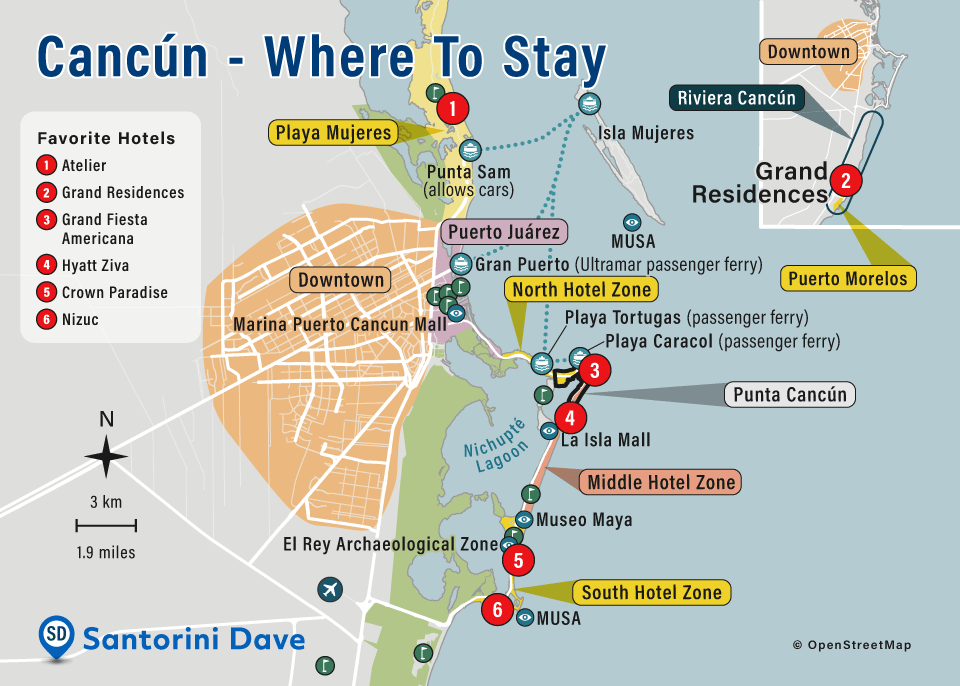
Map of where to stay in Cancun with neighborhoods, golf courses, ferries, things to do, and hotels.
Hotels on Map: 1. Atelier • 2. Grand Residences • 3. Grand Fiesta Americana • 4. Hyatt Ziva • 5. Crown Paradise • 6. Nizuc

Best Areas to Stay in Cancún

See Also

Best Hotels in Cancún
Best Family Hotels in Cancún

Cancún is a premier year-round destination known for its hot, sunny climate and miles of soft, white sand. The city sits on the Mesoamerican Reef, offering world-class snorkeling and diving just offshore. Beyond the beaches, you will find high-energy adventure parks, famous nightclubs, and championship golf courses. It is also the ideal base for exploring ancient Maya ruins like Chichén Itzá, visiting colonial towns, or taking a quick boat trip to nearby tropical islands.

With nearly 30 million arrivals at the Cancún airport last year, this city remains the most popular beach destination in the world. It offers a wide range of options for different budgets and travel styles. Most beachfront resorts are luxury or midrange all-inclusive properties, though several top-tier resorts now offer European plans (room-only). While many of our favorite hotels in Cancún and family hotels in Cancún are in the traditional Hotel Zone, the newer developments in Costa Mujeres and Riviera Cancún now feature the most modern and sprawling properties in the region. Budget hotels, hostels, and local rentals are mostly found in El Centro (Downtown) or the residential areas of Puerto Juárez.

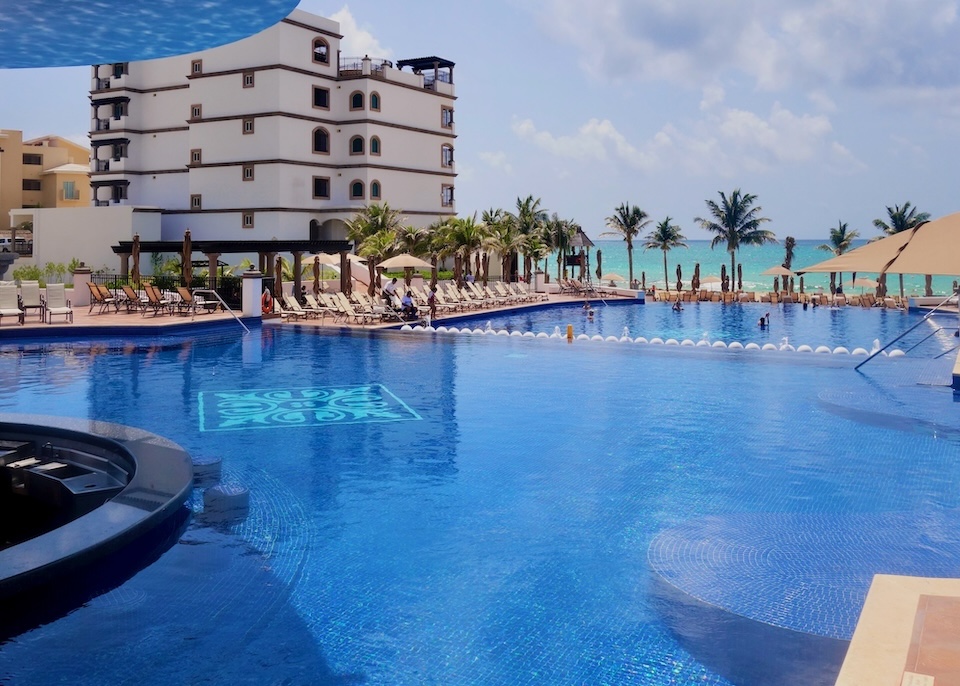
A two-tiered pool facing the ocean at Grand Residences in Riviera Cancun.

Grand Residences Riviera Cancún is our favorite luxury resort for families in Cancún.

The Hotel Zone (Zona Hotelera) is the most popular place to stay. This 22-kilometer strip, shaped like a number 7, is lined with high-rise resorts, shops, and restaurants along Boulevard Kukulcan. The North Hotel Zone (the top of the 7) is known for its calm, shallow water and soft sand, making it the best choice for families with young children. The Middle Hotel Zone (the upper vertical section) is home to the “Party Center” at kilometer 9.5, where you find the biggest nightclubs and busiest beaches. The South Hotel Zone (the bottom of the 7) is much quieter and less developed, offering a more peaceful atmosphere near Punta Nizuc.

Following Boulevard Kukulcan west leads to El Centro (Downtown Cancún), which offers an authentic local vibe and the best value for dining and lodging. This area includes Puerto Cancún, a modern development with a high-end marina and luxury shopping that bridges the gap between downtown and the beach. Just north of downtown is Puerto Juárez, the main terminal for ferries to Isla Mujeres. Farther north, Playa Mujeres and the newer Costa Mujeres area offer exclusive, gated resorts on pristine beaches with calm water protected by the island. To the south of the airport lies Riviera Cancún, a stretch of coast featuring massive luxury resorts and easy access to the Tren Maya station in Puerto Morelos. This train provides a fast, modern connection to the airport, Playa del Carmen, and the inland archaeological sites of the Yucatán.

Best Places to Stay in Cancún

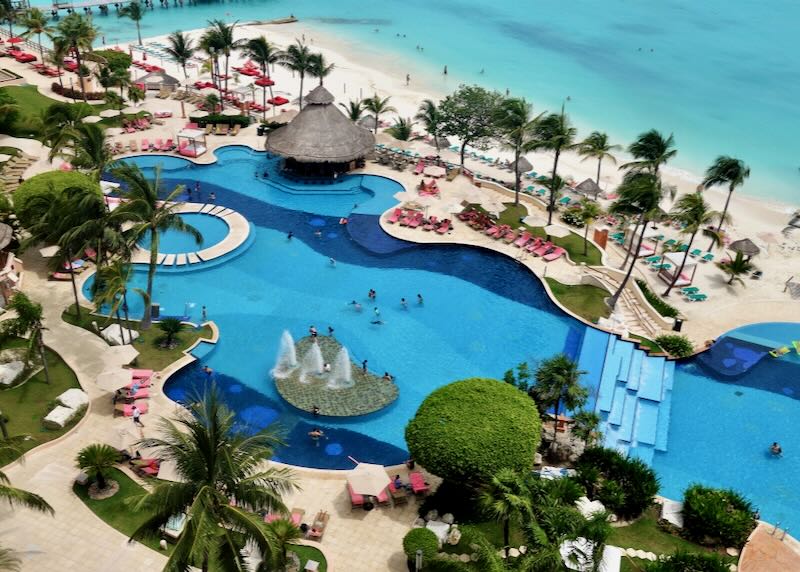
Great hotel for couples and families in Cancun.

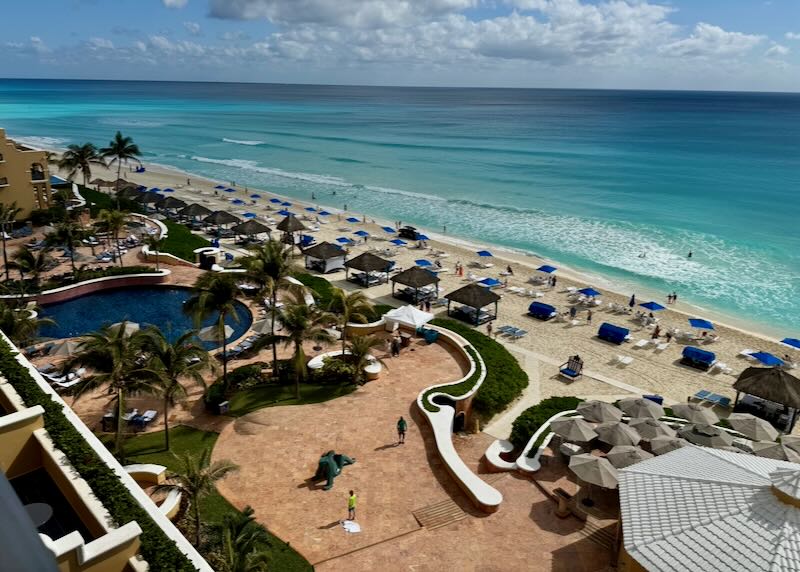
The Garza Blanca – one of our favorite luxury resorts, excellent for couples or families.

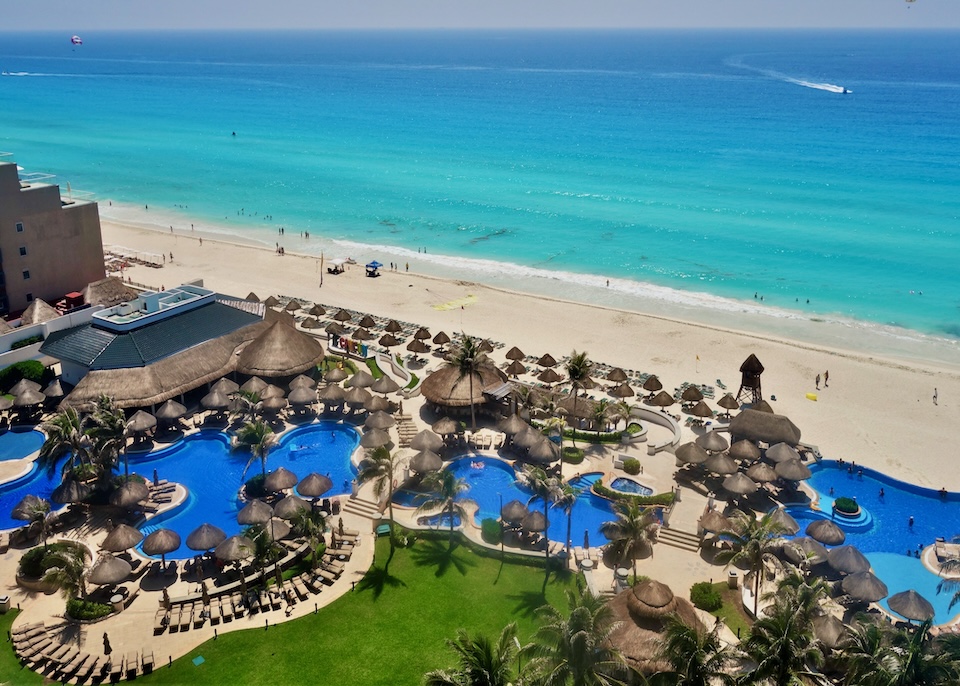
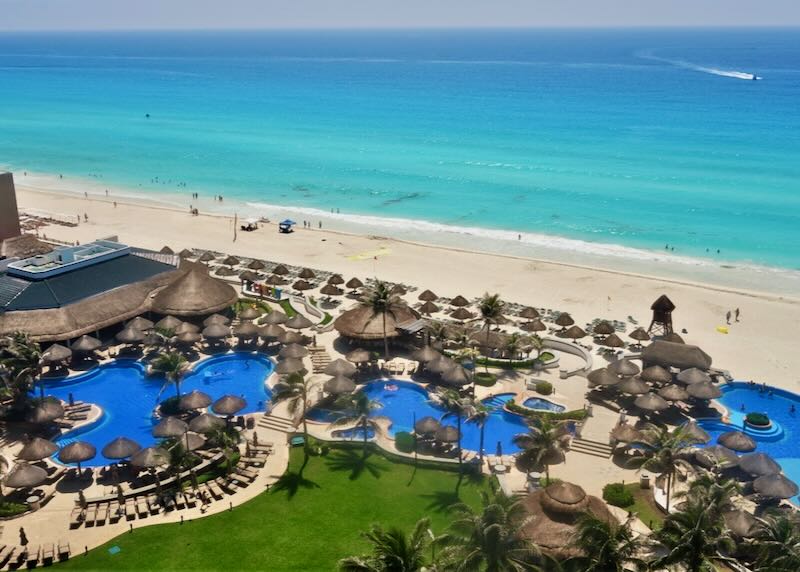
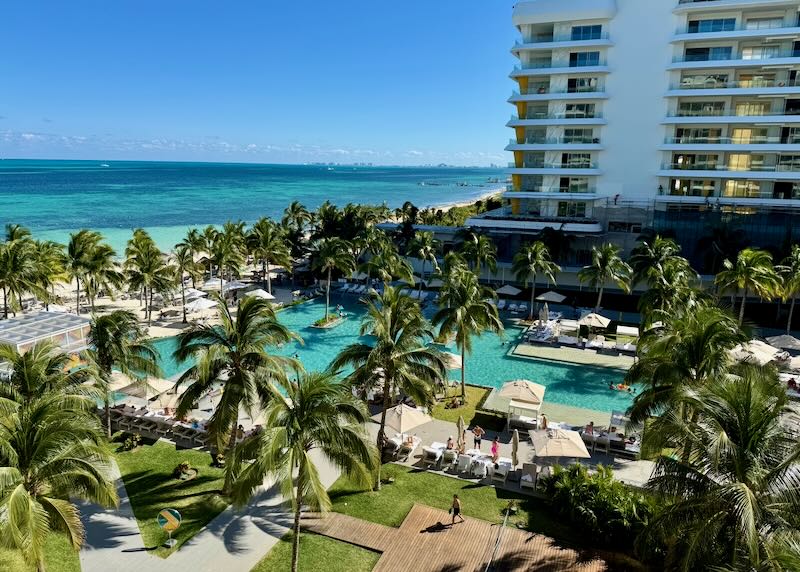
A series of freeform pools fronted by a long, wide stretch of beach at the JW Marriott resort in the Middle Hotel Zone of Cancun.

The JW Marriott has one of the best and largest beachfront pools in Cancún.

Best Areas in Cancún for…

  • Best Area in Cancún for First Timers: Hotel Zone (North, Middle, and South)
    The Hotel Zone is the best place to stay for a first visit because everything is designed for travelers. This 22-km sandbar is shaped like a number 7 and offers the most reliable infrastructure, easiest transport, and the widest range of dining. Most resorts here are massive and self-contained, but the vibe varies by section. The Middle Hotel Zone is the most central and busiest, home to the main Party Center (Punta Cancún), upscale malls like La Isla, and the most iconic beach stretches with turquoise water. The North Hotel Zone has the calmest, shallowest water, which I find much better for swimming, and it sits closest to the local food scene in El Centro and the Isla Mujeres ferries. The South Hotel Zone is much quieter and less developed, located closest to the airport and the El Rey archaeological site.
  • Best Area in Cancún for Partying and Nightlife: Middle Hotel Zone & El Centro
    Cancún’s main nightlife hub is located at the bend where the North and Middle Hotel Zones meet, a district known as Punta Cancún or the Party Center. This compact area is packed with world-famous clubs like Coco Bongo, Mandala, and La Vaquita. These venues are massive, multi-level spaces featuring acrobats, live shows, and high-energy DJs. During Spring Break, this area becomes incredibly crowded. For a more authentic or local experience away from the main tourist strip, head to El Centro. Downtown spots like the LGBTQ+ 11:11 Club and the bars along Avenida Yaxchilán and Avenida Tulum offer a mix of Latin music and better-value cocktails in a less commercialized environment.
  • Best Area in Cancún for Sightseeing: Middle Hotel Zone, El Centro
    The Middle Hotel Zone is the best spot for local sightseeing, including the aquarium, the Maya Museum, the San Miguelito and El Rey ruins, and snorkel tours. Everything in the Middle Hotel Zone is easily accessible by a quick bus ride on the R1 or R2 lines. For visiting local markets, seeing lucha libre, or for self-guided tours of farther-flung destinations like the Chichén Itzá ruins, colonial Valladolid, or bohemian Tulum, staying in El Centro is best. This puts you near the ADO bus station, which is the hub for high-quality, affordable coach travel throughout the region. However, if visiting Chichén Itzá or Valladolid on a guided tour, most operators offer free or cheap pickup from anywhere in the Hotel Zone.
  • Best Area in Cancún for Food and Restaurants: El Centro, Middle Hotel Zone
    The best restaurants in Cancún are mostly found in El Centro. Cancún’s busy downtown core is filled with outstanding dining options, from local Yucatecan fare at Mercado 28 to authentic Mexican favorites at Parque de las Palapas to fine dining, all at a fraction of what you’ll pay in the Hotel Zone. While the Hotel Zone has many overpriced versions of Mexican food, there are several high-quality restaurants outside of the resorts, mostly in the Middle and South Hotel Zones. Try El Galeón del Caribe for seafood or La Tia Juana for a lively atmosphere.
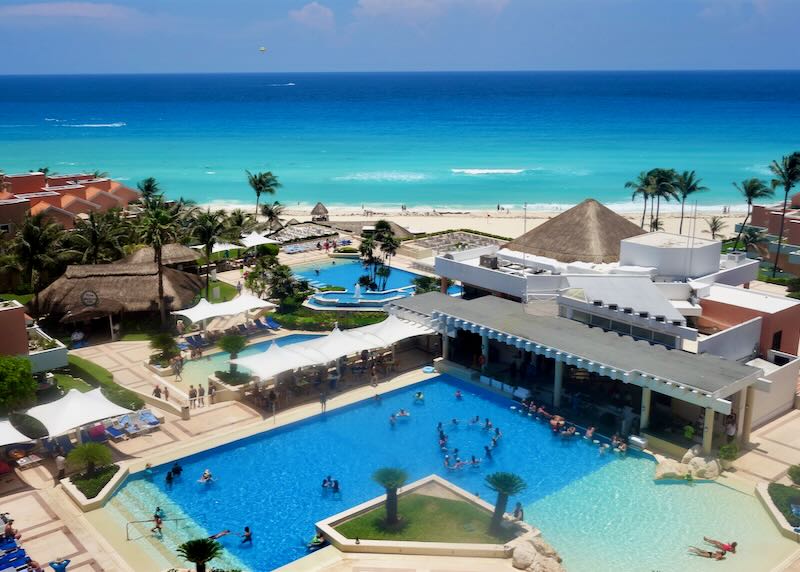
A group of modern, geometric-shaped pools, some with bars or lined with sunbeds, sits behind a beach with a smattering of palm trees at Riu Palace Peninsula in the North Hotel Zone of Cancun.

The amazing collection of pools at the luxurious Riu Palace Peninsula Hotel.

  • Best Area in Cancún for Families: North and Middle Hotel Zone, Riviera Cancún
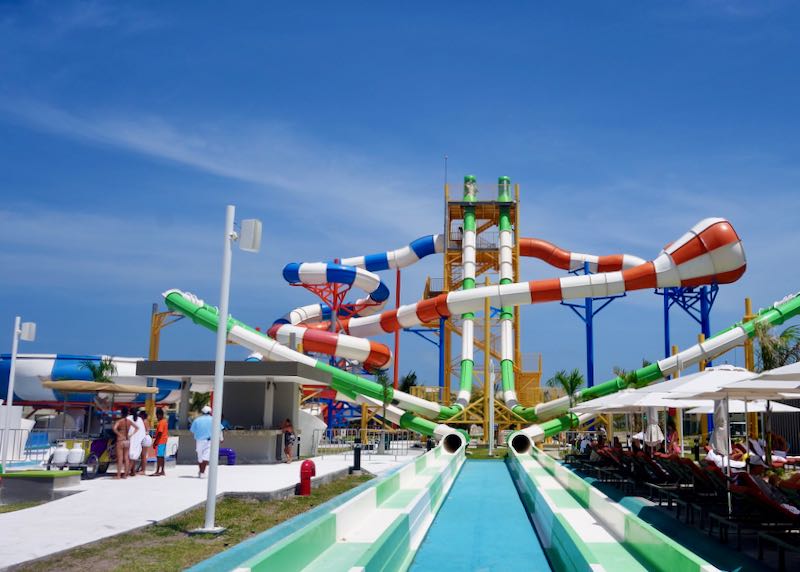
    Cancún is a very family-friendly destination with entertainment for children of all ages. Most resorts here have kids’ clubs and excellent pools, many with water slides or small water parks on site. Families with younger children should consider the North Hotel Zone. Because it faces Isla Mujeres, the beach here is protected from the open ocean, resulting in gentler waves and easier swimming. The Middle Hotel Zone is great for families with older kids and teens due to its easy access to water sports centers and shopping malls. Riviera Cancún is great for active families. Here you will find the largest resorts with the most kid-friendly amenities plus proximity to adventure parks, Croco Cun Zoo, and cenotes.
  • Most Romantic Area in Cancún: South Hotel Zone, Riviera Cancún, Playa Mujeres
    Cancún is a top destination for honeymoons and romantic getaways. Its long, white sand beaches are ideal for sunset strolls. Several luxury hotels are entirely adults-only and many others have adults-only wings or suites with private pools. The top romantic destinations are the South Hotel Zone, a quiet stretch of beach with less foot traffic; Playa Mujeres, the development north of the Hotel Zone with contemporary hotels and pristine beaches; and Riviera Cancún, the most natural area with protected mangrove jungles and relaxing beachfronts.
  • Best Area in Cancún for a Local Vibe: El Centro, Puerto Juárez, and Riviera Cancún
    There are no residential areas inside the Hotel Zone. Most locals live in El Centro or Puerto Juárez, where you’ll find the most authentic restaurants, nightlife, and affordable shopping. The south end of Riviera Cancún is another great spot for a local feel, especially near the village of Puerto Morelos. Though tourism has grown here, there are still plenty of great, cheap restaurants and local bars, especially in the inland pueblo area away from the beachfront resorts.
  • Safest Areas of Cancún
    On the whole, Cancún is a safe city for tourists. The safest parts are the beaches where the vast majority of resorts are located. Almost all resorts have gated entries staffed with guards around the clock and each hotel also employs guards to patrol their beach sections. When outside the resorts, standard precautions apply: watch your bags, keep an eye on your drink if clubbing, and stick to the main, well-lit roads when walking at night. The R1 and R2 buses are very safe and frequently used by travelers.
  • Unsafe Areas of Cancún
    Cancún is among Mexico’s safest cities, but crime does happen, especially in El Centro north of Avenida Chichén Itzá. If you are heading downtown for dinner, I recommend taking an official taxi or a ride-share app to and from the restaurant to avoid walking long distances in the dark in residential areas where petty crime is more common.

Staying in the North Hotel Zone

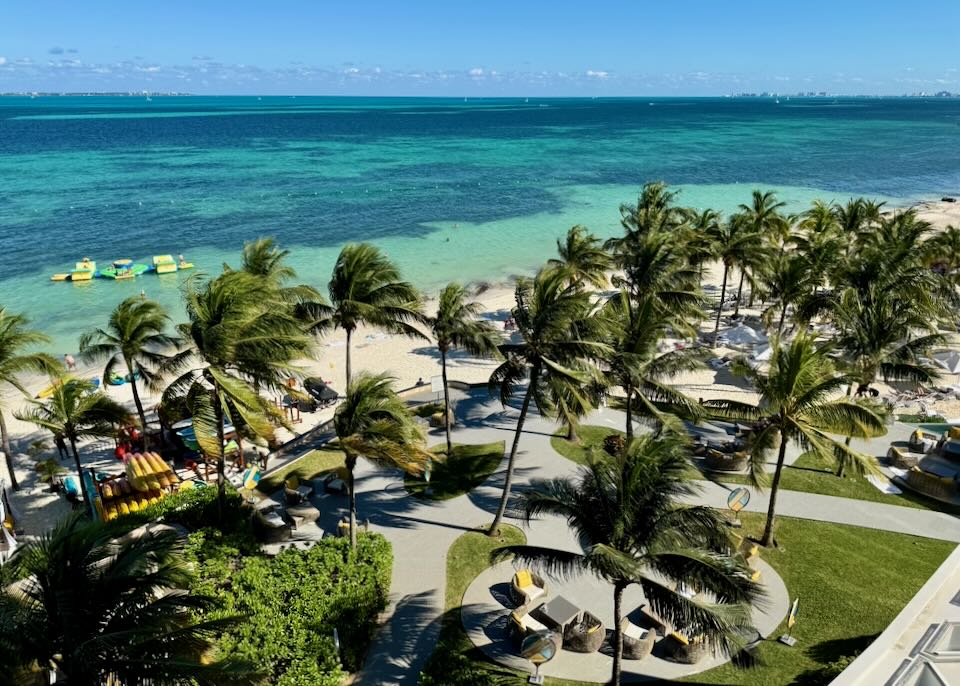
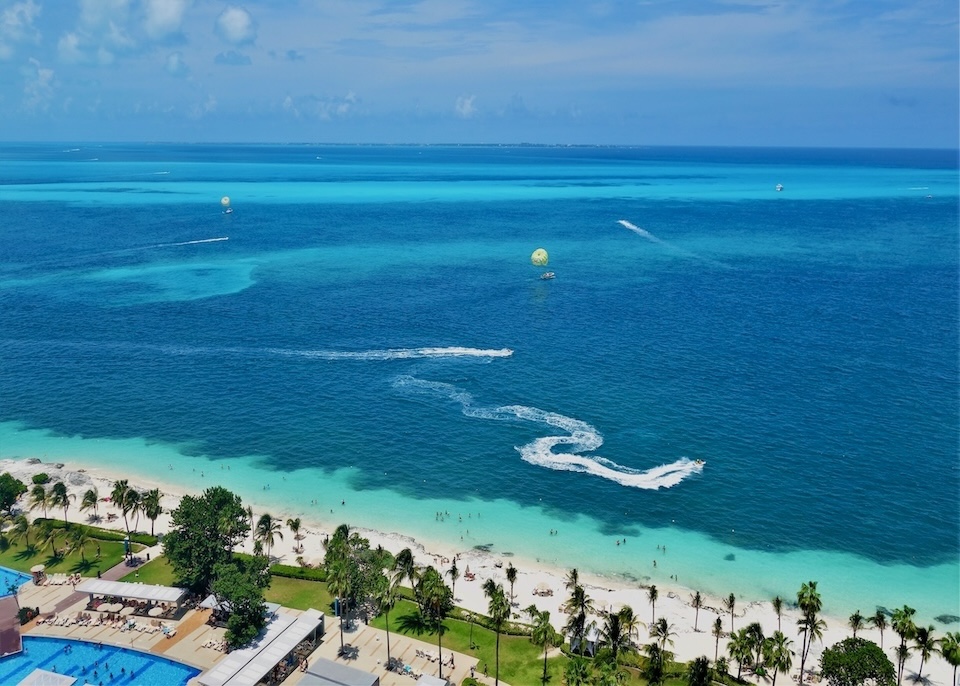
Jet skis are followed by their swirling, white, sea foam wakes, plus two parasailers glide above the ocean in front of the beach in the North Hotel Zone of Cancun.
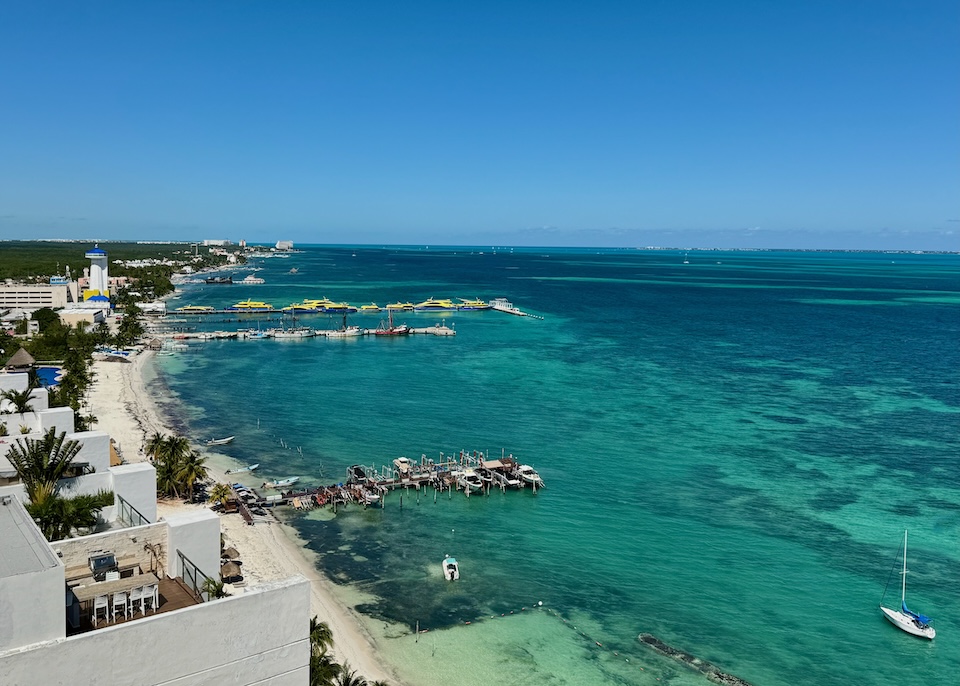
The North Hotel Zone occupies the horizontal top of the “7” shape that defines Cancun’s coast, stretching from the ferry terminals of Puerto Juárez to the “elbow” at Punta Cancún. This is the best area for families and nervous swimmers because the water is exceptionally calm and shallow. Unlike the eastern-facing beaches, this stretch is shielded by Isla Mujeres, which breaks the surf and keeps the water tranquil. It is also the most resilient area during seaweed (sargassum) season, as the island acts as a natural barrier. The sand here is the original fine, white powder that made Cancun famous. It’s a convenient location: you have easy access to the local culture and cheaper eats of El Centro to the west, and the major nightlife hub of Punta Cancún (Uptown) to the east. Two major ferry piers are located here for quick trips to Isla Mujeres.

Staying in the Middle Hotel Zone

A colorful sign spelling “Cancun” on the beach of the Wyndham Alltra resort in the Middle Hotel Zone.
The Middle Hotel Zone is the high-energy heart of the city. Starting at Punta Cancún (the “Uptown” nightlife district home to Coco Bongo and Mandala), this stretch runs south past the massive La Isla Shopping Village. The beaches here offer the classic Caribbean turquoise color and larger waves, which are great for body surfing but can have a stronger undertow than the North. This is the primary nesting ground for sea turtles from May to October; resorts are very diligent about protecting the nests and managing light pollution during the hatching season (July–December). This area is also rich in history, featuring the Maya Museum and the San Miguelito ruins. It is the most walkable part of the Hotel Zone for those who want to jump between beach clubs, high-end shopping, and world-class dining without needing a taxi for every trip.

Staying in the South Hotel Zone

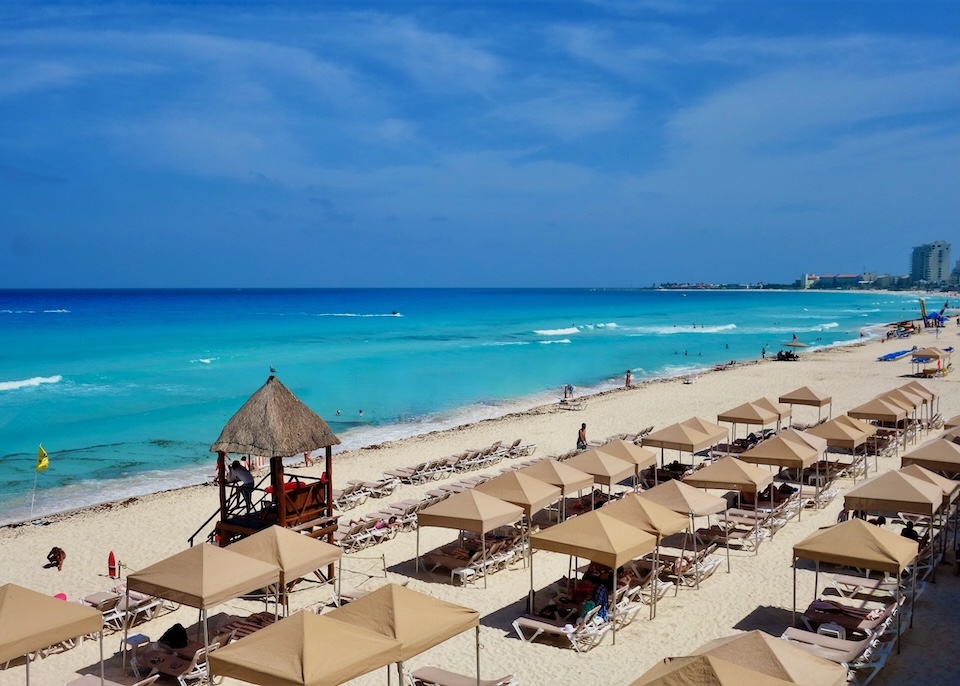
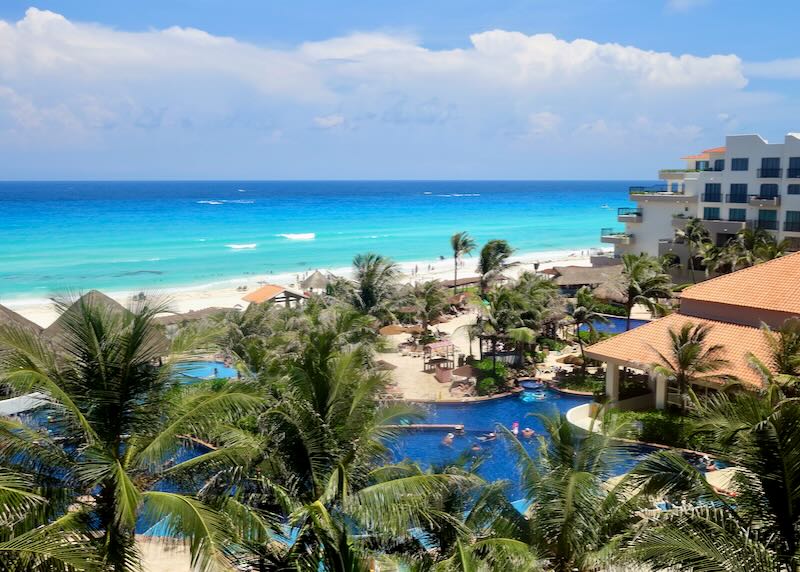
Sunbeds and cabanas line the beach at Crown Paradise Club in the South Hotel Zone of Cancun.
Running from the El Rey ruins down to Punta Nizuc, the South Hotel Zone is much quieter and less congested than its northern neighbors. It is the best choice for travelers who want a peaceful resort experience while staying close to the airport. The beach at the southern tip near Punta Nizuc offers the best snorkeling in the Hotel Zone, as it marks the beginning of the Mesoamerican Reef and features a gallery of the MUSA underwater museum. The area is also highly convenient for regional travel; the nearby Tren Maya station provides a fast connection to Tulum, Playa del Carmen, and Chichén Itzá. While there are fewer independent bars and restaurants here than in the Middle Zone, the lack of traffic and crowds makes it feel much more exclusive and relaxed.

Staying in Playa Mujeres / Costa Mujeres

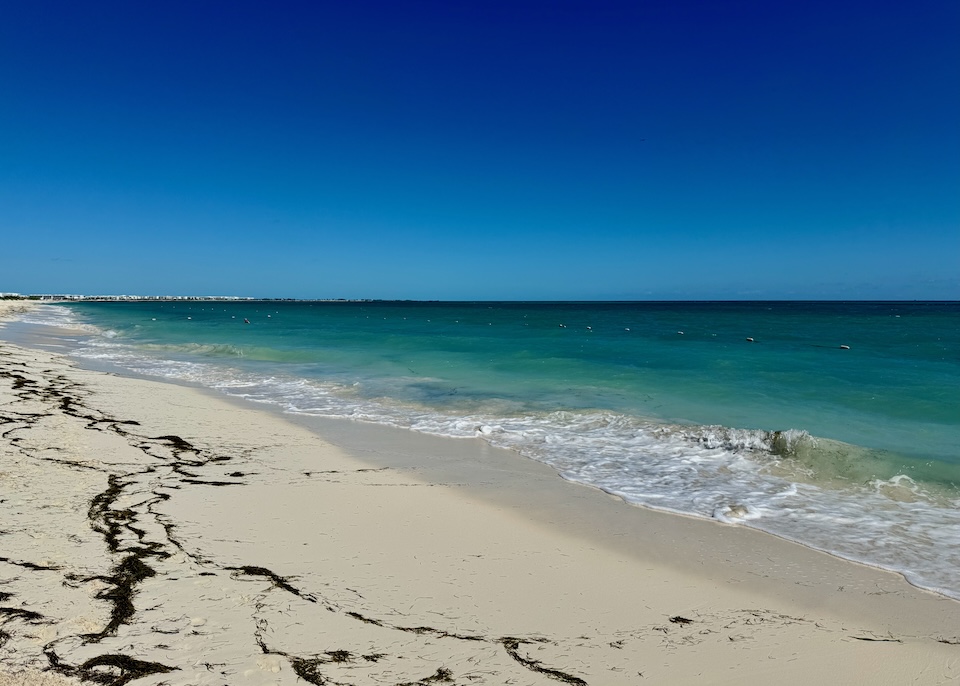
A long beach with gentle waves, a little seaweed, and devoid of people in Playa Mujeres near Cancun.
Located about 20–30 minutes north of the main Hotel Zone, Playa Mujeres (or Costa Mujeres) is a gated, upscale community that feels worlds away from the city’s hustle. This is an area of sprawling, modern all-inclusive mega-resorts, many of which feature world-class golf courses and private marinas. The beaches are pristine with very calm water because Isla Mujeres sits directly offshore, acting as a massive breakwater. This makes it a fantastic alternative to the North Hotel Zone for those who want that same tranquil sea but in a more secluded, luxury setting. Because it is a purpose-built resort area, there is very little “local” life or independent dining within walking distance; you will likely spend most of your time within your resort’s grounds or taking the ferry from Punta Sam over to Isla Mujeres.

Staying in Riviera Cancún

Palm trees line the beach, along with sunbeds, Bali Beds and a pier at Hyatt Zilara in Riviera Cancun.
Riviera Cancún is the corridor connecting the southern tip of the Hotel Zone to the charming fishing village of Puerto Morelos. This area is defined by massive, isolated all-inclusive resorts that offer a true “destination” feel. It is the gateway to the Yucatan’s natural wonders, including the “Ruta de los Cenotes” (Cenote Route) and adventure parks like Xavage and Xoximilco. The beaches here are more rugged and natural, protected by the Mesoamerican Reef which keeps the waves manageable and provides incredible snorkeling opportunities directly from the shore in certain spots. The town of Puerto Morelos itself remains wonderfully low-key with excellent seafood restaurants and a leaning lighthouse. The local Tren Maya station makes it incredibly easy to take day trips to Playa del Carmen or further south to Tulum.

Staying in Puerto Juárez

View from above Puerto Juarez showing the ferry port and two piers in front of a long beach.
Puerto Juárez is the historic gateway to Isla Mujeres and has recently seen a surge in luxury development, particularly in the Puerto Cancún area. This district offers a sophisticated mix of high-end condos, a luxury open-air shopping mall (Marina Puerto Cancún), and a private golf course. While the beaches are smaller and the water isn’t quite as brilliant a blue as the Hotel Zone, the convenience is unbeatable. You are minutes away from the ADO bus station in El Centro and have the island ferry right on your doorstep. For those who want a residential, “city-meets-sea” vibe with access to a marina and trendy restaurants rather than just a sprawling resort, this is the place to be.

Staying in El Centro

Graffiti murals depicting dolphins in a gumball machine on one building and another with a mix of Indigenous patterns, flora, and fauna on two apartment buildings in Centro, or Downtown, Cancun.
El Centro (Downtown) is where you’ll find the soul of the city. This is the best base for budget-conscious travelers and those who want to experience authentic Mexican life. The heart of the action is Parque de las Palapas, a large plaza filled with food stalls, live music, and local families. Here, the prices for street tacos and beer are a fraction of what you’ll find on the beach. While you aren’t on the sand, the R1 and R2 buses run 24/7 and will get you to the Hotel Zone beaches in 15–20 minutes for a few pesos. The ADO bus station is the regional hub for exploring the wider Yucatan, making this the most practical home base for those planning day trips to Chichén Itzá or Valladolid.

The Best Cancun Hotels for Families

MexicoCancun › Kid-Friendly Hotels
Updated: April 14, 2026

See Also

Family hotel on Cancun Beach.

The view of the Cancun beach from the Grand Fiesta Americana.

Cancun Family Resorts: My Advice

  • Where to stay in Cancun: The Hotel Zone (Isla Cancun) is shaped like a large number 7. The top of the 7 faces north and is protected by Isla Mujeres. This area has the calmest, shallowest water in Cancun, making it the best choice for families with toddlers or young children. The long side of the 7 faces east toward the open Caribbean. These beaches have the iconic turquoise water but often experience much stronger waves and a significant undertow. I usually recommend the Grand Fiesta Americana Coral Beach because it sits on the best stretch of that calm, north-facing beach.
  • Best Resorts for Different Ages: I like the Grand Fiesta Americana for younger kids because of its massive kids club and safe shoreline. For families with tweens and teens, the Hard Rock Hotel is a better fit. It has a higher energy level, music-themed activities like the Music Lab, and a very active pool scene.
  • Playa Mujeres: If you want a newer, more exclusive feel, look at Playa Mujeres. This is a gated community north of the main Hotel Zone. The water here is very calm and it is home to some of the newest luxury family resorts like Garza Blanca and Dreams Playa Mujeres.
  • Best Cheap Cancun Hotels for Families: If you want to be on the beach without the luxury price tag, the Krystal Cancun is in a fantastic, walkable location near the shops of Punta Cancun. The Royal Islander is another solid choice further south that offers a quieter, more traditional feel. For the absolute lowest prices, look in Downtown Cancun (Ciudad Cancun), which has great local restaurants but requires a bus or taxi to reach the sand.
  • Getting Away from the Crowds: If you find the big resorts overwhelming, I recommend Isla Mujeres. It is only a 20-minute ferry ride from Cancun and Playa Norte is arguably the most kid-friendly beach in all of Mexico. Another option is Tulum, about 90 minutes south. It offers a bohemian vibe with smaller boutique hotels and easy access to cenotes and ruins.
  • Best Time to Visit: I find the best weather for a family trip is between December and April. Humidity is lower and the temperatures are comfortable. Hurricane season runs from June through November. Also, keep in mind that Sargassum (seaweed) can occasionally affect the east-facing beaches from April through August, while the north-facing beaches usually stay much clearer.

The 18 Best Hotels for Families in Cancun

1. Grand Fiesta Americana Coral Beach – Luxury

Grand Fiesta Americana Coral Beach Hotel in Cancun
This is my top recommendation for families. It is located in a protected cove at the north end of the Hotel Zone, meaning the water is as calm as a swimming pool – perfect for toddlers.

  • Room Style: Every room is a suite with an ocean-view balcony. For larger families, the two-bedroom suites are excellent.
  • Kids Club: The Coral KidZ Club is massive and features a high-tech play area, a remote-controlled car track, and a supervised water park.
  • Dining: It recently moved to an all-inclusive model (Infinite Luxury), offering high-end dining that is significantly better than your average resort buffet.

2. JW Marriott Resort & Spa – Luxury

JW Marriott Resort & Spa in Cancun
A sophisticated, non-all-inclusive choice for families who want a quieter atmosphere and high-end service.

  • Water Features: Stunning infinity pools, a large hot tub, and a unique 20-foot-deep scuba diving pool with an artificial reef.
  • Suites: The one-bedroom suites are very spacious and can comfortably fit a family of four or five. All rooms have balconies.
  • Beach: Located on a wide stretch of white sand. The waves here are moderate – good for swimming, but always watch the flag colors.

3. Hard Rock Hotel – Luxury

Best Cancun beach resort for teens.
This is the best all-inclusive in Cancun for families with teenagers. It is high-energy and music-focused.

  • The Music Lab: Teens (12+) can take professional instrument lessons, join a “jam band,” or record a track in a real studio.
  • Rooms: Every room has a two-person hydro-spa tub. The Deluxe Family Suites are actually two connecting rooms, which is great for privacy.
  • Vibe: Expect pool parties, live music, and a very active entertainment staff.

4. Garza Blanca Resort & Spa – Luxury

Great beachfront hotel for families in Cancun.
This is a sleek, modern resort in the gated Playa Mujeres community. It is much newer than most resorts in the Hotel Zone and offers a very high-end, contemporary feel.

  • Suites: They offer massive one-, two-, and three-bedroom suites. These are essentially luxury apartments with full kitchens, dining areas, and laundry – perfect for long family stays.
  • Pools: There are six different pools, including a dedicated kids’ pool with a splash pad and a stunning rooftop infinity pool (rooftop is adults-only).
  • Dining: The focus here is on gourmet food. Hiroshi (Japanese) and Dao (Chinese) are exceptional, though you must book reservations weeks in advance.
  • Beach: Since it faces Isla Mujeres, the water is very calm and shallow, making it safe for children to play in the sand and surf.

5. Hyatt Ziva – Luxury

Hotel with waterslides in Cancun.
One of the most popular all-inclusives for families in Mexico. It sits on a point surrounded by water on three sides, providing access to two different beaches.

  • Dolphins: There is a dolphin habitat on-site where guests can watch them or pay for an interactive swim.
  • Kids Club: Includes a water park with slides and a supervised activity program that runs all day.
  • Treats: There is a dedicated dessert parlor and a 24-hour lounge for snacks, which is a big hit with kids.

6. Grand Residences Riviera Cancun – Luxury

Cancun apartments for families.
Located in the quiet fishing village of Puerto Morelos, south of the airport. This is an all-suite property now part of the Holiday Inn Club Vacations family.

  • Accommodations: Huge suites (up to four bedrooms) that can sleep up to 13 people. Most include full kitchens, laundry, and whirlpool tubs.
  • Vibe: Very relaxed and residential. It’s a great choice if you want to avoid the “mega-resort” crowds of the Hotel Zone.
  • Beach: A beautiful stretch of sand that is great for swimming, though it can occasionally be a bit rocky in spots.

7. Crown Paradise Club – Midrange

Cancun hotel with kids club and water slides.
A very affordable all-inclusive that is packed with features for younger children.

  • Water Park: Features a full pirate ship and nine different waterslides.
  • Baby Club: One of the few resorts that offers supervised care for toddlers as young as 18 months.
  • Family Suites: These rooms feature a semi-private area with bunk beds and a separate TV for the kids.

8. Kempinski Hotel Cancun – Luxury

Cancun hotel with kid-friendly beach.
Formerly the Ritz-Carlton, this resort offers a more traditional and elegant luxury experience. It is not all-inclusive, which many families prefer for the quieter atmosphere.

  • Kids Club: Focuses on cultural immersion and nature. They also have a great turtle rescue program during the nesting season.
  • Culinary: They have an on-site Culinary Center where families can take professional cooking classes together.
  • Service: The service here is world-class and very attentive to families with young children.

9. Moon Palace The Grand – Luxury

Cancun beach resort with water slides.
This is a massive, self-contained city of a resort south of the airport. It is entirely all-inclusive and offers more activities than almost anywhere else in Cancun.

  • Activities: Features a massive water park, a lazy river, a surf simulator, bowling, and a neon-lit mini-golf course.
  • Family Rooms: The Grand Family Suites are essentially two connecting rooms with extra perks like an Xbox and a kids’ mini-bar.
  • Note: The beach here is not the best in Cancun (it can have seagrass), but the enormous pool complexes more than make up for it.

10. Wyndham Grand – Luxury

Omni Cancun Hotel & Villas
Formerly the Omni, this is a very solid all-inclusive choice with a great pool layout that cascades toward the ocean.

  • Villas: They offer three-bedroom villas that are perfect for larger families or groups, featuring full kitchens and dining areas.
  • Pools: Three pools, including a large one with a swim-up bar and a dedicated kids’ area.
  • Beach: Sits on a beautiful, wide stretch of the Hotel Zone beach.

11. Fiesta Americana Condesa – Luxury

Fiesta Americana Condesa Hotel in Cancun
This all-inclusive resort has a very warm, Mexican feel. It is known for its large thatched-roof palapa and friendly service.

  • Kids & Teens: There is a pirate-themed pool for the little ones and a dedicated lounge with video games and pool tables for teenagers.
  • Dining: A great variety of restaurants, including a popular Mexican venue and a poolside snack bar.
  • Rooms: Options range from standard rooms to two-bedroom suites with jetted tubs on the terrace.

12. Dreams Jade Resort & Spa – Luxury

Dreams Jade Resort & Spa in Cancun
A stylish all-inclusive near Puerto Morelos. If you book here, I recommend upgrading to the “Preferred Club” for better room locations and a private lounge.

  • Activities: Supervised Explorer’s Club for kids (ages 3 to 12) and a Core Zone for teens. They often host outdoor movies and beach campouts.
  • Dining: Several high-quality a la carte restaurants that do not require reservations – a major convenience for families.
  • Location: The beach can be a bit rocky right in front of the hotel, but it is a short walk to better swimming spots.

13. Dreams Playa Mujeres – Luxury

Dreams Playa Mujeres Hotel in Cancun
Located north of the city in the gated Playa Mujeres community. This area is much quieter than the Hotel Zone and has very calm water.

  • Pools: A massive water complex including two infinity pools, a lazy river, and a water park for kids.
  • Accommodations: Modern suites, many of which offer swim-up access or private pools.
  • Golf & Dolphins: Guests have access to an on-site dolphin habitat and a nearby golf course.

14. Dreams Riviera Resort & Spa – Luxury

Dreams Riviera Resort & Spa in Cancun
A very active, family-friendly all-inclusive with a unique circular design that keeps everything close at hand.

  • Rooms: Many ground-floor rooms have private plunge pools. The rooms are spacious and include whirlpool tubs.
  • Activities: Great kids club with a splash pad and a climbing wall. They offer unique family activities like cooking classes and Euro-bungee.
  • Beach: The beach is very clean and the water is generally calm and safe for swimming.

15. The Royal Cancun – Midrange

Now part of Holiday Inn Club Vacations, this is an all-suite resort on the north shore. It is located on a very calm, shallow bay.

  • Units: All accommodations are two-bedroom villas with full kitchens. This is one of the most practical setups for families who want to cook some of their own meals.
  • Vibe: Very low-key and residential. It feels more like a vacation home than a bustling resort.
  • Beach: The water is so still that it feels like a lake – ideal for babies and toddlers.

16. Hilton Cancun Mar Caribe – Luxury

Formerly Royal Uno, this property has been completely rebranded as a Hilton all-inclusive. It is fresh, modern, and very family-oriented.

  • Kids Club: Features a dedicated pool and playground area with supervised activities throughout the day.
  • Dining: Much improved food variety, including an excellent Asian restaurant and a 24-hour snack lounge.
  • Location: Sits on a beautiful stretch of the main Hotel Zone beach. The water can be a bit wavy here, but the pools are fantastic.

17. The Royal Islander – Midrange

A traditional beachfront resort located right next to the Hilton. It offers large suites and a more classic Caribbean feel.

  • Suites: The units are spacious and well-maintained, featuring full kitchens and large terraces.
  • Dining: Features several reliable on-site restaurants, including the popular El Conquistador which often has live music.
  • Amenities: Guests can use loaner bicycles and sailboats. It is also right across from a golf course.

18. El Rey del Caribe – Budget

A unique, eco-friendly boutique hotel in Downtown Cancun. This is not on the beach, but it is a wonderful, affordable alternative for families who want a local experience.

  • Garden: The hotel is built around a lush jungle courtyard with a small pool and many tropical birds.
  • Eco-Focus: They use solar power, collect rainwater, and compost all waste. There is no alcohol or soda sold on-site, focusing instead on healthy meals and yoga.
  • Location: It is a 10-15 minute bus or taxi ride to the beach, but you are walking distance to great local parks and cheap, authentic restaurants.

Family Villas & Apartments in Cancun

Family apartment villas with kitchen and pool in Cancun.

The swimming pool at The Villas at The Royal Cancun – located directly on the Cancun beach.

Apartment rentals and villas for families in Cancun. All units have kitchens. Most have washer/dryer and free-wifi.

Read More

Mexico City in April: Weather, Semana Santa, & Planning Tips

MexicoMexico City › Mexico City in April
Updated: April 12, 2026

See Also

April is one of the best months to visit Mexico City if you want warm afternoons, mostly dry weather, and long days for sightseeing. It sits at the peak of the dry season, just before the summer rains become a regular pattern. While the absolute peak of the purple jacaranda bloom often occurs in March, early and mid-April visitors will still find plenty of color in neighborhoods like Roma, Condesa, and Coyoacán. This is a month for outdoor living, rooftop dining, and exploring the city’s vast parks.

The Verdict: April offers high-energy urban exploration and excellent weather for those who don’t mind the sun. If your trip overlaps with Semana Santa (Holy Week), you will experience a unique version of the capital: lighter commuter traffic and a “quieter” feel in residential zones, though major tourist sites and leisure spots see a surge in domestic visitors. I find the trade-off worth it for the ease of moving across the city, provided you book your top-tier restaurant choices well in advance.


April Weather: Quick Facts

  • Daytime High: 80°F (27°C)
  • Nighttime Low: 54°F (12°C)
  • Rainfall: Very Low; occasional late-month showers.
  • Daylight: Approximately 12.5 hours.

Who April is Best For

  • Walkers and Explorers: People who want to log miles in neighborhoods like Roma, Juárez, and San Ángel without rain gear.
  • Terrace Diners: Anyone looking for that perfect rooftop sunset and “summer-lite” evening temperatures.
  • First-Timers: Travelers who want the most predictable dry weather for visiting ruins and landmarks.

Who Should Skip April

  • Respiratory Sensitivity: Those with asthma or heavy allergies may struggle with the peak “ozone season” air quality.
  • Heat-Averse Travelers: While not tropical, the midday high-altitude sun feels significantly hotter than the thermometer suggests.

The April Daily Rhythm

To maximize comfort and air quality, follow this seasonal schedule:

  • 8:00 AM to 11:30 AM: Heavy outdoor sightseeing. Visit Teotihuacán, walk through Chapultepec Park, or explore the Zócalo. The air is freshest and the sun is manageable.
  • Noon to 4:00 PM: Indoor activities or long lunches. This is the peak for both heat and ozone levels. It is the perfect time for the Anthropology Museum or a shaded courtyard meal.
  • 5:00 PM Onward: Rooftop drinks and evening strolls. The heat dissipates quickly as the sun goes down, leading to the best “light jacket” weather of the year.

April by the Week: When to Go

  • Early April: The most reliable window for lingering jacarandas and standard city operations. Weather is dry and warm.
  • Semana Santa (Dates Vary): Holy Week brings a massive shift. Commuter traffic drops significantly, making cross-town travel fast. However, expect domestic crowds at family attractions like Xochimilco and the Zoo. Some smaller local shops may close, but major museums remain open.
  • Late April: The humidity begins a very slight climb. You will notice more afternoon cloud buildup, and by Día del Niño (April 30), the city feels festive but the haze can be more pronounced.

Weather, Sun, and Air Quality

April is typically among the warmest months in Mexico City. Because the city sits at 7,350 feet, the UV index is extremely high. You will burn faster here in 80°F weather than you would at sea level in 90°F weather. Always wear a hat and high-SPF protection.

The Ozone Season: April falls within the city’s “dry-hot” ozone season. Because there is little wind or rain to clear the basin, smog can build up, particularly in the afternoons. On high-contingency days, the air can look hazy and may irritate the eyes or throat of sensitive individuals. Plan your outdoor exercise for the early morning when the air is at its clearest.


Visiting Teotihuacán in April

April is excellent for the ruins because you are almost guaranteed dry, clear morning skies for photography. However, the old “climb the pyramids” experience is largely gone. Current INAH regulations have restricted climbing on the major structures (Sun and Moon pyramids) to preserve the site. Access is generally limited to the plaza levels. Arrive at 8:00 AM sharp to beat the heat, as there is virtually no shade at the site.


April vs. Other Months

  • April vs. March: March has the peak jacaranda bloom, but April is slightly warmer. April is better for those who prefer balmy evenings over March’s occasionally chilly nights.
  • April vs. May: May is the transition into the rainy season. While April is bone dry, May brings frequent afternoon thunderstorms. April is more reliable for keeping your shoes dry.

April by Traveler Type

  • Families: Pros: Great weather for the zoo and parks. Cons: Holy Week crowds at kid-friendly spots can be overwhelming; stay hydrated in the dry heat.
  • Foodies: Pros: Peak season for the city’s world-class rooftop bar scene. Cons: Popular spots like Contramar or Rosetta require booking weeks in advance, especially during holiday weekends.
  • History Buffs: Pros: Ideal for long walking tours of the Centro Histórico. Cons: Must manage energy levels around the intense midday sun and fluctuating air quality.

Common April Mistakes

  • Assuming “Empty” Means Everything is Open: During Holy Week, don’t assume every neighborhood market or boutique will follow standard hours. Verify holiday schedules for specific museums, particularly for Good Friday.
  • Neglecting Hydration: The combination of altitude and dry April air is dehydrating. Drink significantly more water than you think you need.
  • Ignoring Afternoon Smog: If you see a “contingencia ambiental” alert on the news or social media, take it seriously and move your activities indoors.
  • Packing Only for Heat: While days are hot, the temperature drops fast after sunset. You still need a sweater or light jacket for dinner.

Planning and Logistics

Neighborhood Choice: For April, Roma and Condesa are ideal because their tree-lined streets provide natural shade. Polanco offers high-end luxury and great walkability. The Centro Histórico is spectacular but has very little shade, making it quite hot in the mid-afternoon.

Transportation: Uber and Didi remain the most convenient ways to get around, and during Holy Week, they are exceptionally efficient due to lack of traffic. However, the Metro remains a reliable backup to avoid the afternoon surface-level heat.


Packing List for April

  • Sun Gear: Polarized sunglasses, a wide-brimmed hat, and high-quality sunscreen.
  • Lip Balm and Lotion: Essential for the dry, high-altitude air.
  • Linen and Cotton: Breathable fabrics are a must. Avoid heavy denim for daytime walking.
  • Light Layers: A versatile cardigan, denim jacket, or light blazer for evenings.
  • Walking Shoes: Break them in before you arrive; the city’s volcanic stone and cracked sidewalks are tough on feet.

Frequently Asked Questions

Is Holy Week a good time to visit?
It is a “pro” for traffic and a “con” for domestic crowds at major sights. If you want a quieter urban experience and aren’t focused on local shopping, it is a fantastic time to be in the city.

Do I need a hotel with AC?
While many older boutique hotels do not have AC, April is the one month where you might truly want it. At the very least, ensure your hotel provides high-quality fans.

Is April better than March?
It depends on your priority. March for the flowers; April for the warmest outdoor dining weather and the unique “empty city” vibe of Semana Santa. Lore dictates that the city is most beautiful when the purple blossoms are peaking.

Are the museums open on Easter?
Most headline sights like the Frida Kahlo House and the Anthropology Museum remain open, but always re-check official websites for holiday-specific hours as they can change annually.

Mexico City in March: Weather & Travel Tips

MexicoMexico City › Mexico City in March
Updated: April 12, 2026

See Also

March is one of the most rewarding months to visit Mexico City. It is a time of transition where the crisp mornings of winter give way to warm, sunny afternoons. This is the month when the city’s Jacaranda trees typically bloom, painting the avenues of Roma, Condesa, and Reforma in vibrant shades of violet. Because it is one of the driest months of the year, it is an ideal window for walking tours, rooftop dining, and exploring the nearby ruins of Teotihuacán.

The Verdict: If your priorities are outdoor photography, terrace culture, and dry weather, March is an excellent choice. However, you must plan for the high altitude and the intensity of the dry season. The air can be hazy, and the sun at 7,350 feet is exceptionally strong. I have found that the key to a successful March trip is staying hydrated and finishing your heavy outdoor sightseeing before the mid-afternoon heat and potential haze settle in.


March At-A-Glance

  • Weather: Warm and sunny days with cool mornings and evenings. Rain is rare but not impossible.
  • Highlights: Peak Jacaranda blooms, Spring Equinox celebrations, and peak “Al Fresco” dining season.
  • Challenges: Occasional poor air quality (haze), high UV index, and fluctuating crowds during Holy Week.
  • Best for: Walkers, photographers, and first-time visitors who want reliable sightseeing weather.

Weather, Altitude, and Air Quality

In March, average daytime highs reach 79°F (26°C), while evenings remain cool at 51°F (11°C). It is one of the driest months, which means you can plan your itinerary with high confidence that you won’t be rained out. However, don’t write off the possibility of a brief shower or afternoon clouds.

Air Quality and Haze: Because it is the height of the dry season, the air in the Valley of Mexico can be dusty or hazy. Thermal inversions sometimes trap pollutants, leading to poorer air quality in the afternoons. If you are sensitive to pollution, I recommend checking the IMECA or SIMAT readings daily and scheduling your longest walks for the morning when the air is usually clearer.

The Sun: Do not underestimate the sun at this elevation. Even if the breeze feels cool, the UV index is high. Wear a hat and high-SPF sunscreen daily to avoid a quick burn.


The Jacarandas: When and Where to See Them

The city’s transformation into a sea of purple is the hallmark of March. While these trees are not native to Mexico, they became a staple of the capital’s identity in the early 20th century, a legacy often linked to Japanese landscaper Tatsugoro Matsumoto.

Timing: Jacarandas usually bloom from late February into March. The peak varies year to year depending on temperatures, so it is best to view the season as a flexible window rather than a fixed date.

Top Spots for Blooms:

  • Alameda Central: The purple flowers create a stunning contrast against the white marble of the Palacio de Bellas Artes.
  • Paseo de la Reforma: The city’s grandest boulevard is lined with these trees.
  • Condesa: Walk the circuits of Parque México and Parque España.
  • Ciudad Universitaria (UNAM): The university campus offers vast groves of purple blooms against modernist architecture.

Crowds, Pricing, and Holiday Timing

March is a popular month, and crowds fluctuate based on two major events: the Spring Equinox and Semana Santa (Holy Week).

The Spring Equinox (March 20 or 21): This is a massive event at Teotihuacán, where thousands of people dress in white to climb the pyramids and receive energy. It is culturally fascinating but can be overwhelming. Avoid these specific dates if you prefer a quiet, contemplative visit to the ruins.

Semana Santa: This holiday can fall in late March or April. During this week, the city’s rhythm changes. Some business districts and local neighborhoods feel quieter as residents head to the coast, while religious sites, central tourist attractions, and transport hubs get much busier. Check the calendar before you book to see if your trip overlaps with these dates.


March vs. Other Months

  • March vs. February: March is warmer and sunnier. While February is quieter, March offers the full spectacle of the Jacaranda season and better weather for evening rooftop drinks.
  • March vs. April: April is typically the hottest month of the year. While April is also dry, the heat can feel more intense before the relief of the summer rains. March is generally more comfortable for long days spent walking.

What to Book Ahead

Because March is high season, certain logistics require advance planning to avoid disappointment.

  • Frida Kahlo Museum (Casa Azul): You must buy tickets online well in advance. The museum does not sell tickets in person, and popular time slots often sell out weeks ahead.
  • Fine Dining: If you plan to eat at world-renowned spots like Pujol or Quintonil, book at least two months in advance. For other popular terrace restaurants in Roma or Condesa, a week’s notice is usually sufficient.
  • Hotels: Boutique hotels in Roma Norte and Condesa fill up early for March. If you want a room with a balcony or a view of the trees, book by January.

Best Things to Do in March

  • Early Morning at Teotihuacán: The archaeological zone typically opens at 8:00 AM. I recommend arriving right at opening to beat both the midday heat and the tour bus crowds.
  • Chapultepec Park: With no rain to worry about, March is the perfect time to explore the castle, the zoo, and the botanical gardens.
  • Outdoor Markets: Visit the Bazar Sábado in San Ángel or the Sunday market in La Lagunilla. The dry weather makes browsing these open-air stalls much more pleasant.
  • Xochimilco: Weekday mornings on the canals are peaceful in March. The floating gardens are lush and the sky is often clear for great photos from the trajineras.

Common March Mistakes

  • Packing for a Tropical Climate: It is 80°F at 2:00 PM, but it can drop to 50°F by 8:00 AM. If you don’t bring a light jacket, you will be cold during breakfast and late-night tacos.
  • Ignoring the Altitude: The combination of thin air, dry heat, and walking will dehydrate you quickly. Drink twice as much water as you normally would.
  • Rushing the Sightseeing: The altitude hits harder when it is warm and dry. Slow your pace for the first two days to allow your body to adjust.
  • Forgetting Lip Balm and Moisturizer: The dry March air is notorious for causing chapped lips and dry skin. Pack heavy-duty hydration for your skin.

Packing List for March

  • Light Layers: A denim jacket, lightweight sweater, or a trench coat for the temperature swings between day and night.
  • Comfortable Walking Shoes: The sidewalks are notoriously uneven. Leave the heels at home and bring supportive sneakers.
  • Skin Protection: High-SPF sunscreen, polarized sunglasses, and a wide-brimmed hat.
  • Saline Nasal Spray: This is a pro tip for the dry season to help your nose stay comfortable in the dusty, high-altitude air.
  • Small Daypack: To carry your water bottle and the layers you shed as the day warms up.

Frequently Asked Questions

Is March a good time for a first-time visitor?
It is one of the best times. You get the city’s most iconic scenery, reliable sightseeing weather, and a vibrant atmosphere before the summer rains begin.

What is the best way to get around in the March heat?
The Metro can get very hot and crowded in the afternoons. I recommend using Uber or DiDi for longer trips, as they are affordable and climate-controlled. For shorter distances, walking is best, but stay on the shady side of the street.

Are there many mosquitoes in March?
No. Because it is so dry, mosquito activity is at its lowest point of the year. You likely won’t need repellent unless you are headed deep into the countryside.

Is the air quality really that bad?
It varies. Most travelers will only notice a slight haze on the horizon. However, if you have asthma or respiratory sensitivities, you should monitor the air quality index and limit strenuous activity on high-ozone days.

Can I still see the pyramids if I visit during the Equinox?
Yes, but be prepared for massive crowds and long lines. If you want to actually study the archaeology, I strongly suggest going a few days before or after the actual Equinox.

Mexico City in February: My Complete Planning Guide

MexicoMexico City › Mexico City in February
Updated: April 12, 2026

See Also

February is one of the best months to visit Mexico City if you want dry weather, cool mornings, and a high-energy cultural scene. It sits in the heart of the dry season, meaning rain is very unlikely, though a compact umbrella is never a terrible backup. This is a month defined by massive international art fairs and the peak of the monarch butterfly migration nearby. However, you must prepare for a 30 degree swing in temperature between a chilly breakfast and a sunny afternoon, along with the seasonal haze that can affect air quality.

The Verdict: February is an excellent choice for art lovers, museum-goers, and first-time visitors who prefer walking in dry weather. It is less ideal if you are on a strict budget (due to Art Week price hikes), if you have severe respiratory sensitivities, or if your primary goal is to see the city fully blanketed in purple jacarandas, which usually peak later in March. I have visited during several Art Weeks; the energy is incredible, but the city requires much more advance planning this month than in January or June.


Should You Visit Mexico City in February?

  • Go in February if: You want ideal walking weather, you plan to visit the Monarch butterfly sanctuaries, you want to attend world-class art fairs, or you prefer sunny patio dining without the risk of afternoon downpours.
  • Skip February if: You are looking for the lowest possible hotel rates, you want to see the parks at their greenest (they are quite brown now), or you are highly sensitive to urban air pollution.

February At-A-Glance

  • Best for: Contemporary art, butterfly tours, clear morning views from Chapultepec Castle, and outdoor exploring.
  • Less ideal for: Travelers who haven’t booked in advance, budget seekers during the first half of the month, and those who dislike high-altitude dryness.

Weather, Altitude, and Air Quality

Expect daytime highs around 75°F (24°C) and nighttime lows near 45°F (7°C). Because Mexico City sits at 7,350 feet, the sun is intense even when the air feels cool. Wear SPF 50 daily.

The Temperature Swing: You will experience four seasons in one day. I recommend dressing for a 30 degree shift: a light down jacket for a 9:00 AM coffee, which you will strip down to a T-shirt by noon, and put back on after the sun sets at 6:30 PM.

Air Quality and “Contingencias”: February is part of the dry season where “thermal inversions” can trap smog in the valley. On bad-air days, the government may declare a Contingencia. This means driving restrictions for certain vehicles and advice to avoid strenuous outdoor exercise in the afternoon. If you have asthma, keep your inhaler handy and check the AQI (Air Quality Index) apps daily.

Altitude Pacing: On your first day, keep your schedule lighter than usual. Drink twice as much water as you think you need to combat the dry air and elevation, and go easy on alcohol until you see how your body adjusts.


Costs, Crowds, and Reservations

February is a “cultural high season.” While it isn’t a beach holiday, the influx of international art collectors and winter sun-seekers keeps the city busy.

  • Art Week (Early Feb): This pushes up rates and reduces choice, especially in Roma, Condesa, Juárez, and Polanco. For 2026, ZsONAMACO runs February 4 to 8, while Feria Material and Salón ACME run February 5 to 8. Book hotels at least 3 months early if visiting during these dates.
  • Museum Reservations: The Frida Kahlo Museum (Casa Azul) is online-only. Tickets sell out weeks in advance; book as soon as your dates are firm.
  • Top Restaurants: If you want to eat at Pujol, Quintonil, or Contramar, you need to reserve 4 to 6 weeks ahead for February dates.

Best Things to Do in February

  • Monarch Butterfly Sanctuaries: January and February are the classic months for this. Activity increases from mid-February as butterflies prepare to head north. This is a long day trip; plan for an early start (7:00 AM) and a full day to account for traffic and mountain access.
  • Teotihuacán Pyramids: Go right at opening (8:00 AM). Morning means cooler temperatures, fewer crowds, and usually better visibility before the midday haze sets in.
  • Lucha Libre: Tuesday and Friday nights at Arena México are a great indoor option if the afternoon air quality is poor. Buy tickets on Ticketmaster a few days ahead for the best seats.
  • First Jacaranda Sightings: You may catch the earliest purple blooms in late February, particularly on Paseo de la Reforma, but remember that peak purple season is more often a March and early April event.

Neighborhoods and Where to Stay

  • Roma Norte & Condesa: The best areas for first-timers. These are walkable, leafy, and filled with the best cafés and boutiques. Expect high demand during Art Week.
  • Juárez: A central, design-forward neighborhood that is home to many smaller art galleries and excellent cocktail bars.
  • Polanco: Best for luxury hotels and proximity to the high-end shopping of Masaryk and the Soumaya Museum. It feels less “local” but is very secure.
  • Coyoacán: A slower, colonial-style neighborhood in the south. Great for repeat visitors, though it is a long Uber ride from the central Art Week events.

February vs. Other Months

  • February vs. January: February is slightly warmer and much busier due to Art Week. January is the quietest and coldest month, offering better value for budget travelers.
  • February vs. March: March is warmer and is the definitive month for Jacarandas. However, March can be much dustier and more prone to heatwaves before the rainy season begins.

Common February Mistakes

  • Packing Only Summer Clothes: Do not arrive with only T-shirts. You will be genuinely cold in the evenings and early mornings.
  • Forgetting Lip Balm and Lotion: The combination of high altitude and the dry season will crack your skin and lips quickly. Bring heavy-duty moisturizer.
  • Assuming 2-Hour Travel Times: Traffic in Mexico City is some of the worst in the world. Always add 30 minutes to whatever your navigation app predicts, especially during the busy February fair weeks.

Planning and Logistics

  • Water: Do not drink tap water. Most reputable hotels provide filtered drinking water. Travelers with very sensitive stomachs may also prefer filtered or bottled water for brushing teeth.
  • Transportation: Uber and DiDi are safe, cheap, and plentiful. Use them for most trips, but use the Metrobús or the Metro during peak rush hour to bypass gridlock.
  • Currency: While many places take cards, you still need Pesos for street food, markets, and small tips. Use bank-affiliated ATMs for the best rates.

Frequently Asked Questions

Is February a good time to visit Mexico City?
Yes, it is one of the top three months for weather and culture, provided you book your accommodation and major museum tickets in advance.

What should I wear in February?
Think in layers. A light down jacket or wool sweater for the morning, a breathable shirt for the afternoon, and comfortable, closed-toe walking shoes for the uneven volcanic stone sidewalks.

Are the butterflies still there in late February?
Yes, they are usually very active in late February. They typically don’t begin to leave until mid-to-late March.

Is the air quality really that bad?
It varies. Some days are crystal clear, especially after a rare winter breeze. Other days can be hazy. If you see locals avoiding the parks in the afternoon, follow their lead and stay indoors at a museum or gallery.

Mexico City in January: Weather, Packing, and Travel Tips

MexicoMexico City › Mexico City in January
Updated: April 12, 2026

See Also

January is one of the best months for travelers who want to experience Mexico City on foot. Days are usually sunny and dry, the altitude keeps temperatures comfortable for sightseeing, and the holiday rush fades after the first week. The catch is that CDMX in January surprises people: mornings and evenings can feel genuinely cold, the air is very dry, and pollution can be more noticeable during stagnant winter conditions.

The Verdict: January is an excellent month for museums, food, walking neighborhoods, and day trips like Teotihuacán. It is less ideal for travelers expecting tropical warmth or those who are sensitive to dry air and pollution. For most people, the sweet spot is after Three Kings Day (January 6), when the city feels more settled and prices often ease. I have found that while the midday sun is strong, you will want a jacket the moment you step into the shade.


January At-A-Glance: Best and Worst

  • Best for: Crisp walking weather, museum hopping, exploring neighborhoods like Roma and Condesa, and finding lower hotel rates after the first week.
  • Less ideal for: Travelers looking for lush, green landscapes (parks are often brown and dry) or those who want a nightlife scene dominated by outdoor sidewalk seating.

What January Is Not

January is not beach weather, lush-season weather, or nightlife-on-the-sidewalk weather every night. It is Mexico City at its crispest: blue skies, strong midday sun, cold shade, dry lips, and long museum days. If you are looking for a tropical escape, the high-altitude chill of the capital will be a disappointment.


Weather, Altitude, and Air Quality

In January, average daytime highs are around 71°F (22°C), but nighttime lows can drop to 43°F (6°C). Because the air is thin and the humidity is low, these temperature swings are sharp and immediate.

Air Quality: Dry winter conditions can make air pollution more noticeable on some days, especially for travelers with asthma or other respiratory issues. I recommend checking the daily air-quality forecast (via local apps or sites like Aire CDMX) before planning a long run or a heavy day of hiking.

Altitude and Dryness: The high altitude makes the sun feel much stronger than the air temperature suggests. Use sunscreen and sunglasses daily. The dry air can also cause sinus irritation or dry skin; stay more hydrated than usual and consider a saline nasal spray for more comfortable sleep.


Crowds, Prices, and When to Go

  • Jan 1 to 6: The city remains in a festive holiday rhythm. This is the peak of the Rosca de Reyes season. Expect family-oriented crowds and some reduced business hours as locals celebrate Three Kings Day.
  • Jan 7 to 20: This is the best window for value. The holiday crowds have returned home, hotel prices often drop, and the city’s top restaurants are easier to book.
  • Late January: Excellent sightseeing weather continues, though mornings remain cold. This is a great time for photography as the “winter light” in the city is particularly beautiful.

January by Neighborhood

  • Roma and Condesa: Best for cafe hopping and walking. The cool weather makes the long stretches of Art Deco architecture easy to explore on foot.
  • Centro Histórico: Excellent in the January sunlight, but the narrow streets can feel significantly colder in the shade of the tall buildings.
  • Polanco: Ideal for luxury dining and museums. The lack of rain makes it easy to walk between the Museo Soumaya and the high-end shops of Masaryk.
  • Coyoacán: Especially appealing in cool weather, but remember that the most popular attractions here still require significant advance planning.

January vs. Other Months

  • January vs. December: January is slightly cooler and much quieter. While December is defined by Christmas markets and heavy traffic, January feels more functional and local.
  • January vs. February: By late February, the city begins edging toward spring, and the first jacarandas may start appearing, though peak bloom is usually later in March. January is drier and the mornings are crisper.

Best Things to Do in January

  • Teotihuacán: This is one of the most comfortable months for visiting the pyramids because the open site can feel intense during the hotter months. Go early for clearer views. Note: Climbing access is currently restricted; visitors can typically only ascend the Pyramid of the Moon to the first level. Always check current INAH rules before you go.
  • Frida Kahlo Museum (Casa Azul): Advance planning is essential. The museum’s official policy is no in-person ticket sales, so you must buy online at least two to three weeks ahead of time.
  • Chapultepec Park: The dry weather is perfect for visiting the Castle and the Anthropology Museum. The park grass will be brown, but the museums are less crowded than in the summer.
  • Día de los Reyes: If you are here on January 6, visit a local bakery for Rosca de Reyes. It is the defining food of the month.

Common January Mistakes

  • Assuming Indoor Heat: Many older apartments and boutique hotels in Mexico City do not have central heating. Interiors can feel very cold in January. Confirm your accommodation has space heaters or climate control if you are sensitive to the cold.
  • Packing Only Summer Clothes: You will be miserable in the mornings without layers. Shorts are rarely appropriate for the city in January.
  • Underestimating the Sun: You will burn faster at 7,300 feet than you do at sea level, even in the “winter.”
  • Ignoring Air Quality: If you have respiratory issues, do not ignore “high” pollution days. Plan indoor museum visits on those days rather than long walks.

Professional Packing List for January

  • Light jacket or fleece: Essential for the cold mornings and the temperature drop after sunset.
  • Breathable layers: T-shirts or light long-sleeve shirts for sunny afternoons.
  • Comfortable walking shoes: Closed-toe shoes with good grip are a must for the city’s uneven and often dusty sidewalks.
  • Sun protection: A hat, high-quality sunglasses, and sunscreen.
  • Skin care: High-quality lip balm and moisturizer to combat the dry altitude air.
  • Reusable water bottle: For filtered water. Staying hydrated helps mitigate altitude sickness.
  • Light scarf: Useful for shade-to-sun temperature swings.

Frequently Asked Questions

Is January too cold for Mexico City?
No, but it is a “dry cold.” The daytime is usually beautiful, but you must be prepared for temperatures to drop into the 40s at night.

Are the parks green in January?
Generally, no. January is the heart of the dry season, so the grass in major parks like Parque México often looks parched and brown.

Can I see the jacarandas in January?
No. The purple blooms typically don’t start until late February or March. January is characterized by clear blue skies, not blooming trees.

Do I need to book restaurants in advance?
In the first week of January, yes. After that, it becomes much easier, though world-famous spots like Pujol still require weeks of lead time regardless of the month.

Is the air pollution a dealbreaker?
For most travelers, no. It is similar to other major metropolitan areas. However, if you have chronic lung or heart conditions, you should monitor the air quality index daily.

Mexico City in December: My Guide to Weather & Holidays

MexicoMexico City › Mexico City in December
Updated: April 12, 2026

See Also

December is one of the most rewarding months to visit Mexico City, but success depends on managing two things: the high-altitude winter chill and the massive holiday crowds. You are trading the rainy afternoons of summer for dry, bright days and a city draped in festive lights. It is a fantastic time for culture and food, but it is less ideal for travelers who want a warm escape or those who dislike the logistical complications of major religious festivals and holiday closures.

The Verdict: December is excellent for festive atmosphere and dry sightseeing weather. Just be prepared for sharp temperature swings. While the afternoons are often pleasant, the early mornings and late evenings feel cold. I have seen many travelers arrive with only light clothing and end up buying jackets on their first night. This is high-altitude weather, not beach weather. If you plan correctly around the peak pilgrimage days (mid-month) and the Christmas closures, it is a world-class experience.


December At-A-Glance: Best and Worst

  • Best for: Festive holiday markets, seeing the Centro Histórico illuminated, dry weather for the pyramids, and seasonal food like Romeritos and Ponche.
  • Less ideal for: Travelers sensitive to air pollution (winter is “smog season”), anyone looking for a quiet/empty city, and those who struggle with cold nights.

Is December a Good Time to Visit? (Week-by-Week)

  • Week 1 (Dec 1 to Dec 7): This is the best week for first-timers. The holiday decor is up, the weather is crisp, and the massive crowds of the Guadalupe feast haven’t yet arrived. Crowd level: Moderate. Booking pressure: Standard.
  • Week 2 (Dec 8 to Dec 13): Focused entirely on the Virgin of Guadalupe (Dec 12). Expect over 10 million pilgrims to visit the Basilica. Logistics in the northern part of the city become difficult; many roads close and public transport is packed. Crowd level: Extreme (near the Basilica). Booking pressure: High.
  • Week 3 (Dec 14 to Dec 23): The start of the Posadas (Dec 16). The city feels very local and joyous. Many restaurants require advance booking for holiday parties. This is a great week for holiday atmosphere seekers. Crowd level: High. Booking pressure: High.
  • Week 4 (Dec 24 to Jan 1): The “Holiday Peak.” Christmas Eve is the main celebration; Christmas Day is very quiet with significant closures. By late December, many residents leave for the coast, but tourist areas remain busy. Crowd level: Variable. Booking pressure: Very High for hotels and NYE dinners.

What to Book Ahead in December

  • Nochebuena (Dec 24) Dinner: Most restaurants close early or host expensive, ticketed dinners. Book these at least 3 to 4 weeks in advance.
  • Frida Kahlo Museum (Casa Azul): This sells out year-round, but December is especially competitive. Book at least 4 weeks ahead.
  • Airport Transfers: If arriving on Dec 12, Dec 24, or Dec 31, book a private transfer or allow extra time for ride-shares as driver availability can drop.
  • Teotihuacán Balloon Rides: These are very popular in the clear December air. Book 2 weeks out.

Mexico City Weather in December

Expect average daytime highs around 72°F (22°C) and nighttime lows that frequently dip to 43°F (6°C). It is almost entirely dry. Sunny afternoons can feel quite warm, but as soon as the sun drops behind the buildings, the temperature plummeted. In high-altitude neighborhoods like Santa Fe or the mountains near Ajusco, it can be even colder.

Air Quality and Altitude: December is the peak of the dry season, which can lead to poor air quality. Thermal inversions sometimes trap smog in the valley. I recommend checking the Índice AIRE y Salud (the city’s official monitoring system) before planning long outdoor runs or hikes. The high altitude (7,350 feet) and dry air can also cause headaches; drink significantly more water than usual.


December vs. Other Months

  • December vs. November: November is slightly warmer and features Day of the Dead, but December feels more “sparkly” due to the Christmas lighting and the Posada festivities. Both are dry and good for walking.
  • December vs. January: January is the coldest month of the year and can feel a bit sluggish after the holidays. December has more vibrant energy and more seasonal food options.

Neighborhood Specifics for December

  • Centro Histórico: The heart of the holiday lights and public atmosphere. It is extremely crowded on weekends. Go here for the major light displays and the Zócalo festivities.
  • Basilica / La Villa: Avoid this area from Dec 10 to Dec 13 unless you are specifically attending the pilgrimage. Transport is effectively gridlocked.
  • Roma and Condesa: The best hubs for restaurants and nightlife. Many venues here stay open for travelers, but reservations are essential for the holiday weeks.
  • Coyoacán: Perfect for a quieter seasonal stroll, especially in the plazas where you will find traditional nativity scenes and local markets.

What Actually Changes Over the Holidays?

  • Dec 12 (Guadalupe): Massive crowds in the north; some metro stations near the Basilica close. Expect heavy traffic throughout the city.
  • Dec 24 (Christmas Eve): Restaurants and shops often close by 6:00 PM or 8:00 PM. Public transport runs on a reduced schedule.
  • Dec 25 (Christmas Day): A noticeably slower pace. Many museums (including the Frida Kahlo Museum) and businesses are closed. The Anthropology Museum usually maintains regular hours, but always check their official site.
  • Dec 31 (New Year’s Eve): Large public events often take place on Reforma or in the Zócalo, but programming varies annually. Most locals celebrate with a late family dinner.
  • Jan 1 (New Year’s Day): Most of the city is closed; a great day for a quiet walk in Chapultepec Park.

Holiday Food and Drink

  • Ponche Navideño: A hot, spiced fruit punch. I like mine with a “piquete” (a splash of tequila or rum) to take the edge off the cold evening air.
  • Romeritos: A complex holiday dish of seepweed and shrimp cakes in mole. It is a true seasonal staple you won’t easily find other times of the year.
  • Hot Chocolate and Churros: A December essential. Standing in line at El Moro is a local tradition, but any neighborhood “churrería” will be busy and atmospheric.

Day Trip Considerations

  • Teotihuacán: December can be an excellent time for hot air balloon rides because mornings are often crisp and clear, though departures remain weather-dependent. The lack of rain makes for great pyramid climbing (where still permitted).
  • Chignahuapan: This “Pueblo Mágico” is a niche but rewarding December trip. It is the center of Mexico’s hand-blown glass ornament industry. It is worth the 3-hour drive only if you are looking for a deep-dive into Mexican Christmas traditions.

Common December Mistakes

  • Underestimating the Cold: Pack layers. You need a t-shirt for 2:00 PM and a real jacket for 8:00 PM.
  • Arriving Dec 12 without a Plan: If your hotel is near the north or you have a flight to catch, the Guadalupe crowds can add hours to your travel time.
  • Assuming Everything is Open: Always verify museum hours for Dec 25 and Jan 1. Don’t rely on Google Maps for holiday hours; check the official museum website or social media.

Packing List for December

  • The “Three-Layer” System: A light base layer, a warm sweater or fleece, and a medium-weight jacket or coat.
  • Sun Protection: The high-altitude sun is intense even when it’s cool. Bring a hat and high-SPF sunscreen.
  • Skin Care: The air is very dry. Pack heavy-duty lotion, lip balm, and perhaps a saline nasal spray.
  • Good Walking Shoes: Essential for the uneven pavements in the Centro and the dust at the pyramids.

Frequently Asked Questions

Is Mexico City crowded in December?
Yes, specifically in the Centro Histórico and around the Basilica. However, because many residents leave the city for the beach during the final week of the year, some residential neighborhoods can feel surprisingly peaceful.

What is open in Mexico City on Christmas?
Most major museums and shops close on Dec 25. Some larger hotels and international restaurants stay open, but you must have a reservation. Chapultepec Park is a good outdoor option.

Is it safe to visit during the Guadalupe festival?
It is safe but physically exhausting due to the density of the crowds. If you visit the Basilica, be very mindful of your belongings and prepared for very long walks as public transport reaches capacity.

Can I see Christmas lights in the Zócalo?
Yes, the massive light displays on the government buildings surrounding the Zócalo are a highlight of the month. They are usually switched on in early December.