Mexico Travel Guide › Mexico Safety
Updated: April 6, 2026
I travel in Mexico often and write this page to reflect the practical reality travelers are likely to face right now, not just the headlines. But Mexico is a big, fast-changing country, and I do not personally experience every airport, destination, scam, delay, or security situation I mention here. This guide mixes my own on-the-ground experience with official government advice, local news coverage, reader feedback, and information that circulates widely among frequent travelers. I do my best to filter out rumor and keep this page honest and useful, but some details are based on credible third-party reporting rather than something I have personally seen myself. Always use your own judgment and check official sources before traveling.
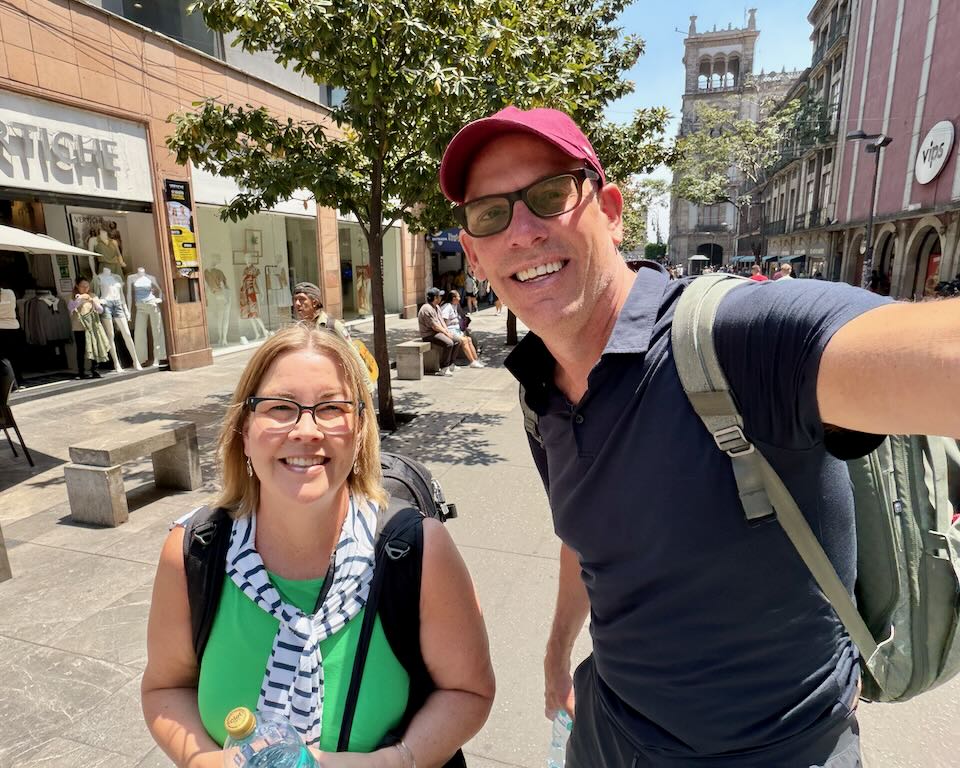
My wife and I in Mexico City, April 2026.
Is Mexico Safe in 2026? – Regional Safety and Logistics
Mexico is not one safety category. Most resort trips go smoothly, but risk varies a lot by state and even by neighborhood. While I continue to travel to Mexico frequently, I never view the country as a monolith. Official advisories remain highly location-specific. For example, the U.S. currently rates Yucatán and Campeche as Level 1 (Exercise Normal Precautions), while major hubs like Quintana Roo, Baja California Sur, and Mexico City are Level 2 (Exercise Increased Caution). In contrast, the state of Jalisco is Level 3 (Reconsider Travel). Canada’s advisory is national in tone but highly regional in detail, so I recommend reading the regional risk map rather than the headline alone.
Arriving in Mexico: Immigration and Digital Entry
The arrival process in Mexico has changed significantly with the rollout of new technology at major airports. It is important to distinguish between the digital entry record and the automated e-gates.
- Digital FMMD (tourist card): Mexico now issues digital Forma Migratoria Múltiple (FMMD) records at all 66 international airports. You no longer need to fill out a paper form on the plane.
- Automated E-Gates: Self-service filters are available at specific airports like Cancun, Mexico City, and Los Cabos. Eligibility is generally limited to travelers who are 18 or older, entering for tourism only, not traveling with minors, and holding an electronic passport from eligible countries like the USA, Canada, UK, or EU.
- The Entry Receipt: If you use an e-gate, you must scan the QR code to download your digital form. Keep this receipt or a digital copy available throughout your trip and through departure, as it may be requested during immigration checks.
- Baggage Delays: Even when immigration is fast, baggage claim can still add significant time at busy airports. I recommend traveling with a carry-on if possible to avoid the wait at the carousel.
Boarding a flight from Huatulco to Mexico City.
Customs: Allowances, Restricted Items, and Declarations
The Mexican customs authority (ANAM) has strict rules regarding what you can bring into the country duty-free. Ignorance of these rules can result in unexpected taxes or confiscation.
- Laptops and Tablets: According to current ANAM guidelines, passengers may bring two electronic tablets and two portable computers (laptops, notebooks, or similar) duty-free as part of their personal luggage. If you exceed this allowance, customs may assess import duties on the additional items.
- Vape Warning: Importing any electronic cigarettes, vapes, or e-liquids into Mexico is prohibited. These items are considered prohibited imports and can be confiscated by customs. Penalties can be serious, so do not bring them.
- Cash Declarations: If you are carrying US$10,000 or more (or the equivalent in other currencies) in cash, checks, money orders, or a combination of these, you must declare it upon entry and exit. Failure to do so can lead to an expensive mistake and legal issues.
- Medications: Keep all medicines in their original packaging. Controlled or psychotropic medications must be accompanied by the relevant medical prescription.
Crime, Nightlife, and Night Safety
The impact of organized crime on tourists is a major concern. While visitors are rarely the intended targets of violence, they are not immune to the risks. In popular areas like Quintana Roo, official advisories warn that shootings between rival gangs have occasionally injured or killed innocent bystanders.
- Bystander Risk: Illegal drugs and late-night party areas raise the risk substantially, but bystanders can also be harmed in disputes they have nothing to do with. I recommend staying in well-lit tourist zones and being especially alert if you are out late in downtown Cancun, Tulum, or Playa del Carmen.
- Nightlife Safety: Spiked food and drinks are a known risk in nightclubs, bars, and restaurants. Always watch your drink and never leave it unattended. Additionally, unregulated or “bootleg” alcohol can be a problem; stick to reputable establishments.
- The Drug Rule: The most dangerous thing you can do in Mexico is attempt to buy or use illegal drugs. By engaging in the drug trade, you remove yourself from the safety of the tourist environment.
Meeting our pre-booked driver at the Los Cabos airport.
Safety by Destination
Cancun and Tulum
- Both destinations are rated Level 2 by the U.S. While the resort areas are heavily policed, official advice specifically says to use extra caution after dark in downtown sections and to stay in well-lit tourist zones.
- In Tulum, the new International Airport (TQO) and Maya Train have made access more straightforward, but travelers should still plan transfers carefully and avoid isolated areas late at night. Stick to the main Pueblo center or the Beach Zone for dining.
Puerto Vallarta and Jalisco
- Puerto Vallarta is a unique case: it sits inside the state of Jalisco, which is rated Level 3 (Reconsider Travel) due to crime and kidnapping. However, Puerto Vallarta consistently scores very well in local safety surveys, and many travelers consider it one of the most comfortable cities in the country.
- Stay alert and stick to the main tourist areas like the Zona Romantica and the Malecón. While security presence is high, you are still in a state with a higher advisory level, so keep an eye on current updates.
Mexico City (CDMX)
- The capital is Level 2 and generally safe in popular neighborhoods like Roma, Condesa, and Polanco. At the airport (AICM), app-based pickups can involve a walk to a designated area; always follow the in-app instructions.
- The Metro is efficient but very crowded and prone to pickpockets. Women-only sections are available on the Metro and Metrobus and are highly recommended for solo female travelers.
Los Cabos
- Cabo is Level 2 and remains one of the safest regions from a crime perspective. However, ocean safety is a primary concern. Many beaches have dangerous shore breaks and undertows. Only swim where conditions are clearly marked as safe, and follow all posted flags and lifeguard instructions.
Safety for Solo Female and LGBTQ+
- Solo Female Travelers: Mexico is very accessible for solo women if you stick to well-trafficked tourist areas. I recommend avoiding isolated beaches or walking alone on dark streets after midnight. In Mexico City, the pink-marked women-only cars on the metro and buses are a safe and comfortable way to get around during peak hours.
- LGBTQ+ Travelers: Mexico is one of the more accepting countries in Latin America, but social acceptance varies by region. The “Zona Romantica” in Puerto Vallarta is the gold standard for safety and inclusion. Cancun and Mexico City’s “Zona Rosa” are also very welcoming hubs. Outside of these urban and resort areas, it is generally better to be more discreet.
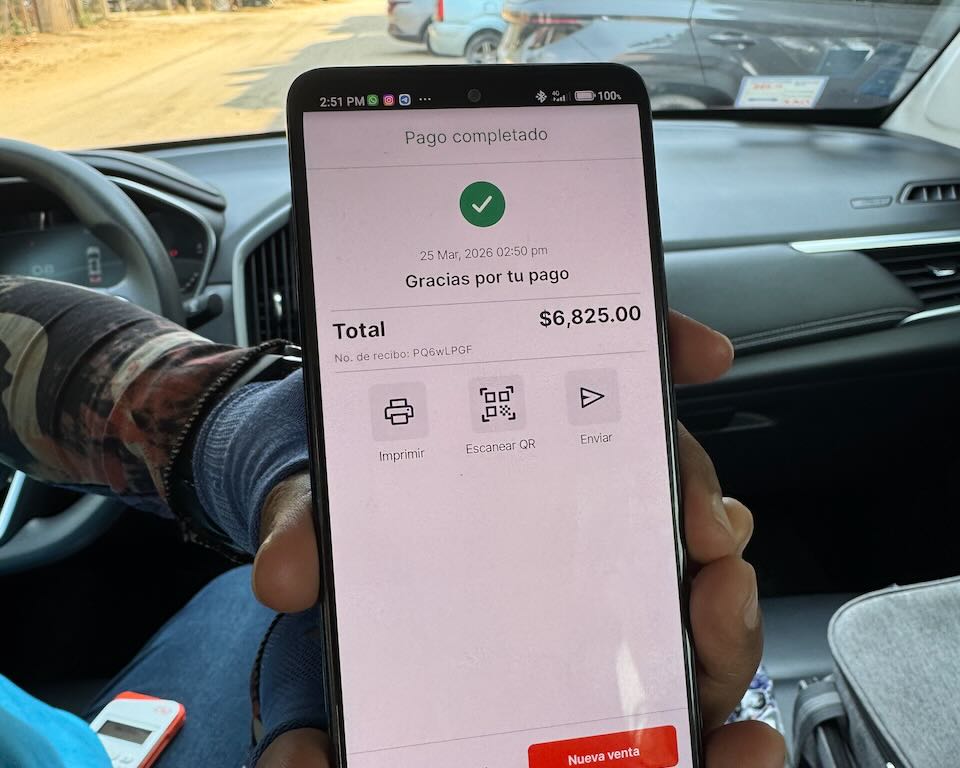
Paying for our hired driver from Oaxaca to Puerto Escondido. (Expensive but the bus was fully booked.)
Road Travel and Local Transportation
Road safety is often a greater risk than crime for many travelers. If you plan on driving or using local transport, keep these points in mind.
- Driving Safety: Road safety can be poor, and fatal accidents are frequent. Toll roads (cuotas) are generally much safer and better maintained than secondary roads. For longer drives, use toll roads whenever practical and avoid isolated secondary roads, especially at night.
- Night Driving: I strongly advise you to avoid driving after dark due to poor lighting, livestock on the road, and potential security issues.
- Official Taxis: While apps like Uber are reliable, official “sitio” taxis (booked at stands) are also a safe option. Never hail a taxi on the street at night.
Digital Safety and Scams
- Virtual Kidnapping: This is a common extortion scam where someone calls your family claiming you have been taken while you are simply in a dead zone or on a tour. I always recommend sharing your itinerary with family and checking in regularly so they know where you are.
- Social Media: I suggest not posting your real-time location on social media. Wait until you’ve checked out of your hotel or left a restaurant before sharing photos. This prevents “location stalking” and keeps your movements private.
- Public Wi-Fi: Be cautious with hotel or cafe Wi-Fi for sensitive tasks like banking. Using a VPN is the best way to encrypt your data. Additionally, stick to ATMs located inside banks during daylight hours to avoid card-skimming devices.
Protests and Disruption
Demonstrations and roadblocks are frequent in Mexico, especially in Mexico City and southern states like Oaxaca. These can lead to significant traffic and transit disruption, and in some cases, airport closures. In host cities during the 2026 World Cup (June 11 to July 19), heavy crowds, security operations, and demonstrations may cause disruptions that feel chaotic even when they are not crime-related. Stay away from protest areas and follow local news.
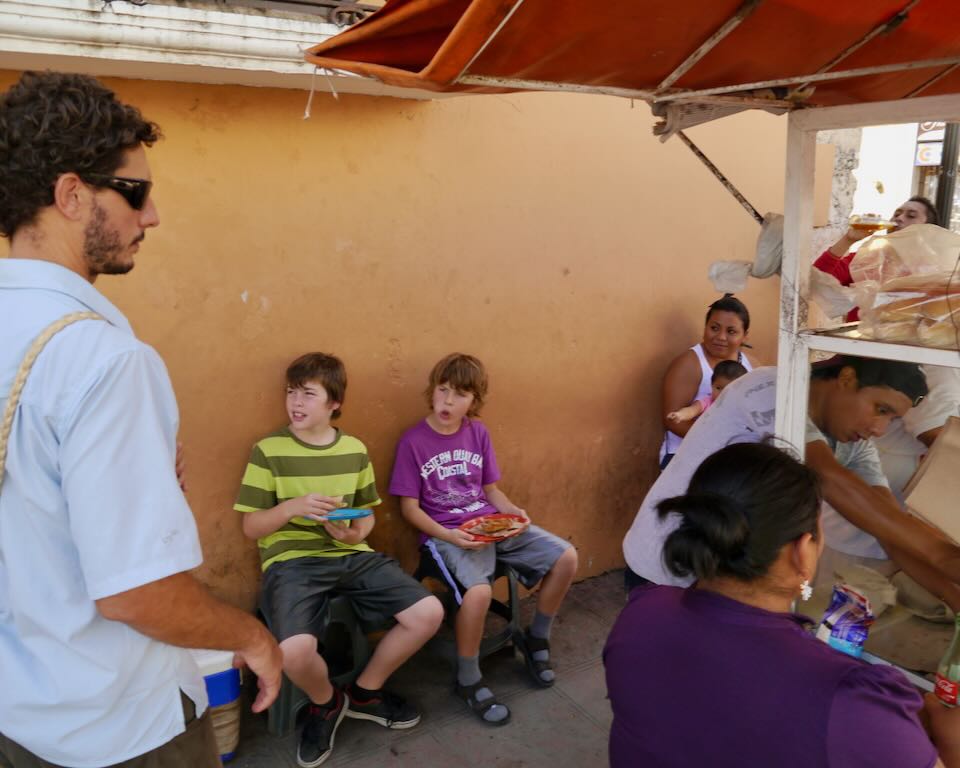
My two boys eating street tacos in Valladolid.
Non-Crime Risks: Nature and the Environment
Mexico’s geography makes it prone to several natural hazards that can impact your safety more directly than crime.
- Food and Water Safety: Traveler’s diarrhea is the most common health risk in Mexico. To avoid it, never drink tap water; use bottled or purified water even for brushing your teeth. Most resorts and high-end restaurants use purified ice. A good trick is to check the shape: cylindrical ice with a hole in the center (donut-shaped) is factory-made from purified water and safe. Be cautious with salads or unpeeled fruit at smaller local spots, and always use hand sanitizer after handling money and before eating.
- Ocean Safety: Coastal waters can be dangerous. Rip currents and strong undertows are common, and lifeguard coverage is inconsistent. If there are warning flags or lifeguard instructions, follow them, and ask locals about swimming conditions before entering the water.
- Hurricanes and Flooding: Hurricane season runs from June through November. Coastal areas, particularly the Caribbean side, can experience severe storms and flooding during this time.
- Earthquakes: Mexico City and the Pacific coast are in active seismic zones. Familiarize yourself with your hotel’s evacuation routes and “Sismo” (earthquake) alarms.
USA and Canada Specific Advice
- USA Travelers: The U.S. Embassy in Mexico recommends that all U.S. citizens enroll in the Smart Traveler Enrollment Program (STEP) before travel. This makes it easier for the embassy to locate you in an emergency.
- Canadian Travelers: Read the regional risk map on the official travel.gc.ca site rather than the headline alone. It lists specific zones where you should avoid non-essential travel. Review the regional advisory page before departure and again just before arrival.
- 2026 World Cup: The tournament runs from June 11 to July 19, 2026. If traveling to host cities like Mexico City, Guadalajara, or Monterrey, I recommend booking accommodations as soon as possible. Expect massive crowds, price spikes, and heavy security operations.
What to Do if Something Goes Wrong
Having a concrete plan is the best way to reduce travel anxiety. Save these numbers and resources in your phone.
- 911: The universal emergency number for police, fire, and ambulance services.
- 078: The “Angeles Verdes” (Green Angels). This is a free service providing roadside assistance and tourist info on Mexico’s highways.
- Guest Assist: If you are in Quintana Roo (Cancun, Tulum, Cozumel), use the Guest Assist app. It provides emergency numbers, directories, and assistance specifically for tourists.
- Tourist Assistance: Some destinations have tourist-assistance centers or dedicated state tourism hotlines; your hotel or consulate can direct you to the right office locally.
- Consular Services: Always have the contact information for your nearest embassy or consulate. If you are a U.S. citizen, enroll in STEP before travel. Consulates provide assistance if you lose your passport, are arrested, or experience a medical emergency.
